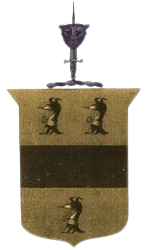
** All Text on these chapter pages has been copied verbatim – with permission – from this book: “Shurtleff Family Genealogy & History – Second Edition 2005” by William Roy Shurtleff & his dad, Lawton Lothrop Shurtleff ** Text in pdf convert to word doc – any spelling errors from the book may or may not have been fixed. ** All images on this page have been added…
Various members of our Shurtleff line have made important contributions to the world, and many others may have become well known in their various fields or occupations. Among these, the following three men are probably the best known:
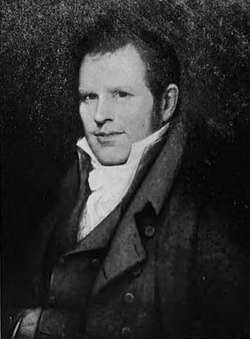
BENJAMIN SHURTLEFF (1774-1847)
Benjamin was the founder of Shurtleff College in Upper Alton, Illinois (1836), the first person to do serious genealogical and historical research on our Shurtleff line in America (this research later formed the basis of both editions of Descendants of William Shurtleff): a famous physician in Boston, Massachusetts; and the father of Nathaniel Bradstreet Shurtleff.
Benjamin Shurtleff was born on 7 Nov. 1774 in Plympton (now Carver), Massachusetts, a member of the fifth generation of our line of Shurtleffs in America. His parents were Benjamin Shurtleff (born 14 Oct. 1748 in Plympton, Massachusetts; died 8 July 1821 in Carver, Massachusetts) and Abigail Atwood (born 7 Oct. 1755 in Plympton, Massachusetts; died 29 Nov. 1826 in Carver, Massachusetts).
The story of the life of Dr. Benjamin Shurtleff can be found in a number of books. The most important of these are: (1) Austen Kennedy de Bois. 1900. The Pioneer School: A History of Shurtleff, the Oldest Educational Institution in the West. Chicago, New York, Toronto: Fleming H. Revell Company. See p. 70-73. A portrait of Benjamin Shurtleff appears facing the title page. (2). Shurtleff College. 1944. Shurtleff College Catalog. See p. 17. (3) Benjamin Shurtleff, comp. 1912. Descendants of William Shurtleff of Plymouth and Marshfield, Massachusetts. Revere, Massachusetts: Published by the author. See p. xii, 144-52. (4) Roy L. Shurtleff, comp. 1976. Descendants of William Shurtleff. San Francisco, California: Published by the author. See p. 68-79, 127-30.
Dr. Benjamin Shurtleff passed his childhood and early youth upon the farm of his ancestors in Plympton, Massachusetts. He graduated from Brown University in 1796 with the reputation of a good scholar. In 1797 he began to pursue his medical studies in Plymouth. On 5 Feb. 1799 he became surgeon’s mate in the U.S. Navy and set sail for the West Indies on the ship Merrimack in company with Dr. Nathaniel Bradstreet (not his son) as surgeon. In 1802 he received a Bachelor of Medicine degree from Harvard Medical School, and the same year he received the degree of A.M. at Brown and Harvard Universities.
On 26 July 1803 he married Sally Shaw in Plymouth, Massachusetts. The daughter of Ichabod Shaw and Priscilla Atwood, she was born on 4 May 1778 at Plymouth, Massachusetts.
On 26 May 1804 their first child, Abby Atwood Shurtleff, was born in Boston. Between 1804 and 1823 Benjamin and Sally Shurtleff had six children, all born in Boston.
In 1810 Benjamin received his M.D. degree at Harvard. He began active practice as a physician.
In Descendants of William Shurtleff, Benjamin Shurtleff (1912, p. 151) writes: “When he was about 30 years old [about the time of the birth of his first child in 1804] his health was delicate and it was feared that he would die of consumption; but he went back for a while to his father’s farm, lived on a milk diet and fully recovered. In his profession he was eminently successful and his practice was for many years quite as extensive as that of any other physician in Boston. He was distinguished by great natural sagacity, much good humor, and excellent judgment. When about 60 [in about 1834] he began to seek rest, and a few years later had almost retired from active practice.
“When he first went to housekeeping, he lived in two rooms, using the bed-room for his office, and upon beginning the practice of medicine he would get up early in the morning and drive his horse ‘through town’ as fast as he could go. He would stop for no one; and if anyone hailed him he would cry out, ‘I haven’t time to stop now.’ This he thought would give people an idea that he already had a large practice, and in this way he quickly built up for himself an extensive business.”
What Kind of Man? “He became a great man who, by the force of his genius, made his life a grand success. In his day everyone in town knew him. His appearance was marked; he had a tall, powerful frame, slightly bowed in later years, a noble head and face, with handsome and expressive features.” Many “remember his cheering smile and pleasant voice in the sick room, and his kindly hand, equally ready to soothe pain or relieve misfortune. No one knew so many children as did he, nor was known by so many. They all liked him, and it was seldom that his chaise had not two or three of them with him as he drove out of town. He was cordial and strong in his friendship, and, like many warm-hearted men, quite decided in his aversion. He was a just man; exact, but by no means hard; liking and practising accuracy in affairs, but always charitable and generous. He was methodical, industrious, and successful, performing all of the duties of life with fidelity and kindness, giving freely of his medical skill and worldly substance to the poor and distressed.
“He felt and manifested a lively interest in the benevolent institutions of his day, and contributed generously to their support. He founded by a handsome gift the college which bears his name in Upper Alton, Illinois, and it is an enduring monument to his munificence and public spirit. In religion he was devout from habit and conviction from his youth; and was an earnest but not intolerant member of the Baptist Church.
“In politics he was always a staunch federalist. Practical and scientific husbandry [raising domestic animals] deeply interested him and a large share of his attention was devoted to it as long as he lived. His farms at Winnisimmet and North Chelsea were models. He gave a great deal of thought and time to the improvement of the breed of cattle and sheep in this country, and was one of the earliest importers of Ayreshire stock [dairy cattle from Scotland].”
Genealogy “He had a strong taste for genealogical research and industriously gathered a large amount of information in regard to the ancestry of others as well as his own. It was he who began this genealogy in the latter part of the 18th century, and he, also, who gathered so much about the early generations in a time when it was fresh in the minds of the old inhabitants of the town in which he passed his youth. His memory was wonderfully full and accurate, and his use of language in composition elegant and vigorous.” His wife died on 20 January 1845. His membership in the New England Genealogical Society dates from 15 November 1846.
‘When disease assailed him, he was patient and submissive, and when called to part with dear and valued friends he exhibited a beautiful example of Christian submission. As the last hours of his life were passing away and when all earthly supports were insupportable he calmly and confidingly trusts in the mercy of the Lord and Saviour. His work is finished and he who for many years resisted the approach and parried the attacks of the king of terrors as he came to others, has himself fallen in that war which knows no discharge.” He died at his home on Tremont Street. His son, Dr. Nathaniel Bradford Shurtleff, had come to his home to try to relieve his intense suffering. “His death [at age 73] was observed in the American Almanac for 1848; and at that time he was the oldest physician in Suffolk Co. and the oldest honorary graduate of Harvard University… He and his wife are buried in the family tomb at Mount Auburn in Cambridge; a tomb which he built and in which his wife was the first person placed.”
Portraits of Dr. Benjamin Shurtleff and his wife Sally are shown facing page 145. They also appear in Roy L. Shurtleffs genealogy of the Shurtleff family, facing page 127.
Shurtleff College. The founder and driving force behind the founding of Shurtleff College was John Mason Peck, a Baptist preacher and teacher, and a man of great ability and drive. He was affectionately called “The Pioneer.” His initial intent was to establish a school in the St. Louis area in which young men preparing for the ministry and other intellectual pursuits could secure training. In January 1827, after 10 years of labor, the first such school in the West was opened in the village of Rock Springs, just east of St. Louis. In 1832 this school was removed to Upper Alton, Illinois, to secure the advantages that this site offered for a college. From 1832 the organization was known as Alton Seminary and then as Alton College. It was a Baptist college and theological seminary. The name Shurtleff College was adopted in 1836 in honor of Dr. Benjamin Shurtleff of Boston, who made a very generous and crucial donation that enabled the college to become established in Alton. An entry in Mr. Peck’s journal dated 6 October 1835 reads: “I held a conversation with Dr. Shurtleff on the subject of the College. He proposed to give $10,000 on the following conditions: Five thousand dollars for building purposes, the college to be named Shurtleff, and the other five thousand to establish a professorship of rhetoric and elocution.”
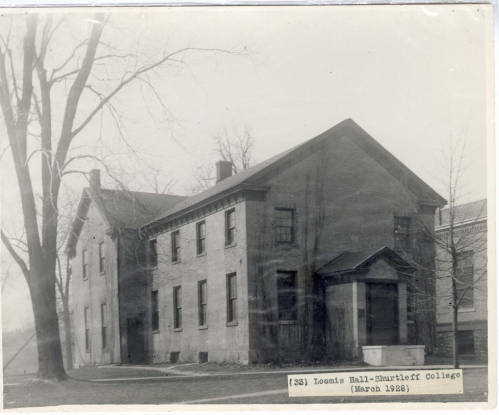
Photo from Ancestry.com
Austen K. de Bois, in a book on Shurtleff College, wrote in 1900: “Princely gifts to educational foundations were of very rare occurrence sixty years ago. Such an act of munificence as that of Dr. Shurtleff would have called forth expressions of gratitude and congratulation, even if the beneficiary had been an old and well-established eastern institution. For the feeble and struggling school on the banks of the Mississippi it meant new life and equipment for splendid service.”
The 1944 Shurtleff College catalog states: “History: Shurtleff College is one of the earliest of the many colleges founded in the Mississippi Valley. Its present charter was granted in 1835 by the legislature of the State of Illinois.”
In 1959, Shurtleff College, by this time the oldest college in Illinois, went out of business. It was supported to the end, but not sufficiently, by the Illinois State Baptist Convention. Today its campus is still used by the Dental School of Southern Illinois University at Edwardsville. Phone: (618) 692-2712. Illinois’ oldest college building, Loomis Hall, still stands and is in use next to the library which was built by Carnegie funds in about 1812.
On the campus is a life-size statue of Robert Wadlow, who at 8 feet 111/2 inches, was and remains the tallest man who ever lived. Robert was born and reared within blocks of the Shurtleff campus. He is listed on the first page of the Guinness Book of World Records.
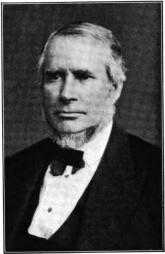
NATHANIEL BRADSTREET SHURTLEFF (1810-1874)
Nathaniel, a medical doctor, was the mayor of Boston for three terms from 1868 to 1870, and the secretary of the overseers of Harvard College from 1854 to 1874. He was also a man of fine literary attainments and the author or many valuable historical works on the history of Boston and of New England, and of our line of the Shurtleff family in America; 25 of his books, speeches, or other important documents are listed in the National Union Catalog.
Nathaniel Bradstreet Shurtleff was born on 29 June 1810 in Boston, Massachusetts, a member of the sixth generation of our line of Shurtleffs in America. He was the son of Benjamin Shurtleff (whose donations to the college at Alton, Illinois, caused that institution to assume his name — see above) and Sally Shaw. He traced his descent to eleven of the Pilgrims of the Mayflower, a number probably exceeding that of any of his contemporaries.
He graduated from Harvard College in 1831.
He was married in Boston on 18 July 1836 to Sarah Eliza Smith. The daughter of Hiram Smith, she was born on 28 March 1814 in Boston, Massachusetts.
On 16 March 1838 their first child, Nathaniel Bradstreet Shurtleff, Jr., was born in Boston. Between 1838 and 1861 Nathaniel and Sarah Shurtleff had seven children, all born in Boston. None of these children married, and three died in infancy or early childhood.
A portrait of Dr. Nathaniel B. Shurtleff is shown facing page 322 in Benjamin Shurtleffs Descendants of William Shurtleff (1912). It also appears in Roy L. Shurtleffs genealogy of the Shurtleff family, facing page 231.
Publications on Shurtleff Family History and Genealogy. Like his father Benjamin, Nathaniel was very interested in the history of his ancestors. He probably incorporated some of his father’s research in his own writings and publications.
His most famous and influential work was Records of the Colony of New Plymouth in New England (1620-1691), edited by Nathaniel B. Shurtleff and David Pulsifer, 12 volumes (Boston, 1855-1861; reprinted as 12 volumes in 6 books, New York, 1968). Along with William Bradford’s Of Plimouth Plantation, this set of original records is our most valuable source of knowledge for the history of Plymouth Colony, and is also valuable to genealogists as a supplement to the vital records, wills, and deeds of the colony. The first six volumes are Court Orders from 1633 to 1691. Volume 7, Judicial Acts, is a record of private lawsuits (“man against man”) from 1636 to 1692. Volume 8 contains Miscellaneous Records, that is, births, marriages, deaths, treasury accounts, lists of freemen at various times, and other lists. Volumes 9 and 10 are the Acts of the Commissioners of the United Colonies. Volume 11 consists of the Laws of Plymouth Colony from 1623 to 1682. And volume 12 is our earliest recordings of Plymouth Deeds from 1620 from 1651.
Two of his other important works about the Pilgrims were: Passengers of the Mayflower in 1620 (1849), and Records of the Governor of and Company of the Massachusetts Bay in New England, 1628-1686 (5 volumes in 6, 1853-1854).
In 1850, Nathaniel wrote and published two more important works about early New England history, focusing on his ancestors:
Brief Notice of William Shurtleff, of Marshfield. 1850. Boston: Privately printed. 19 pages. About our immigrant ancestor, William Shurtleff, who lived 1619 to 1666.
Thunder and Lightning; and Deaths at Marshfield in 1658 & 1666. Boston: Privately printed. 55 pages. About the death of our immigrant ancestor, William Shurtleff, in Marshfield, Massachusetts.
Other Writings. In addition to history and genealogy Nathaniel was also interested in library science. In 1856 he wrote Decimal System for the Arrangement and Administration of the Libraries. Boston: Privately printed. 80 pages. This is “Descriptive of a system which the writer has introduced into the Public Library of the city of Boston.” Then in 1861 he wrote Plan for the Distribution of Books in the Upper Hall of the Library of the City of Boston (June 28, 4 pages).
Mayor of Boston. On 4 January 1869 Nathaniel presented his inaugural address as the mayor of Boston to the city council. So eloquent was the presentation that it was published in Boston by A. Mudge (vi + 77 pages). His second inaugural address, on 3 January 1870, was also issued by the same publisher (123 pages).
Following his death on 17 October 1874, a catalog of his library was compiled and published by W. F. Brown & Co. in Boston. It contained 1,790 entries and was 96 pages in length. The library was sold at an auction by Leonard & Co. in Boston—probably since he had no descendants. His wife, Sarah, died on 5 Aug. 1887 in Boston (Dorchester).
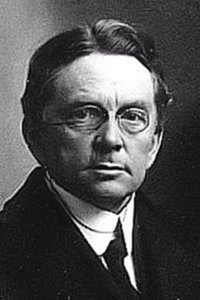
ERNEST WARBURTON SHURTLEFF (1862-1917)
Ernest is the author of the well-known Christian hymn titled “Lead On, O King Eternal.” He wrote it in 1887, at age 25, and it is still found in the hymnals of nearly all denominations and widely sung in churches. He was also the author of many books of poetry, and a few of verse.
Ernest Warburton Shurtleff was born on 4 April 1862 in Boston, Massachusetts. He graduated from Harvard in the class of 1881-82. During 1883-84 he studied at the New Church Theological Seminary in Boston.
His first book of poetry, titled Poems (141 pages) was published in 1883 in Boston; at the time he was only 21 years old. “As a writer, he gained considerable prominence through poems written while still little more than a lad.” Other early books of poetry or verse, or single poems include Easter Gleams (1885), Whittier (1885), Song of Hope (1885, published by Dutton & Co., New York), The New Year’s Peace and Other Poems (1886), and When I was a Child (1886). The last two books were published by D. Lothrop & Co. in Boston.
He entered Andover Seminary in 1885, graduating in 1888, then continuing with advanced work in 1890-91. While at Andover, he played the organ on Sundays at Stone Chapel. He was considered an accomplished musician.
In 1887 he wrote the well-known hymn of consecration Lead On, 0 King Eternal, which was first sung publicly at the graduation of his class from Andover Seminary. The most popular melody was written by Henry T. Smart (1813-79). The first verse goes as follows:
Lead on, Oh King eternal, the day of march has come; Henceforth in fields of conquest Thy tents shall be our home.
Through days of preparation Thy grace has made us strong.
And now, 0 King eternal, We lift our battle song.
In June 1889 Ernest was invited to preach for six months at the Congregational Church in Ventura, California. He had preached at this church on April 14 and 21. He left Boston, in part, because of ill health. On 19 November 1889 Rev. Shurtleff was ordained at this church. As part of the ordination he described a vivid religious experience of his in which faith had triumphed over doubt.
On 13 January 1890 Rev. Shurtleff was invited to extend his stay at the church for one year. He accepted, but with the condition “That I may understand by your call that you pledge yourselves to unite with me in a zealous determination to do the Lord’s work in this town… in the name of Christ.”
Ernest worked as pastor at the church at Ventura for about nine months. On 21 September 1890, three months before the year had expired, he tendered his resignation to accept a scholarship at Andover seminary. While in Massachusetts, he was pastor to the Church of the Pilgrimage in Plymouth, where he continued until 1898.
It is interesting to note that in August 1990, John Randall “Randy” Martin, a member of our Shurtleff line, was called to be senior minister at the same church in Ventura, now named Church of the Foothills (United Church of Christ), where Ernest was ordained and had worked. He and his co-workers have collected most of E. W. Shurtleffs poems, sermons, and other publications.
In 1895 Emest’s beautifully illustrated book The Shadow of the Angel, three Easter sermons in verse, was published in Boston. The theme is that “By every troubled soul some angel stands, And stretches forth her gentle, pitying hands.”
From 1898 to 1905 he was at the First Church (Congregational) of Minneapolis, Minnesota—the oldest in the state and one which ministered largely to pupils and professors of the state university. In 1899 his book on Old Missions of Southern California was published.
Also in 1899, on July 20 he married Helen Symms Cramer at Cameron, Texas. In 1901, on July 25, their only child, Gertrude Sarah Shurtleff, was born in Minneapolis.
In 1905, at the end of his term in Minneapolis, he was awarded a Doctor of Divinity degree from Ripon College in Ripon, Wisconsin. In February 1905 he and his family moved to Frankfurt am Main, Germany, where he assumed charge of the American Church. He remained there for 6 months or more until he was called to Paris, France, where he was put in charge of student activities at the Academy Vitti, a mission to English-speaking students associated with the Congregational Church in the Latin Quarter of Paris. He worked there from 1906 until his death 11 years later. Starting in 1914, during World War I, he and his wife served as relief workers in Paris.
Ernest died on 24 August 1917 at Dinard, France, of heart failure. The funeral services, at which the American ambassador and his wife were present, were held in the American Church in Rue de Berri and were largely attended. Rev. W. G. Allen, an intimate friend and neighboring pastor, conducted the service and paid an eloquent tribute to Dr. Shurtleff, in which he said:
Dr. Shurtleff was a man of singularly attractive character, one in whom the beauty and power of goodness found rare illustration. One could not know him intimately without feeling the arresting power of his personality. But if he illustrated the beauty of goodness, he also manifested its simplicity. No disappointment ever made him loose faith in his fellow men… Even among unselfish men, he seemed to be the most unselfish. He never thought of himself if he could help another, and he did it in all kinds of secret and unsuspected ways. His intellectual gifts were neither few nor slight, and his capacity for service seemed to know no limits. Yet he was never too busy to be kind and to occupy himself with another’s trouble, and his deep and strong affections were seen in all he said and did.
 Shurtleff & Lawton Families Genealogy & History - Second Edition (2005)