** All Text on these chapter pages has been copied verbatim – with permission – from this book: “Shurtleff Family Genealogy & History – Second Edition 2005” by William Roy Shurtleff & his dad, Lawton Lothrop Shurtleff ** Text in pdf convert to word doc – any spelling errors from the book may or may not have been fixed. **
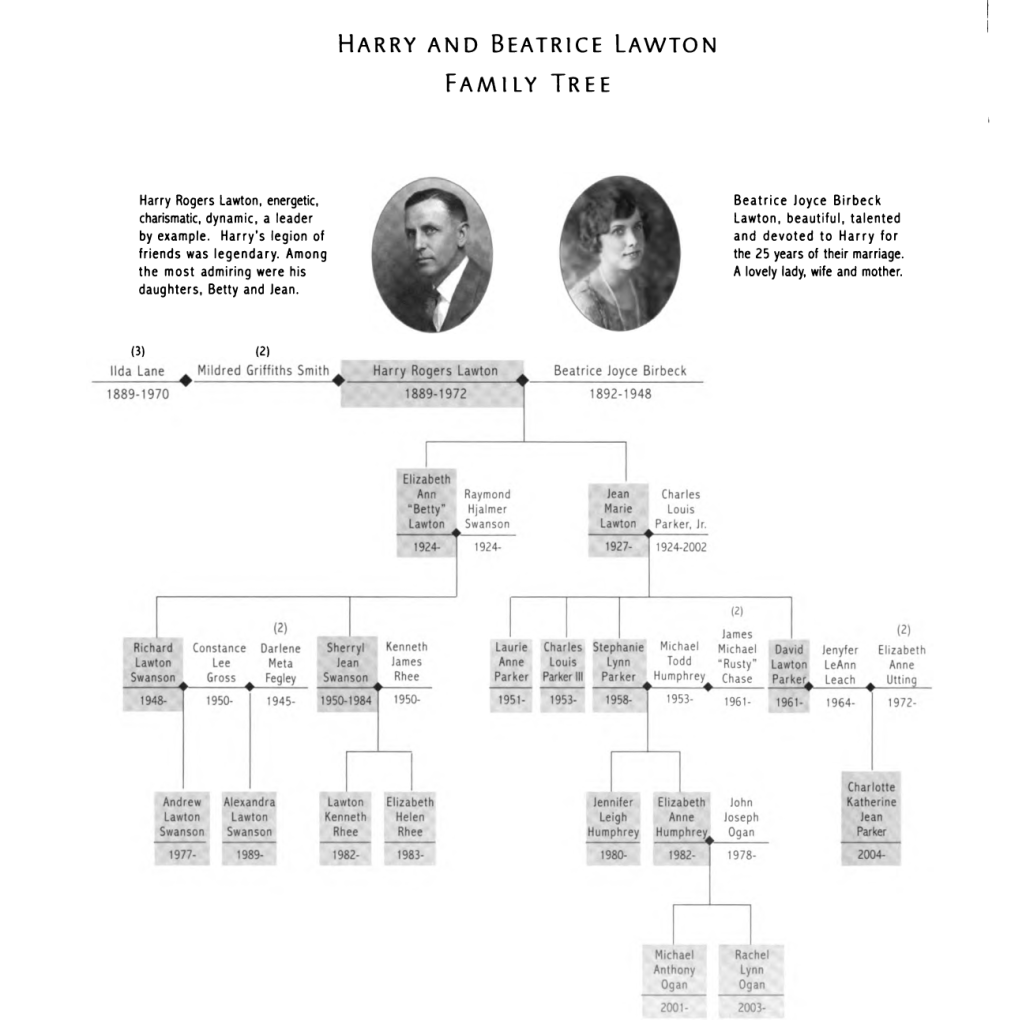
Growing Up in Berkeley (1889-1907). Harry Rogers Lawton was born on 19 May 1889 at the family home on Channing Way in Berkeley, California, Frank and Fannie Lawton’s third child and oldest surviving son. His birth made the house seem too small, so they had a new and much larger home built at 2211 Durant Avenue, also in Berkeley.
Harry went to grammar school at Dwight Way grammar school (later renamed McKinley Grade School) in Berkeley. There his naturally strong personality, adventuresome spirit, and love of fun and mischief began to express themselves. His brother, Don, in later years recalled, “I think that it kind of worried mother and father sometimes when he was younger because Harry was kind of the raising hell type, you know, and I wasn’t.” Harry did indeed make things happen. One day as he passed the drugstore on his way to Dwight Way school, he noticed the front window laxative display featuring two small ‘before” and “after” cardboard figures of a little boy on a potty.
One was straining and glum, the other smiling and relieved. He managed to spirit the two figures out of the window and hurried on to school. Once in class, as soon as the teacher’s attention was diverted, he positioned the stand-up figures at the head of the two center aisles. The response was immediate. The class broke into pandemonium. Harry was forthwith propelled by his teacher, his ear in her viselike grip, to his mother’s doorstep. Mrs. Lawton listened quietly to the teacher’s indignant report and then solemnly explained, “Poor Harry. He had to take a laxative last night and it must have been on his mind.” She totally believed that “family stands together.”
Naturally gregarious, Harry loved socializing. When he was 10-12 years old, Harry joined three to four churches, largely for their “ice cream socials.” There he would meet new girls and enjoy homemade ice cream.
Harry’s father, Frank, set high standards and would not brook academic mediocrity. Here, as repeatedly in later life, Harry proved himself able to excel at “the job on hand” without sacrificing fellowship and good times. This effervescent mix spawned a number of “happenings.” Don recalls that “Mr. C. L. Biedenbach was this German who was principal of Dwight Way grammar school, and later of Berkeley High. He was so strict the students didn’t like him. They even booed him. So one night Harry and some school friends went and rang the door bell to his home at about 12 at night. Mr. Biedenbach came down in his nightgown and opened the door, and they pelted him with tomatoes.” Despite all this, Harry graduated on schedule—a testimony both to his scholastic ability and Mr. Biedenbach’s equanimity.
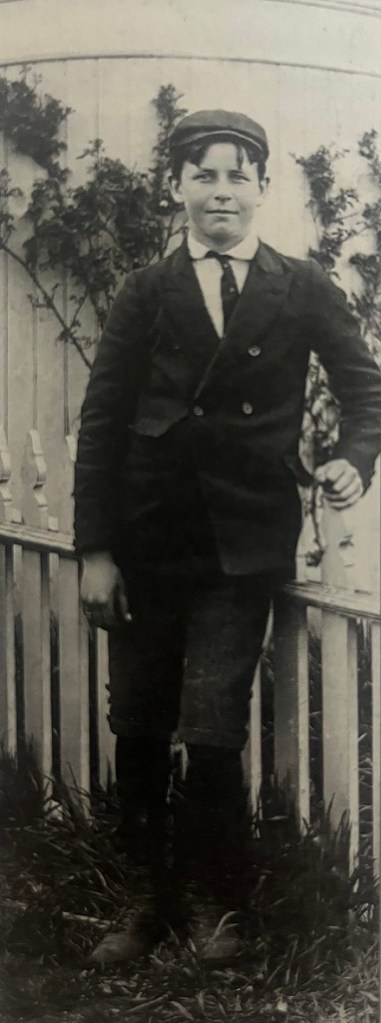
Harry didn’t slow down when he hit Berkeley High School. Don, who always shared a room at home with Harry, recalls: “Harry was always horsing around, joshing and kidding around in high school. I think he either got kicked out of Berkeley High or our folks took him out. He did just what he wanted to, raising so much hell, but in a good, fun way. He went to various preparatory schools, including LeConte [a grammar school], Boone’s Academy [located behind the house in which he was born], and White’s, I think.”
The Berkeley High School yearbook, 011a Podrida, shows that Harry was at Berkeley at least during the period from June 1906 to December 1906, and was listed as a member of the Class of 1907. In his day there were men’s and women’s fraternities and sororities at Berkeley High. Harry was a Theta Chi, one of 11 members in 1906. A photo shows him to be handsome and clean cut. Harry’s close friend, Chester (“Chet”) Ristenpart, was also a Theta Chi. The group met once every two weeks in the home of one of the members for a dance and refreshments.
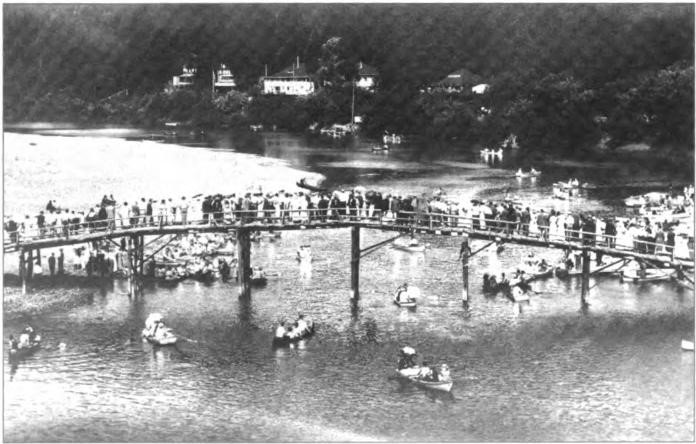
From the time Harry was a young boy, he was a fine athlete. Physical challenge and outdoor sports were always an important part of his life. As Don Lawton said, “Harry was high energy all right. Always full of action and on the move. He didn’t stand still too long.” He enjoyed all sports, but his special passion was any water-related activity and particularly swimming and diving. During the family’s summers on the Russian River he would regularly dive from the 12-foot tower at Sandy Beach, Monte Rio, and he particularly delighted in astonishing onlookers by diving off the Bohemian Pool railroad bridge, which is said to be at least 100 feet high. Another favorite challenge was the rafters of the old Piedmont Baths near Lake Merritt. The baths were in a huge glass domed building and the rafters were 50 to 60 feet above the water. Don recalls, “Harry would sneak up into the rafters, get clear up into the top of the glass dome when the key boy wasn’t looking, and dive off. Diving was Harry’s lifelong hobby. He just loved it.”
When Harry was at Berkeley High, the school didn’t have a swim team, although numerous other high schools in the Bay Area did. But Harry didn’t let that stop him. In November 1906 the A.A.L. (Alameda [County] Athletic League) swimming tournament was held at the Sutro Baths. The 011a Podrida, whose editor-in-chief was Roy Shurtleff, reported: “The San Francisco high schools turned out in great force, there being about 1,000 rooters there. In all this crowd of onlookers, without a single rooter to cheer them on, four Berkeley High men entered and did well in the 100-yard dash and relay. Harry Lawton, in the hundred, took third place against men who had trained for the races all year. The relay team composed of Hartley, Lawton, Shannon and Hendricks, took … third; not at all a bad showing for an impromptu team.” A year or two later a swim team was formed at Berkeley High.
Harry’s daughters and grandchildren later learned more about this time of his life as he told of hitching streetcar rides to the Oakland Estuary to swim, of hiking the rugged Berkeley hills with friends, and of one cold and eerie night spent near Fish Ranch Road, lost in the dark, as coyotes
howled nearby. In 1904 he and a friend walked all the way from Monte Rio back to Berkeley, mostly on the railway tracks. He talked with pride of currying the family horse and polishing the buggy.
Soon after the great earthquake hit San Francisco in April 1906, Harry and a friend stowed away on a ferryboat from the East Bay to San Francisco. Hidden away among sacks of flour, they made it to the city, which was still aflame and off limits to stragglers or looters. Armed soldiers patrolled and, very quickly, the two strong teenagers found themselves pressed into manning water hoses. With guns at their backs, they had no way to head home until they had worked for many hours and were blackened and smelling of smoke and sweat. Don Lawton adds: “One night at about the time of the earthquake Harry didn’t come home until 11 or 12 o’clock. The next morning mother and father questioned him. They had given him $5 to go to San Francisco, and he spent the whole thing. They couldn’t believe it, because in those days a loaf of bread cost 5 cents! He probably went to a dance hall or a beer hall.”
Frank and Fannie held strong opinions about smoking and drinking. Neither of them smoked or drank (at least in public), and they strongly advised their children to do likewise. All obeyed—except Harry. He smoked with bravado, and was also known as a good drinker at a rather early age. This worried his parents, and they became even more concerned in about 1908 when their “black sheep” son, then 19 years old, began to hang out at the local pool hall. As Don Lawton tells it:
Father caught Harry one day up at the pool hall on Shattuck Avenue. Father’s offices were on Center Street and Shattuck, and he’d see Harry with his gang from high school all barging into Al’s Pool Hall in the afternoon. He thought, “Well, brother! I can put a stop to that! I’ll have a bowling alley built here in the basement of our home, and I’ll buy a pool table to go with it.” Harry was very popular all his life, and he always had a crowd of fellows come to the house to play pool and to bowl. Saturday night was bowling night for the neighborhood.
College at Cal (1908-12). In the fall of 1908 Harry entered the University of California at Berkeley. He was 19 years old.
Early in his freshman year, Harry was invited to join the Phi Gamma Delta (Fiji) house. It soon became his campus base. In May 1911 Harry represented his house at a national fraternity meeting on the East Coast. He never lost his interest in, or loyalty to, his Fiji brothers, and maintained his financial support of the fraternity throughout his life. During his college days Harry was both popular and very social. He seldom missed a party but, to the surprise of his struggling associates, his grades didn’t suffer. They failed to realize that when the party was in full swing, Harry would quietly slip away to study. Then later, just as unobtrusively, he would return to wrap up the evening’s festivities.
Not only could Harry balance social and scholastic obligations, but he also proved himself able to juggle simultaneous classroom commitments. One semester, two classes (Japanese and some other subject he was required to take) were offered only on the same day at the same time. Fortunately they were held in the same building, but on different floors, with one classroom directly above the other. Harry confidently registered for both. He resolved the seeming dilemma by spending the first half of class in the upper room, slipping out the window to finish the period down in the class below. Notes shared by friends and finals scheduled on two separate dates provided the last crucial elements. Harry handily passed each course and received full credit for both. Don Lawton recalls that in one class Harry had a friend primed in his seat. When the teacher (who was Japanese) would say “Mr. Rawton,” the fellow would call out “Here!” Eventually the teacher got a little suspicious about Harry’s attendance. So Harry brought him a bottle of whiskey and got an A in the course.
Harry’s love of sports continued on into college. His main claim to fame in college sports was his standout performance in 1908 on the freshman rugby team. Many Cal football fans may not be aware that rugby was such a popular sport in the early 1900s that it actually replaced American-style football at Cal for eight years, including the years that Harry was at Cal. The first Cal-Stanford Big Game was in 1892. From that year until 1905 football was played during the season and at the Big Game. But from 1906 to 1914 only rugby was played, including at the Big Game. From 1915 to 1917, during World War I neither sport was played. And from 1918 to the present it was football all the way.
No doubt Harry enjoyed the fact that rugby was one of the world’s roughest games. The lightest man on the team (at five feet, nine inches, weighing only 132 pounds), he played fullback, the single position nearest to the opponents’ goal. On 16 October 1908, the day before the Cal-Stanford freshman intercollegiate rugby game (the season’s biggest, called the “Little Big Game”), the Daily Cal wrote:
Harry R. Lawton, full-back. Lawton is one of the speediest and surest players on the team and has shown up to the great satisfaction of the coaches and rooters. Early in the season he demonstrated his superiority over other candidates for the back field position and in the error column there is hardly a mark against him. He comes from Berkeley High School, where he was on the football squad but was not a member of the team. He is regarded as one of the best all-round players in the freshman squad. He is popular with the rooters and is known to be a fighter clear through. His main points are his ability to reach touch with his long kicks and his sure cure for tacklers, the “straight-arm.”
Cal, incidentally, won the game 21 to 5. Harry played well. Unfortunately in a subsequent exhibition game against the Australian Blackhawks, Harry got his two front teeth kicked out. He paused for a minute hoping to locate them, but returned to the action as the coach yelled for him to get back in the game or get off the field. Don Lawton recalls how “we all went up that night to the old Cal field on Bancroft Way, right across from the Fiji house, and crawled around on our hands and knees looking for Harry’s teeth.” The following morning Harry’s father delivered an even harder blow. His ultimatum was: If Harry didn’t withdraw from football immediately, Frank would personally withdraw him from school.
Harry was also an excellent boxer, and it was largely due to his encouragement that his younger brother, Don, later went on to become a heavyweight boxer on the University of California varsity team. Don recalls:
Harry used to spar or box with the regular professional boxers, who also worked at the police department in San Francisco. In the summer they used to come up to Monte Rio, build a big stage, fence it all in, and train there. Harry trained with them and he could hold his own with the best of them. Boy, was he good. Sometimes he and some friends used to go to San Francisco and just purposely pick a fight with anyone they could find in one of those alleys over there. They loved to fight. But later he told me: “Don’t ever pick a fight. You never know how good the other fellow may be. You’re taking a wild chance. Many a man has been knocked senseless because he picked on the wrong guy.”
Harry taught me how to box. We’d bring these boys up from Berkeley High and spar in our backyard. He gave me lots of good pointers. If you picked a fight with Harry, you’d lose.
Harry also continued his swimming. Though swimming was not a varsity sport, the university did enter teams in the A.A.L. (Alameda Athletic League) swim competitions and Harry was a member in both 1908 and 1909. He also was one of those selected to represent the university in an attempt to break the standing record on the distance swim of the Golden Gate. For fun, he and Don used to swim way out into San Francisco Bay from Alameda.
One of Harry’s most valued college associations was his “literary” club. (His daughters, Jean and Betty Swanson, think this was “The Gun Club”). Jean has a book with all members’ names inscribed, but it does not give the group’s name.) A number of such clubs existed but membership in the one to which Harry belonged was most highly prized. As Don Lawton explained, “It was really a drinking society but they also discussed books… That was quite an organization. You had to really be somebody to get into that outfit.”
Many lifelong friendships were forged within this tight circle. Earl Warren also belonged, and he and Harry became close friends. Don remembers how Earl would go with Harry to the Lawton house time and time again for Sunday dinners. Ed Martin recalls that Harry gave Earl a personal recommendation, which got him into the Athens Club, a prestigious athletic club in Oakland. Their warm association was to continue even throughout Earl Warren’s years as governor of the State of California and his ultimate elevation to chief justice of the Supreme Court.
And just as the “literary” designation rather belied the truer nature of Harry’s club, so too was one of Harry’s nicknames the cause of gentle misinterpretation by his mother, Fannie. One day at a ladies’ luncheon at the Fiji house where the “evils of alcohol” were being discussed, Fannie confidently proclaimed that she was sure her Harry didn’t drink. She added that he was even called “Bottoms Up” by his friends, which undoubtedly meant Harry kept his glass turned bottom up upon the table. A number of years later a more realistic observation was made by his brother Don; “He was a good drinker, but I never saw him drunk.”
Harry was an unusually generous person. As Lawton Shurtleff recalls: “My mother, Hazle, used to say that whenever there was a group party, Harry would always pick up the tab. Then he often had to go around later and borrow some money, because he didn’t have any. But he always managed to pay the guys back. He was always the center of the party, and he insisted on paying for it.”
The Diary of Helen Lawton, 1909-1911 tells us much about Harry’s life and friends during this time. His two closest men friends were Bob Curry and Chet Ristenpart. Throughout their youth, Harry and Roy Shurtleff were close friends. Although Roy was 2 years older, they were in the same class at Cal. By June 1909 Harry was dating Margaret Witter a great deal; they became so close that his parents, brothers, and sisters all thought they were definitely going to get married.
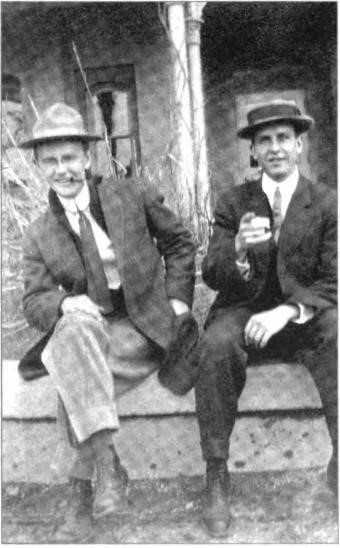
Shurtleff at Cal, circa 1910. Roy was best
man at Harry and Joyce’s wedding in 1923.
Harry’s daughter, Jean Lawton Parker recalls that “He had an absolute devotion to his family and he just adored Fannie, his mother. He felt that she was an extraordinary and noble woman and that she had created the backbone for that family and the strength of family ties. He was a typical Victorian son.” On his 22nd birthday (the poem is dated 19 May 1911 and he was born on 19 May 1889), Fannie gave him a colorfully printed, framed poem, which she selected for him but did not write. It seemed to catch perfectly Fannie’s feelings for her often unconventional but always lovable eldest son. He kept it on the wall of his bedroom for the rest of his life. It read:
TO MY SON
Do you know that your soul is of my soul, such part,
That you seem to be fibre and core of my heart.
None other can pain me as you, dear, can do;
None other can please me or praise me as you.
Remember the world will be quick with its blame,
If shadow or stain ever darken your name,
“Like mother like son” is a saying so true,
The world will judge largely of “Mother” by you.
Be yours then the task, if task it shall be,
To force the proud world to do homage to me,
Be sure it will say when its verdict you’ve won,
“She reaped as she sowed,” Lo! This is her Son.
Likewise, throughout his life, Harry kept his mother’s photograph on his bedroom wall, opposite the foot of his bed, where he would see her the last thing at night and the first thing in the morning.
Harry graduated from Cal in the Class of 1912, with a B.S. in commerce. The Senior Record of that year shows that in addition to the Phi Gamma Delta fraternity and Freshman Football Team (discussed above), he was a member of Theta Nu Epsilon (honor society) and Skull and Keys (senior and junior [drinking] honor society), he acted in their play Going Home in March 1911. He was also on the Freshie Glee and Junior Prom Committees; Floor Manager Junior Informal; General Committee Senior Week; and Arrangements Committee Senior Ball.
Work After College and World War I (1912-1915). Following graduation in 1912, Harry’s first job was with Western Pipe & Steel Company of San Francisco. For the next two years he traveled throughout the state selling well casing and surface irrigation pipe.
In 1914 he joined the Union Oil Company of California in the sales and advertising department at their plant in Richmond. This position offered greater opportunity but later required him to relocate in Los Angeles. Upon arrival in Los Angeles, Harry and several friends began hunting for lodgings. After an extensive and fruitless search, Harry proposed a brash solution. As they drove down a pleasant residential street, Harry told his friends to pick out whichever house they liked the best. He would get them rooms. The door of the house selected was opened by a motherly woman. Harry said, “Ma’am, we’re four young Christian men in great need of a place to stay. Could you possibly open your heart and your home to us?” This lady, Mrs. Lane, had no interest in taking in boarders. But Harry must have touched some special chord, perhaps because she had lost a son who died when young. So she took in Harry and his pals. The young men soon discovered, to their added delight, that Mrs. Lane’s two attractive daughters, Ilda and Helen, shared the home. Forty-two years later, after decades of infrequent contact and other marriages for both, Harry was to renew the friendship and marry widowed Ilda Lane McGahan.
Drawn to the beaches and water of southern California, Harry found another unusual high-diving challenge. On the Fourth of July, 1915, from a special platform installed by the Los Angeles Athletic Club high atop the cupola of the Balboa Beach Boathouse, he celebrated with a diving spectacular as a participant in a special divers exhibition. He never forgot that high platform and the low tide!
A colorful young man with a multitude of friends, Harry loved parties. After graduating from Cal, he was honored by being invited to be the best man (groomsman) at a number of weddings, including the following: Mr. and Mrs. George D. Smith in about June 1913 (George was subsequently the owner and manager of the world-famous Mark Hopkins Hotel for many decades); Roy Shurtleff and Hazle Lawton (his younger sister) on 15 October 1913 in Berkeley; and Don Lawton (his younger brother) and Billie Spaulding on 6 July 1922 at Roy and Hazle Shurtleffs house in Oakland.
Following the entry of the United States into World War I on 6 April 1917, Harry became increasingly anxious to enter military service. He found that an officer’s appointment would entail a delay of a number of months. After submitting his application, he decided that rather than just waiting he would join up. So on 3 August 1917 he enlisted as a private in the fourth U.S. Engineers. In Army vernacular, he had become a “mule skinner.” Assigned to Vancouver Barracks, Washington, he arrived from Los Angeles late at night after “lights out.” Reveille brought the first look at his fellow soldiers. Hard, tough, weathered men, they were emerging from their bunks wearing battered long johns or nothing at all. Harry, still in bed, was garbed in a nightshirt which had been lovingly hand sewn by his mother. Struggling hastily to shed the incriminating garment, he kicked it as far down in the bunk as possible and emerged stark naked—”one of the boys.” Harry later referred to this period as his “time in the trenches.” Digging ditches and excavating latrine pits were almost daily projects for the engineers. This phase of Harry’s service, however, lasted only four months. On 27 November 1917 he was commissioned first lieutenant in the Coast Artillery Corps and assigned to Fort Scott, California.
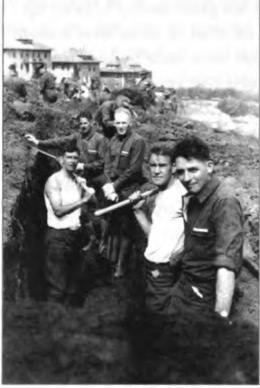
In July 1918 orders for Europe arrived and in August Harry was on his way. Movement was by train from the West Coast to New York and from there up to Canada, where the troops were to ship out with a large flotilla. An entry in Harry’s journal dated August 17 states, “5:20 A.M. set sail up St. Lawrence to Sydney Harbor Cape Briton Island. Beautiful spot. Dove off bridge of H.M.S. Demosthenes, highest foothold on ship. ‘Big Hand.’ Joined convoy and English warship Devonshire.” Harry’s brother Don recalls this same incident and the indomitable Yankee spirit of the day:
Going overseas, we all went on the same big push in 1918, some 20 to 30 vessels in a big camouflaged flotilla to knock the Kaiser off his throne by mob force. Harry never packed a suitcase without putting in his swim trunks first. Well, before anyone knew what was happening, he climbed to the top of the mast of his ship, a few ships behind mine, and dove off into the ocean for fun. It was a big sensation. They picked him up about two to three ships back and almost court-martialed him.
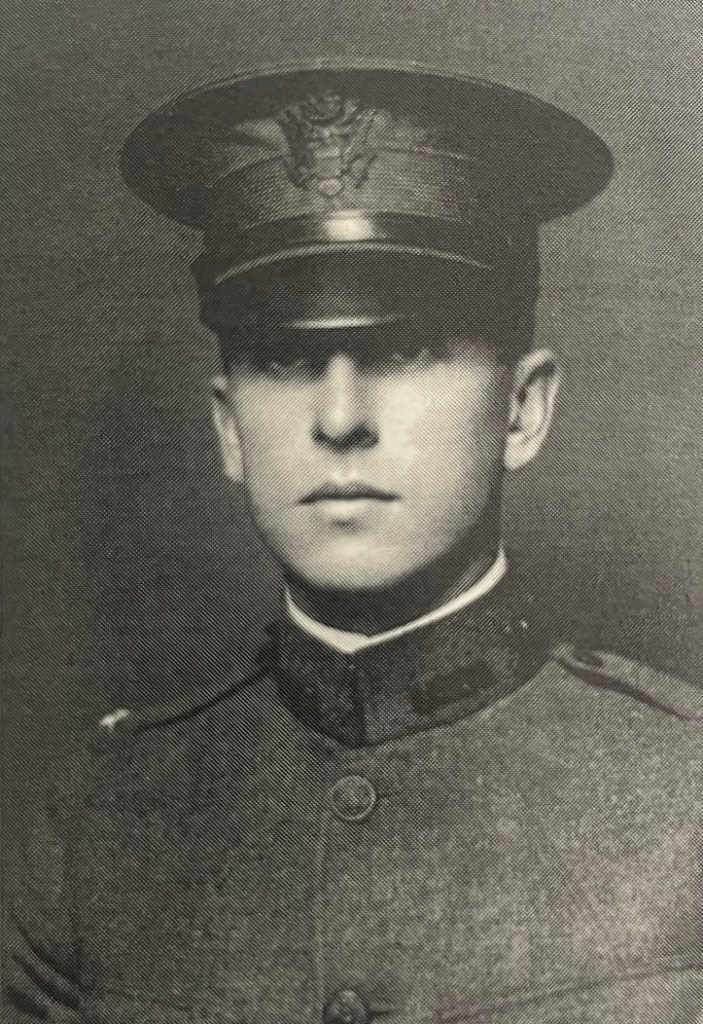
Harry reached France on September 4. Two months later, on 11 November 1918, the armistice was signed. Four days after that, Harry and his brother Don had their pictures taken together in Bordeaux. Eager to stay in Europe longer, Harry was able to have his orders home rescinded. Morale among the men was becoming an increasing problem. The need was for “Show Troops” to entertain the American soldiers as they waited for ships to take them home. Demobilization was a slow process. Harry organized and became the driving force behind one such group known as “The Cannoneers,” whose vaudeville acts were accompanied by a seven-piece jazz orchestra. The men, mostly musicians, singers, and actors, were drawn mostly from Harry’s 69th Coast Artillery unit. They toured France from February 1919 for about five months, performing in and around Bordeaux, Dijon, Rochefort, La Rochelle, Tours, Brest, St. Malo, Marseille, and elsewhere. They frequently made the local papers, and the Bordeaux Sunday paper of 2 March 1919 described:
(The Cannoneers) in a campaign of fun are successfully bombarding Bordeaux with their clever “Mirth, Magic, and Melody” and thousands of Base Two’s khaki-clad theatre-goers are enjoying the attack.
They were subsequently recognized as the most outstanding of the army show troops. A book about the group, Trix & Chatter, written by W. Dornfeld and published in 1921, said of the manager and director Harry:
We had a lieutenant in charge of us and he was an exceptional officer. He was different! He was unique! He was, in other words, a “Regular Guy.” He took care of eighteen hard boiled, artistic temperament-filled ham-actors like a mother. We got the best there was to be gotten under the rather limited circumstances of the newly organized entertainment department.
Harry’s mementos of the troupe’s tour include many letters from army officials and Red Cross personnel congratulating him and his men for their performances and the contribution they were making.
On the strength of this sterling contribution, “the Loot,” as Lieutenant Lawton’s men called him, sent telegrams flying until he had wangled a final tour that terminated in Bordeaux (a point of debarkation), where his men hoped for quick shipment home. And for himself he requested and was granted 14 days leave to visit Cologne, Antwerp, and London. However, it was never to be. When Harry arrived in Bordeaux he happened to sleep in a Casual Officers Barracks, which was forthwith quarantined for spinal meningitis. From a window, Harry waved goodbye to his departing troupe.
When Harry’s sailing orders finally came, he was assigned as commanding officer to a company of black troops. They arrived at Newport News, Virginia, on 2 July 1919. A photo shows Harry marching down the streets of the town at the head of the company, the only white face in sight. From there they went on to Camp Shelby, Mississippi, where the orders came down that all personnel records had to be fully current prior to any discharge. Many of the men were illiterate and much of the needed information seemed impossible to secure. Harry called the black first sergeant into his office and said, “Sergeant, those men out there want to go home. You want to go home, and sure as hell I want to go home. Now we can do this the Army way and be here forever, or we can do a little creative paperwork.”
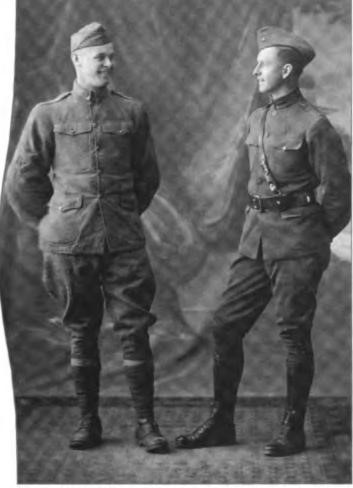
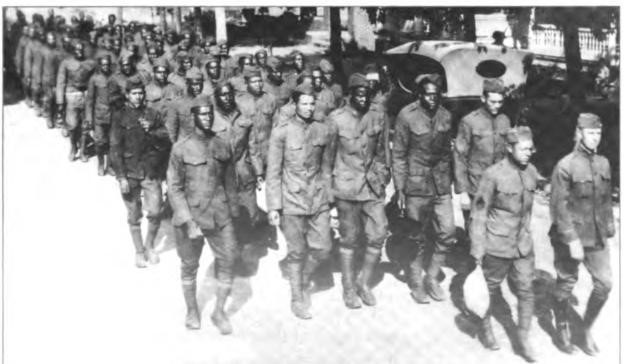
Thereafter, facts, figures, birth dates appeared as if by magic and the forms were completed in a matter of hours—a typical Harry Lawton approach. The company qualified for embarkation in record time and Harry received a letter of commendation to boot. He was honorably discharged on 11 July 1919. For the rest of his life, Harry prided himself in his ability to cut through unnecessary red tape PDQ.
The theme of loyalty is a strong one that runs throughout his life. The loyalty to family and friends, which he had cultivated as a young man, had expanded to include his country and been deepened by the experience of war. He became a life-long patriot and demonstrated his patriotism in countless practical ways. Over the years he also developed a deep loyalty to principles. He was a man of principle and would not be swayed by mere self-interest. He hated to see people treated unjustly, and again and again sprung to their defense and support.
Return to Civilian Life and Marriage (1919-1924). Shortly after Harry returned home to California, he took a trip to see his older sister, Wirtnie, in Wyoming. There he got a job working for her husband, his brother-in-law, Bimey Seymour, with the Carney Coal Co. The job was wholesaling coal to dealers and his territory was Montana. In 1919, in Billings, Montana, Harry joined the American Legion, starting an association that would be one of the most important of his life. It was probably in Montana (or perhaps in Wyoming) that he met and married his first wife, remembered now by family members only as Christine, a checker or cashier in a local country bank, or perhaps a client’s daughter or a waitress in a cafe. Don recalls that Harry wrote Fannie, saying, “She’s a swell gal, the nearest thing to you, mother, that I’ve ever seen. That’s why I’m marrying her.” They lived there briefly, then Harry brought her back to Berkeley where they stayed temporarily at the family home. She is remembered as a nice, sweet girl but she was soon homesick for her small Montana town. Berkeley and the big, active family she had joined all seemed to overwhelm her. Within just a few weeks or months after they arrived, she was on her way back home. The marriage was annulled in Oakland. In fact, it was not even recorded in the big family Bible, along with all the other marriages.
Image: Harry and Joyce Birbeck were married 14 June 1923 at her mother’s home in Piedmont, California. Roy Shurtleff was Harry’s best man.

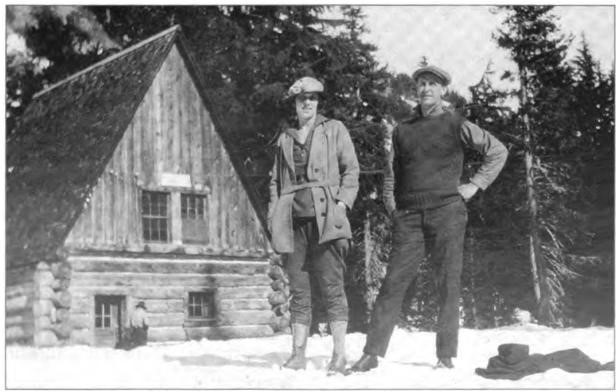
In 1920 Harry entered the investment banking business, starting at Peirce, Fair & Co., an early West Coast venture capital group, owned by Harry Fair and centered in San Francisco. There he met his second wife, Beatrice Joyce Birbeck, who was employed by the same company and was three years Harry’s junior. Harry and Joyce courted for several months and then were married on 14 June 1923 at her mother’s home in Piedmont, California. Roy Shurtleff was best man and Joyce’s sister, Dorothy Birbeck, was maid of honor. They went to a cabin in the snow at Crater Lake, Oregon, for their honeymoon.
Beatrice Joyce Birbeck and Her Ancestors. Born in Moosejaw, Saskatchewan, Canada, on 9 December 1892, Joyce was the second child and oldest daughter of a family of seven children. Her father, Thomas Edson Birbeck, was of English heritage, an Oxford graduate and a civil engineer, and her mother was Frances Vivian Welsh.
Thomas Edson, born and raised in England, lost his mother at an early age. His father remarried and his second wife was a woman with two sons who did not like Thomas and treated him badly. So at about the age of 11, Thomas ran away from home and went to sea. Returning home several years later, he found his stepmother had turned his father against him and he had been disowned.
Thomas turned to his uncle, Sir William Birbeck, who took him in as his own. Sir William, an engineer, had been knighted by Queen Victoria in recognition of his having established England’s first vocational school to train young men in mechanical and technical studies. He is memorialized at Birbeck College of the University of London.
Sir William sent his nephew, to Oxford from which he graduated with a degree in engineering.
Thomas Edson then immigrated to Canada, where he met and married Frances Vivian Welsh. “Fanny” had also emigrated from England to Alberta province. Born in Liverpool, she was the daughter of a banker who had joined the flood of Englishmen who took English financial institutions and ways of business to Brazil in the mid-1800s. He moved his wife and children to Rio de Janeiro, where he subsequently died of yellow fever in 1870. His wife, who had returned to England with her several youngsters to await the birth of another child, had to depend for assistance upon her relatives—churchmen of modest means. As young men, her two oldest sons immigrated to Canada, homesteaded, and, as soon as they could, brought their mother and the younger children, including Frances Vivian, over to join them in Alberta.
Following their marriage, Tom Birbeck and Fanny Welsh lived in Canada for a number of years. It was there that their four boys and three girls (including Joyce) were born. During this time he worked for the Canadian Pacific Railroad, and was subsequently asked by the government of Mexico to assist in the building of the El Pacifico Railroad. He accepted and moved his entire family to Mexico City. There they became popular members of the international community. Joyce’s younger sister, Edith Allen recalls: “We used to go to all the parties at the embassies. When we walked into the room, three young girls with long blonde curls, we became the center of attention.” Joyce, then in her early teens, was a beautiful young girl and was particularly popular, sought out by the sons of the foreign colony and Mexican society.
To travel the line as work progressed, Tom Birbeck had a beautifully appointed personal railroad car. Occasionally he permitted members of the family to accompany him, and one day, while daughters Joyce and Dorothy were with him, they learned that Pancho Villa and his men planned to ambush the train. Birbeck and his daughters left the train to take refuge in a ravine. Pancho Villa did attack the car, ransacking and vandalizing it thoroughly, but the Birbeck family was undiscovered.
Completing his work on the railway, as the political climate worsened and revolution seemed near, Thomas Birbeck left Mexico and moved his family to Virginia. Here Joyce was enrolled in a young ladies’ finishing school to become polished in music and dancing, manners, and conversation, in the expectation that her future would be that of the typical genteel southern woman. But everything changed when Joyce was in her late teens. Her father left his wife and seven children, and headed West to seek a better living. When promised letters and funds failed to arrive, one of the older sons left home to trace his father’s path and finally located him in California. Fanny and her children then moved to California, rejoining Thomas Birbeck and settling in Alameda. Subsequently, however, Tom Birbeck fell in love with another woman and abandoned his family to be with her. Joyce was so distraught with her father that she later took every photograph of him that she could find and destroyed them all.
Joyce was an attractive and talented young woman with an exceptional singing voice. She had sung in the San Francisco Opera as the second lead in Madame Butterfly. Her talent brought her to the attention of Madam Amelita Galli-Curci, a world-famous opera star, who had offered to be her sponsor and teacher. But by that time, the fatherless family needed income, as there were still young children at home. Since Joyce and the older of her brothers were the family support, she did not feel that she could take the opportunity for a vocal career. Instead she concentrated her efforts on business. Her fresh, blonde appeal and her talent brought her further notice when at World War I bond rallies, she broke sales records. It was during this time that Joyce and Harry met and married on 14 June 1923.
Harry would later tell his daughters that he was attracted to Joyce’s trim ankles, regal carriage, lovely face and strawberry-blonde hair. She also was tall for her generation (five feet, seven inches), shapely and athletic. Her first job in California had been as an athletic director in Oakland’s Mosswood Park. In the years ahead, her particular joy was in creating a lovely home for her husband and family. She took a special interest in her gardens and loved to arrange flowers artistically. She was an accomplished hostess and, as long as her health permitted, she took real pleasure in welcoming their friends and business associates to their home. Joyce was a well-read and well-educated woman with a bright mind and an articulate manner. She was always concerned about others less fortunate and, especially during the Depression years of the 1930s, would quietly assist when she became aware of a need.
Even though she was very ill during the years of World War II, she had the courage and devotion to Harry to be willing to sell their home and move their household with him as his army assignment required. In the last 15 years of her life she was bedridden much of the time.
Joyce returned to Seattle with her family in the spring of 1945 and she passed away in October 1948 of heart failure. Severe malaria, which she had as a child in Mexico, had left her vulnerable to hepatitis, liver failure, and arthritis. She had endured many years of pain, twice been near death, and fought her way back. As her daughter Betty said, “She had a great determination, and strength of character, some vanity, and ‘a lot of class’.”
Harry and Joyce’s first child, Elizabeth Ann Lawton, was born on 25 October 1924 in Oakland, California.
Harry found his work at Peirce, Fair & Co. to be an excellent match for his talents. He moved upward in the firm, and was soon named sales manager. Ray Swanson, his son-in-law, recalls:
Harry did a phenomenal job selling for Peirce, Fair. Before he sold any securities, he researched each one carefully and conscientiously, so that when the Depression hit, many of the firms he had recommended survived. He used to sell in the San Joaquin Valley, and on up into Redding. He’d play cards until late at night with his salesman friends from competing investment companies. Then he’d get up early in the morning, make sales to all the interested merchant investors, then having cleaned out all the money in that town, he’d move on to the next one while his competitors were still asleep. He had a knack for that.
Harry’s first major successes in his new position was the Caterpillar tractor stock offering. Harry Fair conceived and developed the 1925 merger of the C. L. Best Tractor Co. of San Leandro, California, with the Holt Manufacturing Co. of Stockton, California, and Peoria, Illinois. Both companies were pioneer manufacturers of traction engines, crawler tractors, large grain harvesters, combines, and the like. According to Don Lawton, “Harry Fair, who was on a trip in Europe at the time of the Caterpillar offering, asked Harry Lawton to set aside some of the stock for him if it looked promising. Harry set aside a big block and it turned out to be a real winner. It later became worth millions of dollars for Harry Fair.” Harry also encouraged his brother, Don, to buy Caterpillar stock. The $5,000 Don invested in 1925 had more than doubled in value by 1937, allowing him to buy a beautiful home on Parkside Drive, where he and his wife, Billie, lived for the rest of their lives. Harry Fair was chairman of the board of Caterpillar until the mid-1950s. In 1987 Caterpillar was the acknowledged world leader in crawler tractors and heavy equipment, with $7 billion annual sales.
In 1925 Harry Lawton was named Peirce, Fair’s Northwest regional manager and vice president. This meant a move for him and his family to Seattle, Washington.
Harry as a Young Man. After Harry married Joyce, settled into his job, and started to raise a family, a new side of his character and personality began to emerge. While he never lost his love of fun, laughter, camaraderie, good fellowship, friends, and adventure, much (but never quite all) of the mischievous side of his personality was left behind in youth. The enjoyment he had once found in being a good-natured “bad boy” gradually disappeared. Increasingly he cultivated the more serious and respectable sides of his character, such as civic responsibility and leadership.
Not only did he become more willing to conform to society’s standards of social behavior, but he became a fine example of many of those standards, indeed a model citizen. His sense of family, personal loyalty, and uncompromising integrity, values already well developed in his youth (he attributed this largely to his mother), grew stronger. Yet he never took himself too seriously, and never lost the common touch or his special brand of irreverence and humor. To the end, he was a man of action, a true individual and a real character, with a multitude of friends. A few quotes from those who knew Harry well help round out our picture of him during this time of transition from youth to adulthood, and during his early adult years.
Don Lawton: “Harry was just a lot of fun. Everybody had the greatest respect for him, and he had friends everywhere, more friends than you could shake a stick at. There was nothing in his past that ever caused anybody any trouble. Harry was in on everything, very interesting and clean cut. He was a man’s man, always very popular with the fellows. He was also his own man, a loner at times, a daredevil, and a big spender. He never took himself too seriously.”
Mardy Peet Love recalls a little of the remnants from his earlier days.
From my grammar school days (1935) on, 1 always remember Harry as blowing into town. We’d say, “Here comes our wild, drinking uncle.” He was always fun, and 1 liked him. Several times he’d do things with me like say, “Well now let’s see, what’s this under your pillow?” And he’d pull out a $10 bill. Or, “C’mon, let’s take in a show.” My mother was enough of a prude that it bothered her when he used words that were a little off color, or made good natured comments about Auntie Billie’s “good boobs.” She’d say, “O000h Harry!” He loved to shock people like that. 1 also remember how he loved Joyce so much.
Nancy Shurtleff Miller: “You just never knew what Harry was going to come up with next, whether it would be a four-letter word or what. Like Uncle Don, he always had that twinkle in his eye, and he would tap a staccato rhythm on the table with his fingers. He was just a marvelous husband to Joyce. He was absolutely devoted to her, which was something I didn’t expect from him. Our family used to visit Harry and Joyce in Washington at their nice home on the water. Joyce was in bed.”
Ray Swanson, his daughter Betty’s husband: “I knew Harry for 29 years. He was a man of integrity. A man of his word. His primary motivation was not money or accumulation of wealth. He enjoyed helping others, both privately and publicly. He looked for the good in people. He rarely spoke unkindly about another person. When he introduced people, he was genuine and generous in describing the good things about them. He had an unusual, God-given ability to put people, ideas, money and power together to accomplish a greater result for the benefit of others. He was a handsome, vigorous man, one of the real movers in Seattle. I felt he had a touch of the commanding personality of General Douglas MacArthur. He liked to tell stories, and he had had such an interesting life that there was little need for him to stretch the truth. His adventures and accomplishments were more interesting than the fantasies of many men.”
Chuck Parker, his daughter Jean’s husband: “For me, Harry Lawton was one of the primary influences of my life. I knew him as a caring family man, supportive of his friends in their time of need, successful in both his civilian and military careers. Tune and again he demonstrated his ability to go to the heart of the matter and solve a problem. To me he was a man’s man who, from the days of his youth, never lost that Tom Sawyer and Huck Finn adventuresome spirit.”
Jean Lawton Parker, his daughter ‘Dad was an original, a charmer, a character, and a very charismatic man. When he entered a room, he just automatically became the focus of attention. He was one of those men who had the strength of his convictions. I admired the fact that when he felt something needed to be done, he did not waiver as to whether it was going to be acceptable or not in the eyes of others. He had the moral fiber to act on principle, even if it wasn’t the popular thing to do.”
Bimelyn Seymour Piper: “Harry was very outgoing and always willing to help people, especially those in need. He was extremely kind to others.”
Early Years in Seattle (1925-41). Harry was the only one of the Lawton children to live most of his life away from the Bay Area. Because of this, and because of his modesty, many of his relatives and descendants were not well aware of his many important activities and honors in the following years. We hope this chapter will help to set the record straight.
Seattle was to be Harry’s home base for more than 30 years. He quickly identified with the vitality and opportunity of the Pacific Northwest and became involved in many aspects of its civic and business growth.
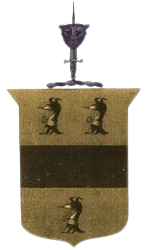
One of the family’s first projects was to build a suitable home. They chose a site in Seattle overlooking Lake Washington. The Lawton family crest above the front door of a lovely Tudor house at 3146 Lakewood Avenue remains a permanent testimony to its original owners. While living at this home in Seattle, their second daughter, Jean Marie Lawton, was born on 3 September 1927.
A sense of Harry’s involvement during these years is conveyed in many pictures and newspaper articles:
Seattle Daily Times, 4 May 1927 “… the listing committee of the Seattle Bond and Stock Exchange, under the chairmanship of Harry R. Lawton, Northwest manager of Peirce, Fair & Co., announces the completion of a code of requirements for securities to be listed on the local exchange.”
On 3 October 1927, titled Seattle Post Intelligence article “Praise for Convention Success is Showered” says, “Let’s start with Harry R. Lawton, Vice President of Peirce, Fair & Co” and praises his chairmanship of a committee for a gathering of 700 bankers and investment bankers and their wives “who came for the first time in a body to see the Northwest.”
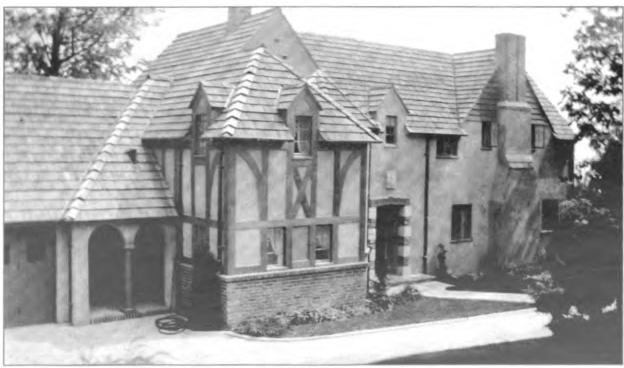
Concurrent with Harry’s increasing civic and business involvement was a growing role in Seattle social activities. The new Lakewood home was the setting for large parties. Then a sudden transfer for Harry, back to the San Francisco office of Peirce, Fair & Co. made an unforgettable change in their lives. Joyce’s beloved “dream house” had no sooner been sold than the company’s plans were reversed and Harry was asked to remain as head of the Seattle office. House hunting began, and this time they chose to buy a country home in Medina on a large site fronting on Lake Washington’s east side, with a view across to Seattle.
The home sat on a high bluff with a winding path leading down through woods to a sandy beach and dock. This home too hosted many parties. Colored lanterns often swayed in the trees that led to the picnic tables and bars set up near the beach. Seattle friends arrived in their cruisers to dock right at the party. Many times internationally famous artists performing in Seattle were guests at the home. Betty and Jean remember hearing their mother sing duets with such musical greats as Lawrence Tibbett and Lauritz Melchior.
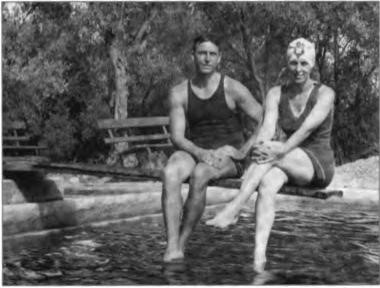
Harry took full advantage of living on the lake, perfecting his back flip dive, enjoying his cabin cruiser, and rowing to his own rousing rendition of the World War I ditty “Good Morning Mr. Zip Zip Zip.” His swimming feats included a successful two-mile crossing of Lake Washington and a dive from the Lake Washington ferryboat to rescue the victim of a boating accident. Even the 10 September 1929 Seattle Daily Times business section featured him in swimsuit, under the headline “Who’s Who and Where.” The article read, “Harry R. Lawton—The vice president of Peirce, Fair & Co., which recently completed financing of the Puget Sound Pulp & Timber Company, is an enthusiast about outdoor sports and was caught by the photographer while resting between swims in Lake Washington.”
Throughout his later years in Seattle, Harry continued to be a “no-frills, high-energy person.”
As his daughter Jean recalls:
He would often eat his meals standing up. At our Medina home, his favorite way to consume a meal, unless it was served in the formal dining room, was to take it directly off the stove and eat standing. He never had a lot of patience with the niceties just for their sake.
There was also a little of this when we would visit people. One of his favorite pastimes on Sundays was to take long walks. My sister and 1 were usually with him. We would drop in on friends, and he would stand the whole time. After 10 minutes he was ready to leave and off we’d go. Many of his friends used to say, “You always have to catch Harry on the wing.”
In 1933 Harry’s cabin cruiser, which he was then using to commute across Lake Washington from the Medina home to his business in Seattle, burned one afternoon as he was returning home. The boat had just been serviced and the motor overhauled, but a workman had inadvertently left the cap off the gas tank. Harry was in his swim trunks and at the wheel outside and above deck when accumulated fumes suddenly exploded. He was blown into the air. If he had been at the wheel inside the cabin, he would have been caught by the ball of fire. Betty and Jean, who often watched his homecoming from their viewpoint on the large porch of their home that overlooked the lake, saw the ferry and other boats converging on the burning boat in mid-lake. Harry was elated when, several days later, the Coast Guard retrieved a floating kapok bunk mattress carrying his wallet and treasured gold pocket watch from his father, still riding there, just where he had left them when he changed from his suit into swim trunks.
As Peirce, Fair’s Northwest manager, Harry, in association with Swedish-born Ossian Anderson and other entrepreneurs, was instrumental in forming the Puget Sound Pulp & Timber Co. of Bellingham in 1929. A merger of Fidalgo Pulp Manufacturing Co. of Anacortes, San Juan Pulp Manufacturing Co. of Bellingham, and of a modern pulp mill under construction in Everett, Washington, it showed considerable foresight and was an important step in the economy of the state of Washington, and its timber, logging, sawmill, and pulp industries. Harry was as proud of his role in this deal (in part because he played a big role) as in the Caterpillar offering four years earlier. He served as one of the executives and the secretary of the new company.
In 1932 Peirce, Fair & Co. went out of business, a victim of the Depression and the growing amount of time Harry Fair was spending with Caterpillar. Harry had worked with that firm for 12 years.
From 1932 to 1934 Harry worked as resident manager for Russell Miller & Co., a Seattle stock brokerage company. From 1934 to 1936 he was a partner in Lanser, Agnew & Lawton Inc. in Seattle. Harry handled business coastwide and in Alaska.
As these changes were being made, Harry was also becoming more and more deeply involved in Seattle civic activities and concerns; he continued to expand his circle of contacts and friends. One of Harry’s most admirable traits was that he made close friends with all kinds of people. He was as much at home with financiers and the captains of industry, as with common working men. Because he understood and respected both labor and management, he later became an excellent arbitrator. After World War II, General Roy Hunt (a former Fiji at Cal, who had dated Harry’s sister, Hazle) stopped by to see Harry in Seattle. He later told Don Lawton: “When Harry and I walked down the streets of Seattle, I have never in my life heard so many people holler out to a friend. From doorman to the executives, it was ‘Hi, Harry! How’s it going, Harry?’ Even the bootblack came over and shook hands as we walked past.”
During this time, militant labor was gathering strength throughout America. Along the West Coast, the longshoremen were organizing and posing a potential threat to strangle the economic life of the coastal ports. Warring labor factions were represented by Harry Bridges, then in the International Longshoremen’s Association, which had strong Communist sympathies, and Dave Beck of the International Brotherhood of Teamsters, a more moderate influence. Harry, in spite of threats to himself and family, worked aggressively with Dave Beck to facilitate constructive change and defuse the potentially explosive labor situation. His daughters recall, “Dad was genuinely concerned for our safety. There was the threat of kidnapping. His particular worry for mother was that the family car might be booby-trapped.”
It was in 1933 that the mayor of Seattle and other civic leaders and local veterans of World War I, through the power of their American Legion posts, wanted to confront the labor agitators. Harry was elected commander of Seattle Post #1, of the American Legion. The other candidate was “too timid in these chaotic times,” as Harry wrote on a memo. Son-in-law Ray Swanson later noted: “Harry was not your typical legionnaire. He was more a mover and a shaker.” As he would soon demonstrate.
A 1933 Seattle Times article headed “Lawton Named Commander of Seattle Post” read: Accepting his election in a spirit of peace-time service to his city, Harry R. Lawton. . . commented today that: “Never before has there been presented such an opportunity, if not necessity, for the American Legion to serve in peace as well as war . . . our problems are growing more complex and more ominous. Our responsibilities, therefore, are growing greater.”
A list of the Citizens General Strike Committee appointed by Mayor Charles. L. Smith included Harry Lawton. Harry described this committee as taking “drastic civic action to halt ruthless labor effrontery… to offset shooting and labor strife on Seattle streets.” Harry was appointed chairman of the committee’s “Action Group” and he originated the idea of the White Shirt Parade. He sent out an announcement through the newspapers inviting everyone who abhorred dictatorships and labor extremism to turn out for a big parade on the Fourth of July, 1933, wearing a white shirt. These were times in Europe when Hitler had his Brown Shirts in Nazi Germany and Mussolini had his Black Shirts in Fascist Italy, both symbols of right-wing totalitarian regimes. A news photo dated 4 July 1933 shows some of the more than 1,000 white-shirted men, marching four abreast on a downtown Seattle street, for as far as the camera could see, to present a united and visible statement of their concern for what was happening in their city. The White Shirt Parade was a huge success, and the galvanizing force in the campaign to return order to the city and its waterfront.
Throughout his time in Seattle, Harry was active in the top civic and social clubs that contributed significantly to the life of the city. An October 1934 news article and picture announced his election as an officer of the prestigious Rainier Club. He was a charter member of the Washington Athletic Club and its even more select 101 Club, made up of 101 of Seattle’s most influential men. His chairmanship of a 101 Club Bankers’ luncheon, pictured in a 3 September 1935 Seattle Daily Times photo, shows him holding a rubber dollar, demonstrating the Stretch-the-Dollar theme of the meeting. Across that article Harry had written “Bankers were in the Doldrums… gave ’em a Shot in the Arm.”
In the mid-1930s, Joyce’s health started to fail. Her daughters don’t know what she had when her illness began. Her years of illness included fainting and dizzy spells, a number of problems with arthritis, hepatitis and liver problems, eye hemorrhages, and partial blindness by 1944.
Harry never handled any of the domestic activities such as cleaning, cooking, or bathing the children. When the girls were young there was always a children’s nurse, first Josephine, then Irene. And throughout all of Joyce’s married life, after arriving in Seattle, there was always a cook/housekeeper, and usually a gardener.
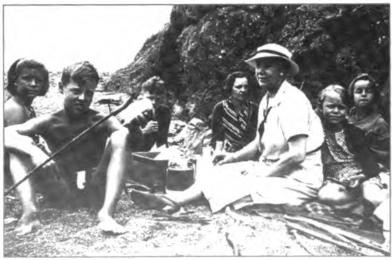
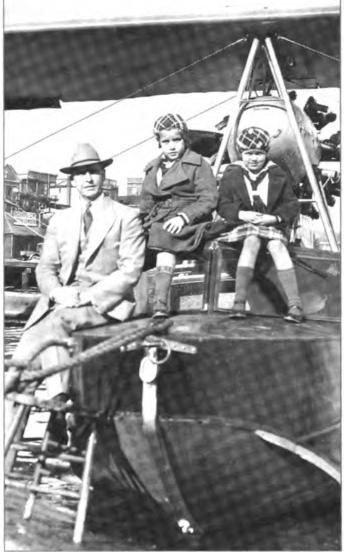
Harry tried to spend a great deal of time with Betty and Jean. He took them walking, driving with him on business trips, even overnights when he was calling on clients. He dreamed up wonderful all-day outings, such as to Ye Olde Curiosity Shoppe, to take airplane rides, to go to the tops of tall buildings—all special to children.
Betty recalls that during her childhood bouts with bronchitis, it was her father who heard her call out at night and came to give her long, soothing backrubs that calmed her fears. He gave long, patient hours to this kind of caring.
Don Lawton recalls: “He and his daughters always had a great mutual feeling toward one another.”
In 1936, Lanser, Agnew & Lawton was forced to acquire control and take over active management of Columbia Brewery Inc. in Tacoma, Washington. As Don Lawton recalls the story:
Harry was a real go getter, bringing in all kinds of business to his investment company. Many of the stock offerings were done jointly with other investment banking companies. He once told me, “We were sick and tired of handing out all the big deals we would get to our competitors. The next time a good big deal comes along, WC decided to grab it pr ourselves and make some money.” Well, Columbia Brewery, maker of the famous Alt Heolelberg beer, cairn’ ahmg and they grabbed it. If was indeed a big deal, They were doing very well, on top of the world. Then all of a sudden the company went bankrupt. Harry woke up one morning and realized that he and his partners were in the brewing business. So Harry became the brewery’s vice president in charge of sales and Mr. Lanser was its president. Searching out new markets, Harry traveled repeatedly to Alaska, where he got their beer in all the army camps.
Harry was vice president of Columbia Brewery from 1936 to 1942. Part of this time he was also secretary of the corporation and in charge of public and labor relations. In this latter capacity, he did everything he could to keep the Columbia workers from having to be laid off—including making their payroll checks out of his personal funds on more than one occasion.
On another occasion Dave Beck’s Teamsters Union struck Harry’s brewery. As Don Lawton recalls the story:
Harry said to his men, “To hell with that bunch. Go out and get 50 pick axe handles and we’ll fight ’em off.” Well, Harry’s group all locked themselves in the brewery. Dave Beck laid siege to the plant and eventually starved them out. Harry had to give up. Then Beck said to Harry, “Anyone who can put up the fight that you did to hold his brewery is the man I want as my vice president in charge of negotiations for my union up here.” Harry replied, “You can take your goddamned union and you know what you can do with it. I’ll be a friend of yours, but I don’t want any part of that union.” Later on, Beck and Harry became friends. Beck admired Harry a great deal.
Harry wrote a note in the Proceedings of the Washington State Federation of Labor in 1939: “Dave Beck was the strongest force in labor at the time; Board of Regents of the University of Washington and constructive civic leader and supporter of free enterprise principles.” Harry had helped Beck secure the board of regents appointment.
Jean Lawton Parker adds, “Though not social friends, dad and Dave Beck did respect one another.” During the labor turmoil of the 1930s they were often adversaries, but as time passed they worked together many, many times to achieve civic and social goals. Harry felt that Beck had done much that was very good for Seattle and the state. When Beck was indicted and sent to jail for corrupt union leadership, Harry, who felt Beck had been “setup” by a rival union faction, continued to be supportive and was upset that so many who had previously sought Dave Beck’s favor and friendship now quickly turned against him.
Harry’s trips to Alaska marketing beer to the Eskimos brought in not only a great deal of new business for Columbia Brewery but also a number of close calls. A lengthy article in The Ketchikan Chronicle of 11 June 1937 described his just-completed 7,000 mile Alaskan tour. Headlined “Contact Flying Thrills. Tacoman Brewery Head, Tells of Following Dog Trails in Plane,” it also described how a storm forced the plane to land on the ice cap and Harry ended up spending the night in an Eskimo village.
Another Alaskan business trip which he made by ship, taking Joyce with him, yields a typical Harry story. On a postcard to daughter Jean, showing the SS Yukon in the Gulf of Alaska in front of the Columbia Glacier, Harry wrote, “Famous swimming hole and the SS Yukon—Capt. Glasscock—with bridge as springboard for diving purposes. This is ship Joyce and I were on from Valdez to Seward with Tacoma Chamber of Commerce.” Harry, whose diving skills had been questioned by the ship’s captain (over dinner and a few drinks), accepted the challenge. He dove from the ship’s bridge into the ice-filled waters then climbed a Jacob’s ladder back up onto the ship. As he reached the deck, the taciturn captain conceded, “Ya got da prunes!”
On this same occasion from the SS Yukon or another (when he dove off the top of a warehouse on a wharf in Alaska), Harry hit a chunk of ice floating just below the surface and injured his shoulder.

Harry returned to Alaska a number of times. His trip on 14 June 1941 as chairman of the Alaska Development Committee of the Tacoma Chamber of Commerce was covered by the Fairbanks Daily News-Miner. A large, front-page story on June 17 described him as a goodwill ambassador. Similar coverage and a picture was carried by the Anchorage Daily Times of June 21st.
Harry’s service with the American Legion had been ongoing and in August 1938 he was elected state commander of the American Legion for 1 year; this was the highest position in the state of Washington. A warm letter from Ray Atteberry, pastor of Grace Methodist Episcopal Church, Seattle, dated 22 August 1938, read:
I want you to know how honestly I rejoice in your election, Harry, for I have had complete faith both in your intelligence and “honest-to-God” humane integrity since I first came to know you in the Legion. I therefore congratulate the Legion in first of all electing a natural gentleman to this office, a gentleman by nature as well as by breeding. And I further congratulate it on selecting one who had added to a gracious endowment of mind and heart the refinement of formal education and wide years of experience with his fellow men in business life, so that in the background and foreground of the mind he is big enough and sane enough to be the leader of Washington Veterans.
By now Harry was involved in Tacoma’s business and civic life and he saw something that needed changing. Black soldiers from nearby Fort Lewis had no place to go when they received passes to go into town. They could not use the “white” USO canteen available to other soldiers, so Harry led a successful drive to get them their own USO.
Through his contact with General Walter Sweeney, commanding officer of Fort Lewis, he worked closely with the general’s aide, Major Mark Wayne Clark (later to become General Mark Clark of World War II fame), who became a lifelong personal friend.
Shortly after Harry became state commander of the American Legion, a military parade at Fort Lewis celebrated Seattle Day. Harry and Governor Arthur Langlie were the guests of honor who reviewed the troops with General Sweeney that day. The troops in review were the 15th Infantry, just back from duty in China. In Harry’s words, “Lt. Col. Ike Eisenhower with the 15th saluted us as his outfit passed in review, eyes right.” Harry had just been rendered the honor of a salute from a future president of the United States. Daughters Betty and Jean, present that day, clearly recalled the parade and also visiting with the Clark family at their Fort Lewis quarters.
While American Legion state commander, Harry was constantly on call for leadership, speeches, and travel throughout the state. His contacts with officials of the Washington state government became frequent. The American Legion was at that time deemed the strong and responsible voice of a very large number of citizen veterans. Harry further extended his circle of friends and acquaintances as he met governors, mayors and other officials throughout the West. His contacts with the labor movement were kept up as well. In July 1939 he was a speaker at the Washington State Federation of Labor’s Stith Annual Convention. In notes he wrote on the program, Harry said, “As State Commander of the American Legion (Washington), I was the first Legionnaire (Vet) to face any major labor organization in Centralia (a big lumber and labor center) since the I.W.W. (Wobblies) shot and killed several legionnaires from ambush while leading their Fourth of July Parade 10-15 years previously, with Dave Beck’s support.”
Culminating his effective term as state commander was the push to draft Harry as the Republican candidate for governor in the next election. He was now one of the foremost civic leaders in Seattle. To quote the Spokane Daily Chronicle column of 21 September 1939 headed “Political Parade,” ‘The report’s going the rounds that Harry Lawton of Seattle, retiring state commander of the American Legion, may be a candidate for the Republican nomination for governor next year. G.O.P. leaders say the talk about Lawton emanates from almost all sections of the state. Incidentally, Lawton has made no comment, one way or another.” In fact, Harry felt compelled to withdraw himself from consideration as a candidate. Joyce’s health had been failing steadily, so personal and financial considerations made a run for office impossible.
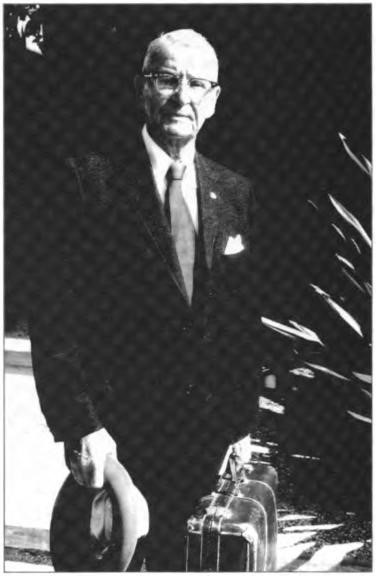
Through the years Harry had quietly reached out to a number of people with kindness and personal acts of charity. One such person was Pat Whalen, a Seattle policeman, who had been put in jail for what Harry felt was doing his duty. Harry helped his wife and family over an extended period of time. He wrote to Harry in January 1940:
I am home at last, believe me it is a grand feeling . . . I want to do something to show you how much I appreciate all you have done for me. Isn’t there something I can do for you, Harry. Anything, any damn thing in the world I can do for you, just ask and it will be done.
During these same years Harry was working with the Seattle Urban League and on Seattle Police Department committees. As well as labor problems, Seattle was faced with inequities and some violence in its minority population, a civic concern that Harry worked to alleviate.
World War II (1941-44). The United States’ entry into World War II in December 1941 meant major changes for Harry and his family. The patriotic concern he had always felt for his country was now rekindled. For some time Harry had been commuting daily the 45 miles between the Seattle area and Tacoma. But with the advent of war, there was the possibility of a gasoline shortage. So the family home, in Medina, on Lake Washington was sold and early in 1942 a house was rented at 1814 West Boulevard on Day Island, just outside of Tacoma. It was now wartime, and Harry was anxious to find a way to serve his country again. As his daughters Jean and Betty noted, “Intensely patriotic, he wanted to join up for the same reason an old fire horse wants to run when the bell rings.” But he hesitated to leave home because of his ailing and bedridden wife, who was attended by a full-time nurse. Joyce, however, understanding the call on Harry’s higher loyalties, said selflessly, “Harry, you’re going to do it!” In the years that followed, she made great sacrifices to travel with him wherever he was assigned to go. These years would also be ones of unrelenting pressure and personal financial sacrifice for Harry.
Harry’s original partners in Columbia Brewery, Lanser and Agnew, had sometime earlier sold their interests to others. Harry left the business on an extended leave of absence, relying on the new partners to care for his interests. They completely failed to do so, as he would learn upon his return from service.
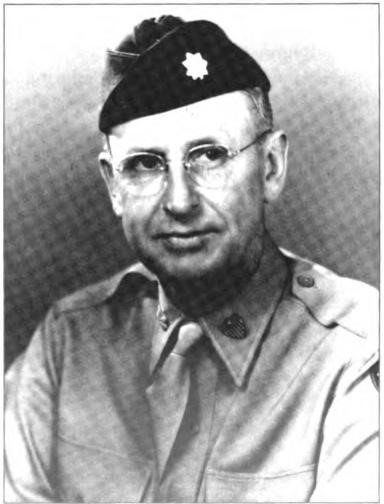
In July 1942 he was appointed a lieutenant colonel in the Adjutant General’s Department. Because of his age, 53, he had flown back to Washington, DC, to take a final extensive physical exam, and to waive his rights to insurance and other military benefits. He was first briefly assigned to the Presidio in San Francisco, then took up his duties as head of Officer Procurement for the 9th Service Command located at Fort Douglas, Salt Lake City, Utah. From August to November 1942 his family (Joyce was bedridden) and Joyce’s nurse stayed with his sister, Winnie Lawton Seymour, at her home on Webster Street in Berkeley. From there they moved to Salt Lake City.
Harry was a perfect choice for his assignment, in part because of his many important friends and contacts, including those in the investment and financial industries, all over the western states. The job called for a man who could tap a lot of talent and influence. In a letter he wrote to Governor Langlie of Washington state, he explained the role of Officer Procurement as meeting “the need of the Army for men qualified for Military Government and other special duties that could not be performed by men already in the armed forces.” He was looking for the best of civilian medical, scientific, business, and government talent to recruit.
The Ninth Service Command encompassed nine western states plus Hawaii and Alaska. Harry’s approach to “mining” this far flung area was to form a Governors’ Committee, headed by his friend, Earl Warren, then governor of California. Daughter Jean recalls a Sunday morning when she sat in her father’s office in Fort Douglas as he phoned each of the 11 governors so that they would bring their influence to bear on key men throughout their areas. The governors met with Harry, at their own expense, at the Westward Ho Hotel in Phoenix, Arizona, and pledged their support for the program. This highly innovative approach, which cut through government red tape, yielded outstanding results. Harry’s commanding officer, furious that he had gone “outside channels,” threatened a court martial. This was completely short-circuited by a call from the Commanding General of Officer Procurement in the Pentagon, Washington, DC, commending the record-breaking performance of the Ninth Service Command and requesting that Lt. Col. Lawton be a keynote speaker and share how he achieved such results. Exonerated, Harry emerged as a hero.
In 1944, the Officer Procurement needs now largely met, Harry was assigned as Chief of WAC (Women’s Army Corps) Recruiting, Ninth Service Command. Working with him was Billy McDuffie, who later said (as Lawton Shurtleff recalls): “I thought I was the smoothest guy in town when it came to recruiting WACS, but Harry Lawton could drink me under the table and steal the potential women recruits away from me hands down. Harry was the slickest thing that walked!” But Harry’s daughters feel this is misleading. They said, “Dad enjoyed people and good times, but not a the expense of the job to be done or his dedication to family.”
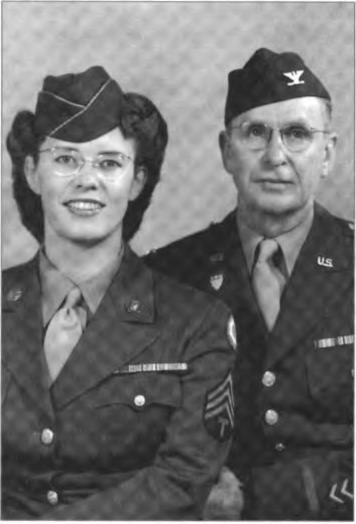
A sidelight to this period is that on Betty’s 20th birthday in October, Harry swore his daughter, into the Women’s Army Corps. In January 1945, Harry was discharged from military service, by that time a full colonel. He had served to the full in his second World War.
Later Years in Seattle (1945-56). Returning to Seattle in January 1945, I larrv, Joyce, her nurse, and Jean first rented a friend’s house at 1626 39th Avenue, a year later buying a home at 233 37th N.
During the war, there had been a successful U.S. boycott of German beers. Many Americans, not realizing that Alt Heidelberg, Columbia Brewery’s flagship brand, was 100 percent American, stopped buying it. This almost drove the company out of business. During this difficult time, the partners brought a new financier into the business and practices changed. Upon his return, Harry found to his bitter disappointment that his partners at Columbia Brewery had actively undermined his interests. As a matter of principle and at considerable personal cost, he elected not to reassociate himself with Columbia Brewery.
Instead, he became vice president and assistant to the president of Sick’s Brewing and Malting Co. (at 3100 Airport Way), whose famous brand was Rainier. Harry went to work in the areas of labor, public relations, and arbitration. Thus, he almost immediately reentered Seattle civic life. Emil G. Sick, a very wealthy and powerful man in Seattle, recognized that Harry’s experience in labor relations and public relations would be invaluable to his firm. Harry worked at this job until 1956. Ray Swanson recalls the following story:
Harry could hobnob at ease with the rich and powerful, and at the same time be liked and respected by working people. When congressman Henry (Scoop) Jackson was campaigning for the U.S. Senate in 1952, he visited Sick’s Seattle Brewery. He went out into the plant to meet the men and shake their hands. Jackson even climbed down into a huge beer vat to shake hands with the men cleaning it. To Harry Lawton, that humbling action marked Jackson as a good man. Jackson’s opponent didn’t get past the executive office and the tasting room.
A July 1945 newspaper article was bannered “Colonel Lawton to Head July 4 Festival Here” and Harry, as general chairman of the Seattle 4th Observance, created a spectacular celebration, featuring Admiral Mark Mitscher, hero of the Pacific Fleet, as guest of honor. Letters of appreciation from Admiral Mitscher and from the governor of Washington, Mon Wallgren, described the event as exceedingly interesting and well handled.
Harry’s reinvolvement in the American Legion prompted nomination as national vice commander. Once again he was forced to decline an opportunity. A newspaper article on 11 May 1946 said of his withdrawal, “Additional responsibilities and the question of time, due to a change of circumstances, were the compelling factors.” Wife Joyce Lawton was now critically ill and required extended hospitalization.
Of Harry’s many activities in 1947, a major commitment was to the fund-raising to finish rebuilding the huge St. Mark’s Episcopal Cathedral in Seattle. He apparently saw this project more as a civic than a religious one. As his daughter Jean noted: “I think dad was one of the most Christian men I have ever known, but I don’t think he felt organized religion was crucial to that. He rarely went to church.”
The year 1948 was a momentous one in all aspects of Harry’s life. An April 1948 news clipping wrote of the Washington chapter of the nationwide National Security Committee being activated with the appointment of Colonel Harry R. Lawton, former state commander of the American Legion as State Chairman. (The committee nationwide was headed by a former U.S. Supreme Court justice). The article further mentioned Harry’s old friend, General Mark Clark, attending an initial Seattle meeting and thereafter enjoying a weekend of fishing with Lawton and others.
May of 1948 brought the death of his sister Hazle Shurtleff. Boyhood friend and now California Governor Earl Warren sent the following letter, “Dear Harry: Nina and I were extremely sorry to learn of Hazle’s passing. We want you to know we are thinking of you in your great loss and sending our deepest sympathy. Sincerely, Earl.”
June of that year brought a special challenge. Emil Sick was chairman and Harry was one of four vice-chairmen and the driving force behind Seattle’s Presidential Reception Committee for President Truman’s Visit to Seattle. Approximately 125 of Seattle’s leading citizens and other dignitaries of local, state and national prominence were named to the committees. The resulting visit, and all its activities and entertainment were very well handled. Truman’s Seattle visit was long remembered as the one where he made his famous “If you can’t stand the heat, get out of the kitchen” speech. One person was selected by Truman from his many hosts to receive personal thanks: Harry Lawton. As he later wrote, it “Rated a return personal engagement in Harry’s [Truman’s] private office in the White House, while Jimmy Doolittle and Mossadegh, the P.M. looked on.” Iranian Prime Minister Mohammed Mossadegh was immensely popular with his countrymen. He nationalized the British Petroleum company in 1951, setting off the first postwar oil crisis.
Never one to take himself or others with social or political stature too seriously, Harry recalled the Oval Office meeting when President Truman stepped out of his private washroom, zipped up his pants and extended his hand, as “the time I shook the hand the President pissed with!”
Again, in July 1948, a letter from friend, Governor Warren read, “Dear Harry: Thank you very much for your letter of July 6th. I am happy to be on the ticket with Governor Dewey, and look forward to the campaign. It is quite probable that the itinerary will bring me to Seattle and I shall look forward to seeing you. In the meantime, I want to commend you upon the civic job you did in helping to welcome the President of the United States to Seattle. With best wishes, I am, Sincerely, Earl.” Harry had been one of a small number of friends who Warren invited to join him in his bedroom the night he won the governorship of California by a landslide.
Then came personal loss after a marriage of 25 years filled with much love and sacrifice. Courageous Joyce lost her fight for life after years of illness and hospitalization. She died on 16 October 1948 in a Seattle hospital of heart failure and complications from childhood malaria. To the end, Harry had been unstinting in his loving concern and dedication to her needs. Condolences came from all over the country.
It seems appropriate to note at this point that Harry had been very successful financially over the years in his various businesses. But 15 years of providing the very best in medical and nursing care for his seriously ill wife, in an era when health insurance was not available, had inexorably depleted his financial resources. He always felt that Joyce’s care came first, and he never complained.
In those days, it was considered “good form” to wait for at least six to twelve months after the death of a spouse before remarrying. Though Harry had loved Joyce dearly, he had always preferred to do things his way, paving little heed to convention—as long as no one was hurt. So less than three weeks later, on 5 November 1948, he married Mildred Smith Griffiths. His daughter Jean, who was then president of her Pi Beta Phi sorority at the University of Washington, recalls feeling some embarrassment as condolences overlapped with congratulations. Both Mildred and her deceased husband Mansell P. Griffiths (1889-1945; he had worked at Blyth & Co. as a partner) had been Harry’s longtime close friends. After living for about six months at Mildred’s home at 731 McGilvra Boulevard in Seattle, they purchased a handsome English Tudor home on Mercer Island, an island suburb of Seattle in Lake Washington. Its long green lawns ran down to a dock, again on the water. Harry continued his love of swimming and diving. Son-in-law Chuck recalls watching in astonishment as Harry did his famous back flip into the icy waters of Lake Washington on a cilly day in March.
Harry’s third marriage was not a very happy one, though it lasted for over seven years.
Carrying on, Harry was active in another major event. Among his papers is a telegram from the office of the secretary of defense, Washington, DC, dated July 2, 1949, which reads in part, “Secretary [Louis Al Johnson acknowledges your recent letter of June 16 to assure you that appropriate air coverage will be provided for the dedication of the Seattle-Tacoma Airport on 9 July.” Harry was still, and again, arranging patriotic events!
Throughout Harry’s personal papers are many such communications from persons and offices of state and national prominence, testimony to his activities and successes.
During the 1950s, when Harry was in his 60s, his personal papers and newspaper coverage testify to his continued involvement in local affairs. Among these activities were: Army Advisory Committee, three years; board of trustees, Seattle Chamber of Commerce (1949-52); Golden Gloves Tournament Committee; Urban League of Seattle, chairman of Industrial Relations Committee and then Director; Foundation of Infantile Paralysis Board of Trustees; Governor’s Employ-the-Handicapped Committee chairman; Citizens’ Advisory Committee to Seattle Police Department, Board Member; Community Chest-United Fund, chairman. And, of course, he was chairman of one more Fourth of July Parade festivity in 1955 and recruited General Maxwell Taylor as guest of honor. Harry’s years of public service were well summed up in the words on a citation he received which read as follows, “The Seattle Chamber of Commerce has placed upon its highest honor role of citizenship the name of HARRY R. LAWTON.”
Retirement Years (1956-72). The year 1956 brought three major changes to Harry’s life: A divorce from Mildred in April in Seattle, retirement from business at age 67, and a move from Seattle (after 33 years there) to Los Angeles. Representative of a number of letters that he received thereafter is this one from the executive secretary of the Urban League of Seattle: “Our community has suffered a grievous loss, for I have always felt that you were one of the most successful civic workers in Seattle. I certainly wish to pay tribute to the splendid work that you have performed for the Urban League.” Governor Arthur Langlie wrote on 16 February 1956, expressing his regret at Harry’s departure from his state, saying “We are appreciative of the constructive leadership you have given.”
On 15 June 1956, shortly after he arrived in Los Angeles, Harry and Ilda Lane McGahan, now a friend of many years, were married there. Ilda was the daughter of David Clarence Lane (born in Pennsylvania) and Fannie Harford (born in Illinois). After Ilda’s first husband, Mr. McGahan, had died, she and her sister Helen (who had never married) became inseparable. So Harry’s fourth marriage was a “package deal.” At the time of Harry and Ilda’s marriage they were both 67 years old and living in Beverly Hills on the same street, she at 9528 Olympic Boulevard and he at 9537. Both were renting apartments. They purchased a home at 3035 Strand at Hermosa Beach, California, directly on the oceanfront.
Harry and I would swim out in the ocean and body surf He was a great, strong swimmer. One day the Coast Guard came along and said, “Do you know where you are?” Harry said, “Of course I do. Why?” They said, “Well, you’re way out beyond the safe limit.” Harry replied, “Well, there are no phones out here and there’s nobody to tell me what to do except you fellows, so I guess I’ll just take your advice and swim on back.”
Harry loved the sunbathing, swimming and body-surfing and, as always, made friends quickly. He also saved several people from drowning in the surf. Shortly after Don Lawton retired in 1960, he and Harry Peet and their wives took a trip down to visit Harry, who was in his 70s. As Don recalls:
There were some good years of happy social occasions and travel. One highlight was the November 1963 return to San Francisco for a gala party at the Bohemian Club celebrating the 50th wedding anniversary of George D. and Eleanor Smith, for many years owners of the famous Mark Hopkins Hotel in San Francisco. Harry had been best man at their wedding in 1913.
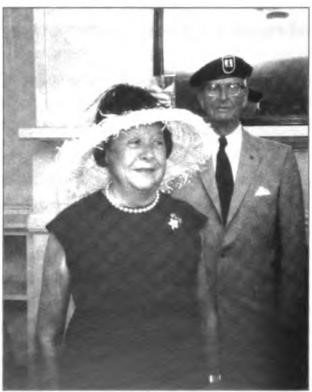
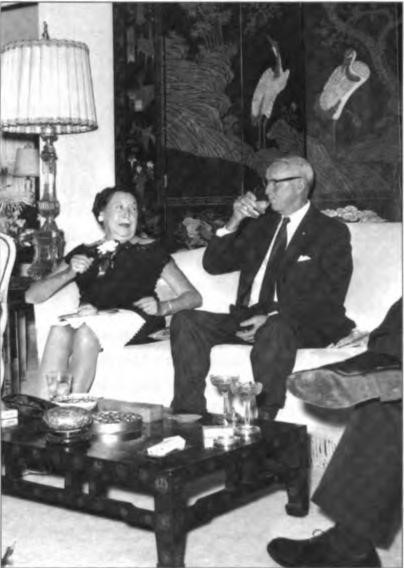
Ilda and Harry at the prestigious Bohemian Club in San Francisco celebrating the 50th anniversary of George and Eleanor Smith. Harry had been best man at their wedding in 1913.
Chuck Parker recalls: “In the summer of 1964 Harry and Ilda flew to North Carolina to visit us at Fort Bragg. They were housed in VIP quarters in the midst of the 82nd Airborne Division. When not with us seeing parades, parachute jumps, and the like, he would walk to the nearest club or Post Exchange and spend hours talking with the soldiers, once again savoring the service life that he always spoke of so fondly. He always emphasized what a great bunch of guys he knew and worked with. Never did he degrade anyone.”
As part of his interest in athletics and exercise, in about 1965 Harry helped to develop an exercycle. Don Lawton later handcrafted many similar machines.
Once Harry went to the hospital for a prostate operation. On either the first or second day, when he felt he had recovered, he walked out with the drainage tubes dangling. He didn’t let little things stop him.
Sometimes at night rowdy kids would go out onto Hermosa Beach and make a racket. One night at three or four o’clock in the morning they were being especially noisy. No-nonsense Harry, who was friends with the local chief of police, took out a 38-caliber police pistol he had and fired it into a row of empty garbage cans, making a horrendous noise. That immediately solved the problem—and made the papers the next morning!
Their life changed in 1968 when Ilda had a stroke and then broke her hip. Harry was again caring for an incapacitated wife. Ray Swanson recalls: “Harry had to care for her around the clock. But he never felt that he was too good to do what had to be done, such as changing the linen like a nurse. He never felt that he was above it.” This took its toll and his health began to fail. Ilda passed away on 17 February 1970 at a hospital in Torrance, California. They had been married for almost 14 years.
Loath to leave the beach he loved, Harry managed to stay until the spring of 1971, when he had to move north, into an apartment in Walnut Creek, California, near his daughters. About seven months later, he moved in with his daughter Jean, her husband Charles Parker, and their children at 3007 Bowling Green Drive.
There he stayed until his death on 3 October 1972. He died of cancer of the colon at age 83. His ashes were interred at Mountain View Cemetery in Oakland, and his name inscribed on the Lawton family stone.
Harry’s immediate family and friends remembered him as a deeply caring father, a warm and loyal friend, a genuine patriot. They spoke of a man of good humor and a zest for life, charisma and a natural talent for leadership. They recalled his willingness to adventure, to accept change and to make choices and then go forward without complaint. A strong man sprung from a strong family.
Harry Lawton had two children, both by his second wife, Joyce:
Elizabeth Ann “Betty” Lawton was born on 25 Oct. 1924 in Oakland, California. Her childhood home was the residence in Medina, across Lake Washington from Seattle, Washington From a three-room country grade school in Medina, she went on to a private girls’ high school, Helen Bush. Betty’s college years were influenced by World War II. She entered the University of California at Berkeley, joined Pi Beta Phi sorority, and lived at the sorority house her freshman year. She was soon involved in writing or drawing for the Daily Californian student newspaper and the Pelican humor magazine, and singing with Treble Clef. She joined her parents in Salt Lake City, attending the University of Utah for her sophomore year, again writing and cartooning for the school humor magazine. She majored in journalism and worked for radio station KDYL.
In Sept. 1943 Betty met her future husband, Raymond Swanson, at the University of Utah. Ray had gone from college at the University of Minnesota into the military service and had been assigned to an Army Officer Training Program at the University of Utah. In early 1944, these officer-trainees were suddenly transferred to the tank corps, urgently needed in Europe after some major tank battles with the Germans.
Wanting to make more of a contribution to the war effort than just rolling bandages or going to USO dances, and aware of how many other family members were serving, Betty enlisted in the Women’s Army Corps (WAC) on her 20th birthday, Oct. 1944. She trained in Iowa snow, did WAC recruiting among the Native American and Mexican-Americans in the Arizona heat, and then was editor of an army hospital newspaper in Utah. Though not the patriotic duty she had hoped for, it was a physically challenging time. When World War II ended, Betty, then a sergeant, turned down assignment to Officer Training School and was honorably discharged in November 1945. She returned to Seattle, Washington, to be near her ill mother, Joyce, to return to college, and to marry Ray. Sergeant Ray Swanson, now with the 13th Armored Division, returned from Europe and was honorably discharged.
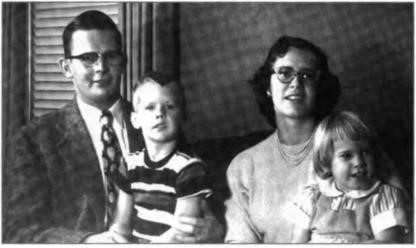
Betty was christened in Seattle on 5 February 1946, the day before her marriage. Both she and Ray belonged to the Episcopal church. She married Raymond Hjalmer Swanson on 6 February 1946 in Seattle, Washington. Born on 21 January 1924 in Floodwood, Minnesota, and christened there that same year, he was of Finnish descent, the eldest of five sons of Hjalmer Johan Swanson and Hilda Katrina Widstrom.
Both Betty and Ray enrolled at the University of Washington. After 11/2 years of college, Betty, like many wives of that era, went to work so that her husband could complete his BS degree in engineering. Ray graduated in December 1947, then joined the Weyerhaeuser Timber Co. as a plant engineer in Everett, Washington. By 1953 they had been transferred to Tacoma, Washington.
In 1956 Betty, Ray, and their two children moved to Lafayette, California. Ray was in engineering and sales for construction-related products. Betty became involved in Scouts, PTA, and civic and Republican Party volunteering. In 1967 she entered the real estate business, becoming a licensed broker in 1972; it was her work thereafter. When Ray became a real estate broker that same year, they started their own small independent real estate business named All West Brokers in Walnut Creek, and ran it for 10 years. In 1983 Betty joined the large residential firm of Fox & Carskadon. She and Ray separated in 1984, just before the unexpected and tragic death of their daughter, Sherryl. They were divorced in 1993. In May 1994 Betty and Ray sold their home and Betty moved to Santa Rosa, Sonoma Co., California.
In March 1998, Betty moved to Coalinga, California and purchased a home. Her son, Rich, and family were already living there. Within a year he had left Coalinga to become Superintendent of Schools in Inyo County, Colorado.
Betty worked part time in real estate and was instrumental in getting a new park developed in her neighborhood. As a result of this activity, she became involved in the Chamber of Commerce where she created and leads a Citizen/Leadership program and a City Welcome Tour. She is now serving her second four-year term on the City Planning Commission. Betty and Ray had two children:
1. Richard Lawton Swanson was born on 21 May 1948 in Seattle, Washington. His family moved to Lafayette, California, in 1956, and he graduated from Acalanes High School in June 1966. In 1970 he received his BA degree in psychology from the University of California at Davis, with a teaching minor in economics. Rich then taught elementary school in Twaine Harte and Danville, California, for five years.
On 20 June 1971 he married a UC Davis classmate Constance Lee Gross at her family home in Los Altos Hills, San Mateo County, California. Born on 8 July 1950, she was a Quaker and the daughter of William Gross and Shirley Jackson. She received her BA from UC Davis in 1972. She became an airline flight attendant, then a teacher, and later a utility company (PG&E) trainer.
In 1974, by attending UC Davis part-time and summers, Rich earned his MA degree in educational psychology.
While at UC Davis, Rich served two years as captain of the University Sailing Team. Always interested in water sports, in the years after college, he continued to sail his own boats in competitive races, and to row, scull, and windsurf.
In 1977 he received his PhD degree from UC Berkeley in educational and social psychology, specializing in moral development. Then he moved to Sacramento to work as a writer and consultant to the state of California. He was affiliated with the Episcopalian church.

By 1987 Richard had been in stock brokerage for several years and a vice president with Smith Barney, Harris Upham & Co. an investment brokerage banking firm in Walnut Creek. He and Connie divorced in 1987 and their son remained with him. They had one child:
Andrew Lawton Swanson, Harry Lawton’s eldest grandchild, was born on 7 July 1977 in Walnut Creek, California. Today Andrew is leading a life on the sea. Since graduating from the California Maritime Academy, he has worked as an engineering mate on ships servicing oil platforms in the Gulf of Mexico and throughout the world.
On 3 October 1987 his father, Rich, married Darlene Meta Graves, a vice president of Dean Witter & Co. in Hawaii. She had lived in Hawaii for 20 years. Born on 27 Feb. 1945 in Pasadena, California, she was the daughter of Willis Raymond Fegley and Bona’dea Edward. After the wedding they settled in Walnut Creek, California, near Rich’s parents, for 18 months, then in April 1989 they moved to Brentwood (near Stockton). In June 1991 they moved to Coalinga, in California’s hot Central Valley, exactly halfway between San Francisco and Los Angeles. He taught sixth grade for two years in Coalinga and also taught at nights in the prison system. Because he spoke good Spanish, Rich often taught Hispanic children. Word got around, and soon Rich was offered the position of coordinator alternative education in Avenal, a small agricultural town 15 miles south of Coalinga which is 85 percent Hispanic and 15 percent white. He runs two continuation high schools (mostly for kids who cannot survive in a standard high school), and a full high-school performance-based independent study program. All students are working for a high-school degree. He also runs programs in Kettleman City, including adult night school classes teaching English as a second language. He also has been employed for a number of years as a lecturer with the Chapman University in learning theory.
In 1990 Rich quit the private sector and went back into education, first as a 6th grade teacher and then an administrator. For the last five years he has been managing a series of small districts with various legal and ethical problems. The work combined all of Rich’s skills in business, school law and instruction. He participated in over 25 million dollars worth of district audits and his efforts have resulted in the conviction of one former superintendent for perjury, conflict of interest and grand theft. Two unethical teachers also lost their teaching certificates after his investigation. Rich is now the Superintendent/Principal of a small district, (Warner Unified) 60 miles north and east of San Diego up in the mountains, but he can be found some weekends, sailing on San Diego Bay with his wife and daughter.
When Alexandra was born Dar quit work and became a full time homemaker until going back to work as a school business clerk for several years at the Inyo County Office of Education. She currently works part time at the business office at a local church camp in Wynola, California. Rich and Darlene had one child:
Alexandra Lawton Swanson was born on 27 June 1989 at John Muir Hospital in Walnut Creek, California. She is a very engaging young woman actively involved in playing the flute and violin, school and numerous other activities. A straight A student and a sophomore in high school, Alex has also been a leader in her Future Farmers of America (FFA) chapter and has won numerous awards. Last year she spent a month at UC Davis attending the California State Math and Science summer gifted students program. Now, during her weekends, she manages the main desk at the local glider airport and in between lulls in activity she typically gets up and flies the glider for an hour or so every weekend. She recently flew an acrobatic glider for the first time. She has to fly with fellow pilots for now because she cannot get her license until she is sixteen. Every few weekends or so she goes down to the ocean with her parents and there she gets the chance to sail and surf.
2. Sherryl Jean Swanson was born on 24 April 1950 in Everett, Snohomish Co., Washington. She was christened in 1956 in Tacoma, Washington. She possessed an unusual diversity of talents. While at Acalanes High School, she received many academic and student body honors. She was elected to be an American Field Service exchange student in 1969, spending 13 months in Denmark and becoming fluent in the language.
In 1973 she graduated Phi Beta Kappa, magna cum laude, with a BA degree from the University of California at Berkeley.
She married Kenneth James Rhee on 21 December 1973 in Orinda, California. Born on 11 March 1950, he was the son of Dr. James Liberty Rhee (Korean-American, a well-known anesthesiologist in Oakland, and president of the California Society of Anesthesiology for several years) and Constance Chifumi Takahashi (Japanese-American). He was christened on 20 December 1973, the day before the marriage, in Orinda, California. Ken was a physician, having earned his MD degree at UCLA. The couple moved to Westwood, where Sherry began her pursuit of art.
Moving to Ann Arbor, Michigan, she continued her education and in 1979 earned second BA degree, this time in fine arts, again Magna Cum Laude. She began showing her art work in 1978 in both state and national juried exhibitions.
In 1980 Sherry entered the University of Michigan School of Law, obtaining her jurist doctorate (JD, formerly called LLD) in 1982. There she did legal work with Artist Equity.
Sherry had outstanding careers both as an attorney and an artist, but these were tragically cut short. She died on 27 December 1984 in Sacramento, California, at the young age of 34, of acute leukemia. She was buried at Mountain View Cemetery in Oakland, California. Following her death, her art was displayed for a month, in May 1985, in a one-woman art show at the prestigious Detroit Institute of Arts. Several months earlier, her entry in a Taos, New Mexico, show won a juror’s merit award.
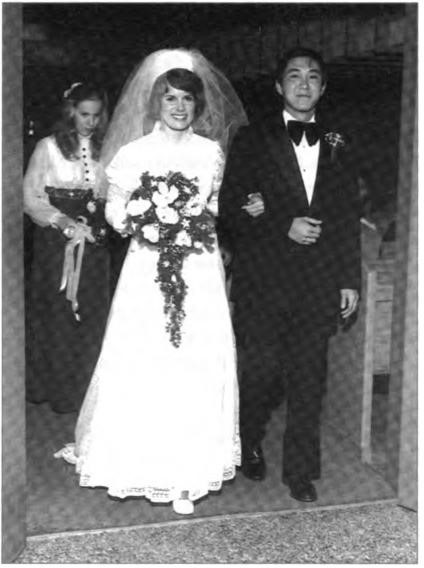
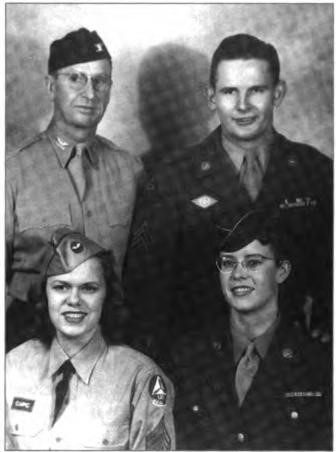
Sherry and Ken had two children, both born in Seoul, Korea. They were ages three and one when she died:
Lawton Kenneth Rhee was born on 3 Feb. 1982. He graduated from the University of Oregon, Eugene, in 2004 and is employed at a research facility where he can use his psychology degree.
Elizabeth Helen Rhee was born on 1 Dec. 1983. she has taken a leave of absence from her senior year at the University of Oregon, and is working at the local YMCA.
On 26 April 1986 Ken married Donna Rae Bennett. The daughter of Henry Thomas Bennett and Evelyn Anna Frueh, she was born on 8 April 1938 in Oakland, California. She had been previously married to Robert Louis Gilmore, and they had had two children: Christi Anna Gilmore, born 5 Jan. 1967, and Robert Louis Gilmore, born 5 May 1969, both in Berkeley, California.
The 1990’s found Ken, Donna and younger children, Lawton and Liz, in Omaha, Nebraska. Ken had left the staff of U. C. Davis, Sacramento to become the Director of Emergency Services, Research and Clinical Medicine for the University of Nebraska and the three Omaha hospitals they serve. Donna, with her environmental chemistry degree and her own consulting company, became an activist. They are now living in Ashland, Oregon in what they call “semi-retirement.” Both are still busy—Donna with her environmental interests and Ken as director of Emergency Service, Rogue Valley Medical Center in nearby Medford.

Jean Marie Lawton, the second child of Joyce and Harry Lawton, was born on 3 September 1927 in Seattle, Washington.
When Jean was about two, the family moved from their Seattle home across Lake Washington to a waterfront home in Medina.
In 1940, because their mother’s health was steadily deteriorating, it was decided that Jean and her sister Betty should become boarding students at Helen Bush School for Girls in Seattle. Jean, an eighth grader, chafed at the confinements and restrictions and after one year convinced her parents to permit her return to public school. She entered Garfield High School in Seattle as a freshman in September 1941. In the spring of 1945 she graduated from Garfield, fifth in a graduating class of 275, but in the intervening years she had attended an additional five schools due to family moves occasioned by her father’s military service.
Following relatively brief relocations to Tacoma, Washington, and Berkeley, California, the family moved in November 1942 to Salt Lake City, Utah, where Harry Lawton was assigned to Fort Douglas. It was here that Jean at 15 began flying lessons and gained her pilot’s license. She recalls, “I was determined to be part of the war effort. My goal was to qualify for the Women’s Airforce Service Pilots (WASPs), a special group of women who ferried military aircraft from the United States to England. But the war ended before I could reach the requisite age of eighteen. They had won the war without me.”
In September 1945, Jean entered the University of Washington as a political science major. She became a member of Pi Beta Phi sorority and in her junior year was elected president of her chapter. Active in many campus activities as well as an excellent student, Jean graduated cum laude in 1949, having been elected to Totem Club and to Mortar Board, campus and national “scholarship and activities” honor societies.
Following graduation, Jean accepted a position in Japan as a civilian recreation director for United States military troops. She was assigned to Camp Crawford on Hokkaido and it was there she met Charles Louis Parker, an army sergeant. They were married on 18 July 1950, in Yokohama and their first child, Laurie, was born in Fukuoka, Japan.
Sergeant Charles Parker received a direct commission to first Lieutenant in March 1957 and remained in service until late 1970. Assignments followed in Georgia, Puerto Rico, California, North Carolina, Germany, and Vietnam, with his family able to join him at each duty station except Southeast Asia. Son Charles was born in Georgia, daughter Stephanie in North Carolina, and son David in Germany.
Remembering this period Jean said, “Chuck’s service began in World War II; we were both on hand when the Korean War exploded; our five years in Germany encompassed the mounting tensions of the Cold War, the erection of the Berlin Wall and the Cuban Missile Crisis; and Chuck then went on to serve three combat tours as a Green Beret in Vietnam. We had countless wonderful times and also some terribly difficult ones, but always we felt that what our military did really mattered. We were very, very proud to be a ‘Service family’.”
In 1971 the family moved to Walnut Creek, California, and purchased a home. Charles Parker subsequently spent a number of years overseas working as a civilian, first in Vietnam and later for eight years in Saudi Arabia. Jean remained in Walnut Creek, becoming owner in 1977 of a travel agency. She sold the agency in 1987 after ten years of business success and travel throughout the world.
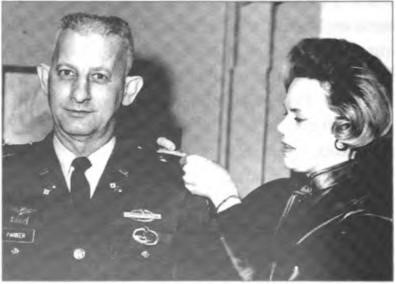
Always interested in government and politics, Jean became increasingly involved in City affairs and local concerns. In the Spring of 1989, at the Mayor’s request, she served as the chair for a bond measure effort. Soon after that campaign, she was approached by the Walnut Creek Chamber of Commerce to join their staff — an association that would continue for over fifteen years. Service also followed as a board member or appointee for various city committees and organizations.
In February of 1994 she became a City Commissioner. She was twice reappointed to Walnut Creek’s Park, Recreation and Open Space Commission, for a total term of seven years. She then went on to serve as a Transportation Commissioner until 2004. A nice reminder of this time is a bronze plaque at the Liberty Bell Plaza in downtown Walnut Creek. Jean is among those acknowledged for their work in the design and development of this area.
In the Fall of 2000, Chuck’s health began to fail. Two years later on September 29, 2002 Chuck passed away. His memorial service was held at Travis Air Base, Fairfield, California, the nearest military facility. He was accorded full military honors. Charles Parker died on 29 September 2002 in Walnut Creek, California.
Jean and Chuck had four children:
1. Laurie Anne Parker was born on 20 Nov. 1951 at the U.S. Military Hospital in Fukuoka, Japan. In 1971 she was one of 30 students chosen nationally for summer internship in U.S. Army hospitals. She interned at Letterman Army General Hospital in San Francisco. Laurie was recipient of the Pi Beta Phi Scholarship for Arts and Crafts. She attended the University of North Carolina, Chapel Hill, UNC State at Raleigh, North Carolina, then graduated from California State University at Hayward with a BS degree in recreation. She did post-graduate studies at UC Berkeley, San Francisco State Univ., and University of Maryland. She was the recreation therapeutic director for Contra Costa County Hospital for eight years. She received her teaching certificate in business, therapeutic recreation management, was certified by the California Board of Parks and Recreation Management, and was the therapeutic recreation consultant for ARA Living Centers Inc., a national chain of nursing homes.
In 1991 Laurie started her own Recreation Therapy Consultation company to serve her clients throughout California. She was elected president of the Northern California Council of Activity Coordinators and served on their board for a total of eight years. In March 1998 Laurie accepted a position with Good Samaritan Society, an organization known for their commitment to patient care. Headquartered in Sioux Falls, South Dakota, her corporate responsibilities encompassed 78 senior housing communities throughout the United States and included providing consultation and training both onsite and through satellite television.
In 1998 the National Association of Activity Professionals appointed Laurie to a two-year term as Standards and Ethics Trustee. In October of 2004, she was the keynote and closing speaker for the Northern California Council of Activity Coordinators, twenty-fifth annual conference.
2. Charles Louis Parker III was born on 11 March 1953 at Fort Benning Army Hospital near Columbus, Georgia. Chuck III attended California State University at Hayward and the University of California at Berkeley, majoring in military science. Disqualified physically for military service, he left college his senior year. He was manager for Playing Boards Inc. (Albany, California), Prestige Investment Properties (San Francisco), and worked for Vinnell Corporation in Saudi Arabia and Transamerica Title Co. Inc. of Walnut Creek, California.
In 1988 Charles joined the Bay Area Title Services, headquartered in Walnut Creek, and continued to work there for many years. A bachelor with a grand sense of humor, he enjoyed bemoaning his fate. He maintained that as the older son, and the only one of the four siblings still in the state, he’d drawn the “duty” — to watch over Mom and Dad in their later years.
3. Stephanie Lynn Parker was born on 29 July 1958 at Fort Bragg, near Fayetteville, North Carolina. She attended California Polytechnical University at San Luis Obispo, California, concentrating in para-legal studies. Stephanie left college during her second year and married Michael Todd Humphrey on 16 June 1979 in Martinez, California. Born on 17 December 1953, he was the son of Richard and Vivian Humphrey. Subsequently she and Mike lived in Tacoma (Washington), and Walnut Creek and Stockton, California.
They had two children, both born in Tacoma, Washington:
Jennifer Leigh Humphrey was born on 2 May 1980. She moved to Sioux Falls, South Dakota in the summer of 2001, where she lived with her aunt Laurie Anne Parker, while attending college at Dakota State University. She stayed there three years, returning to Georgia to complete school.
Elizabeth Anne Humphrey was born on 18 Sept. 1982. She married John Joseph “Joey” Ogan in 2001 in Columbus, Georgia. Their son, Michael Antony Ogan was born Nov. 30, 2001. Their daughter, Rachel Lynn Ogan was born Feb. 28, 2003.
Stephanie worked in her family’s travel agency and continued as a successful travel consultant in Tacoma, Walnut Creek, and Stockton. In 1988 Stephanie and Michael divorced. Four years later in March 1992 Stephanie traveled to Baumholder, Germany, where her brother, David, was stationed with the military. He introduced her to his training NCO, James Michael “Rusty” Chase. Rusty, born September 20, 1961, and now, too, was a divorced parent raising his son, James Michael Chase, Jr. age 11. They were married on 12 October 1994 at Fort Benning, Georgia.
In 1998 the family moved to Fort Riley, Kansas. This was James Michael “Rusty” Chase, Sr.’s last duty station before retiring from the army in 2000 and returning to Georgia.
James Michael Chase, Jr. enlisted in the Air force in 2000. That year he also married Angel Maria Roman-Murphy at Fort Riley, Kansas. After completing his training, his family moved to Columbus Air Force Base in Mississippi, where James was part of the air crew life support. Their daughter, Nelonne Gabriella Chase was born 21 February 2001 and their son, James Michael Chase III was born 10 February 2002. This marriage ended in divorce in 2004
4. David Lawton Parker was born on 19 July 1961 at the U.S. Military Hospital in Heidelberg, West Germany. Dave attended San Jose State University and California State University at Sacramento, majoring in communications. He was U.S. Army Ranger and Airborne (parachutist) qualified and a member of the 12th Special Forces Group, Airborne Reserves (Green Berets). He chose the military as a career. He was a competent musician. Keenly interested in Young Life, a religious and social organization for teenagers, he served as both a junior counselor and adult counselor for many years.
On 9 September 1989, after both had graduated from California State University at Sacramento, David married Jenyfer Leach. David had already received his Army commission as a 2nd Lieutenant. This marriage ended in divorce. There were no children.
From 1990 until 1993 David was stationed in Germany. Assignments at Fort Benning, Georgia and Fort Bragg, North Carolina followed. Then in 1995 David was sent to Western Sahara, Africa, to serve with the United Nations. In 1997, as a captain, he assumed command of a company of the 325 Parachute Infantry Regiment, 82nd Air-borne Division. This assignment had particular significance for David because forty years earlier his father had also been an officer with this unit.
In February of 1998 David met Elizabeth Ann Utting who was attending The Royal Military Academy, Sandhurst. Elizabeth, daughter of David Arthur and Barbara Utting, was born 23 September, 1973 at Lichfield, England. In December 1998 she received her commission in the Royal Engineers, having earlier graduated from Cambridge University. In September 1999 David and “Liz” announced their engagement and the wedding was the following year on 5 August 2000.
In 2001, David was reassigned to RAF Lakenheath, England, as a ground liason officer attached to the US Air Force 48th Operations Support Squadron.
At the beginning of 2003, David’s wife, Captain Elizabeth Parker, Royal Engineers, was deployed with her unit, 16th Air Assault Brigade to the Middle East. Captain Parker was the first female Engineer ever to wear the maroon beret, proud symbol of the British Airborne Forces.
In July it was Major David Parker’s turn to deploy in support of Operation Iraqi Freedom.
On 24 August 2004, Liz & David’s first child, Charlotte Katherine Jean Parker was born.
After four years overseas, David returned to the States with his wife and baby girl. On 1 November 2004, David reported to his new duty assignment at Fort Sam Houston, San Antonio, Texas.
 Shurtleff & Lawton Families Genealogy & History - Second Edition (2005)