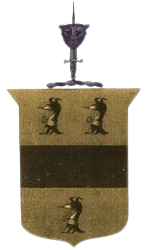
** All Text on these chapter pages has been copied verbatim – with permission – from this book: “Shurtleff Family Genealogy & History – Second Edition 2005” by William Roy Shurtleff & his dad, Lawton Lothrop Shurtleff ** Text in pdf convert to word doc – any spelling errors from the book may or may not have been fixed. **
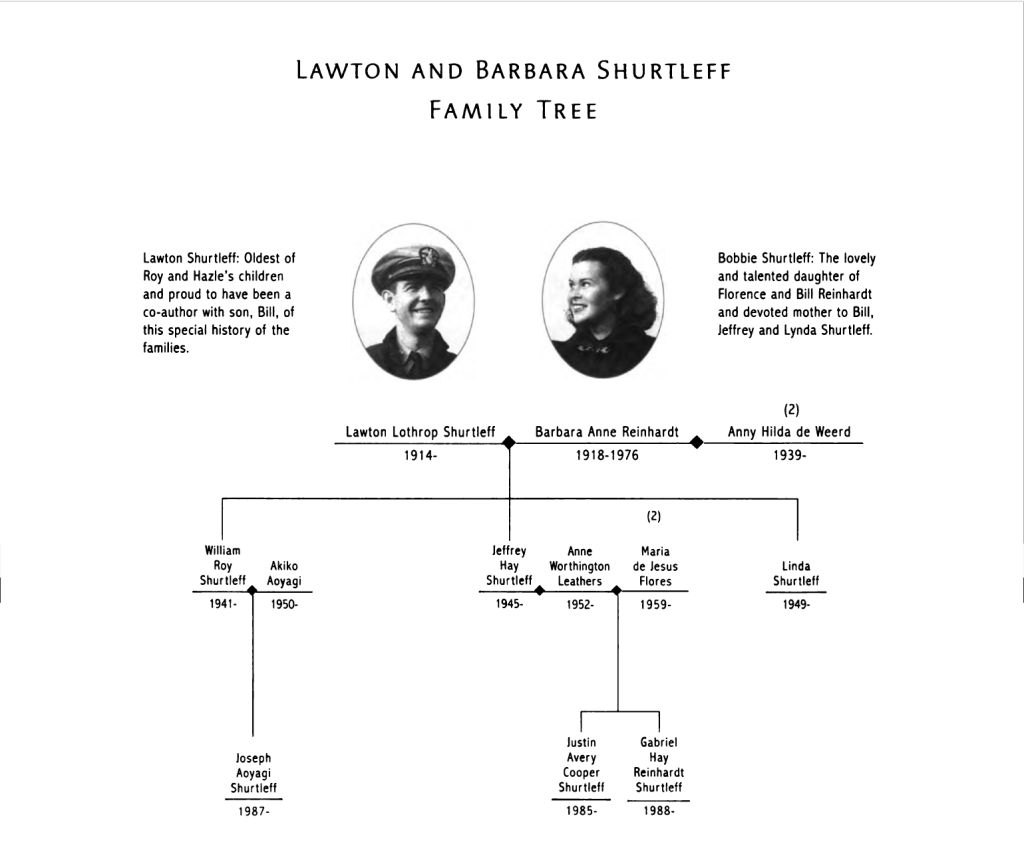
In the previous chapters we have followed the lives of Lawton, Gene, and Nancy as they grew up together. Now, we will look at Lawton in his later years.
Lawton Lothrop Shurtleff. Born on 6 November 1914 in Berkeley, Lawton graduated from the University of California at Berkeley in June 1936, then, that fall, entered Harvard Business School for a two-year course in business administration.
In the summer of 1937 he went to Lake Tahoe to visit Gus Knecht, a former classmate at Harvard Business School. Gus introduced him to Bobbie Reinhardt, then a student at Stanford University. For both, as Gus had so often predicted, it was love at first sight. Bobbie and her parents lived just up the hill from the Knechts’ home at Brockway, at the north end of the lake. Lawton was invited by Gus for the weekend but, having met Bobbie, he was happy to be invited to stay a full week. A week or so later Florence and Bobbie invited him back to spend another glorious week at the Reinhardt cabin.
Bobbie was lovely and talented. A 1936 Los Angeles newspaper ran a large photo with this caption: “Barbara Anne Reinhardt. The 20-year-old Stanford coed, registered from Los Angeles, was elected the most beautiful girl on the campus by a jury of 500 men in a contest conducted by the campus magazine. She’s a first year student.”
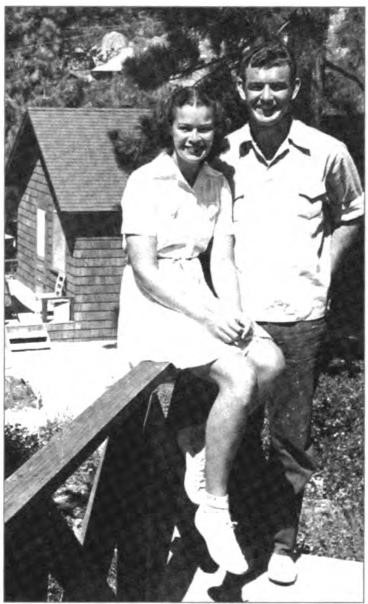
At Stanford, Bobbie was a member of the Kappa Kappa Gamma sorority, was elected to Phi Beta Kappa for her academic excellence, and was chosen Stanford Queen her junior year, with a full-page photo in the 1938 Stanford Quad.
Work at Blyth & Co. (1938-39). After graduating from Harvard Business School in the summer of 1938 with an M.B.A. (Master’s in Business Administration) degree, Lawton had no clear idea of what type of career he wished to pursue. Over the years he had dreamed of being a foreign correspondent for a newspaper, of working as a forest ranger, and often of teaching in, and one day starting a private boarding school. He never thought of himself as a businessman.
Nevertheless, in the fall of 1938 he showed up for work at Blyth & Co., Inc., an investment banking firm on Wall Street in New York City. His father, Roy, was just finishing a tour of duty there before returning to his home base in San Francisco. Whether Lawton joined Blyth out of loyalty to his father who was one of the founders of Blyth—or as the path of least resistance—Lawton can’t recall, but probably, it was a little of both.
At Blyth, in the depth of the Depression with little to do, he was bored and restless. This must have been obvious to Charlie Mitchell, one of the true giants in the banking business, Blyth’s chairman and head of the New York office, for one day six months or so into Lawton’s “job,” Mitchell called Lawton to his office and in a lengthy conversation advised him that, if he were ever to become valuable to Blyth, Lawton should follow his own example—”get out into the world of industry, mining, manufacturing, anything basic to find out how the world really works. Above all get out of your coat and tie, into your work clothes and get your hands dirty.”
That was the most welcome advice Lawton could imagine, and a major turning point in his career. Shortly after that meeting he left New York and joined his father in San Francisco where Roy asked him to stay for a while to see if he might change his mind. In time Roy began to understand Lawton’s desire to leave banking and get into something where there was more activity, and he agreed to help.
He introduced Lawton to Jack Smith, an All American Football Player at Washington University and then the president of two manufacturing companies—Hawley Pulp and Paper Company and Western Cooperage, both near Portland, Oregon. Lawton asked for a job and apparently Jack offered him work in the Hawley Paper Mill.
During the summer of 1939 Lawton and Bobbie became increasingly close. Bobbie, having graduated from Stanford in June, spent much of the summer at Tahoe. Lawton, living in San Francisco that summer, often visited Bobbie at Tahoe, and she spent weekends with Lawton, Roy, and Hazle at their ranch in Martinez. In 1983 Lawton remembered:
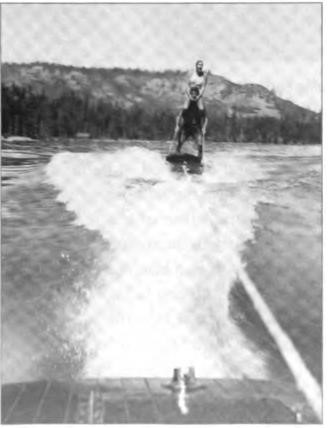
I had met Bobbie, Stanford’s most accomplished, most charming, most beautiful, and above all, most lovable lady. It was an unforgettable summer of aquaplaning, reading Steinbeck on a secret beach, and dancing nightly at the old Tahoe Tavern.
That summer Lawton also met Bobbie’s aunt, Aurelia Reinhardt, the famous and irrepressible president of Mills College, who asked at a breakfast table full of guests: “Young man, what are your intentions regarding my niece?”
The offer of a job in Oregon gave Lawton the answer to Aurelia’s question. Right after his interview with Jack Smith, he called Bobbie, described his job offer, and proposed they marry immediately, then go on a short honeymoon and move to Oregon! They’d dreamed that something like this would happen. Lawton picked up Bobbie in Palo Alto, and on Nov. 8 they drove to Los Angeles to tell Bobbie’s parents, Florence and Bill Reinhardt, of their engagement. It was not an encouraging meeting with Florence. She had higher hopes for her beautiful, only child than marrying a young man earning $90 per month and moving to uncivilized Oregon! Furthermore, Bobbie’s selection for a marriage date conflicted with Florence’s hair appointment, and the hair appointment won.
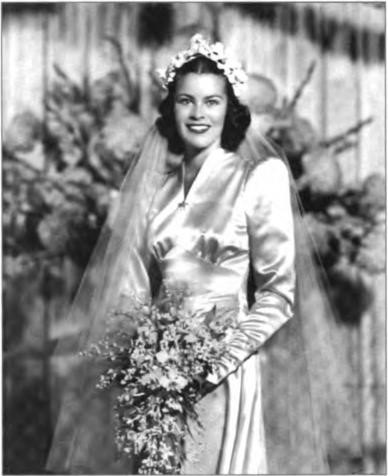
Marriage and Early Work in Oregon City (1939-41). Lawton married Barbara Anne Reinhardt on 9 December 1939 in Los Angeles, California. Born on 2 March 1918 in Berkeley, California (at Alta Bates Hospital, the same place that Lawton had been born in 1914), Bobbie was the daughter of William Reinhardt and Florence Agnes Hay of Los Angeles. Mr. Reinhardt, a member of the Bohemian Club since May 1929, had been a petroleum engineer and California production manager for the Shell Oil Co., was general manager of the Kettleman North Dome Association (Kenda, a major petroleum trade association in Los Angeles; 1930-37), then (from 1937 on) Vice President of the Union Pacific Railroad, in charge of oil development.
They were married at the Reinhardt home at 132 North Las Palmas, Los Angeles. Gene Shurtleff was the best man, and Kay Glass was the maid of honor. A group of Lawton’s close friends from the Bay Area and Jack Sayre, Lawton’s roommate at Harvard Business School, came to Los Angeles. On the train, after drinks, they ended up driving the steam engine, tooting the whistle, and ringing the bell. After the wedding the couple’s parents hosted cocktail party receptions at the Los Angeles Country Club and the Bohemian Club in San Francisco. The wedding was widely publicized in both Los Angeles and San Francisco. He was 25 and she was 21.

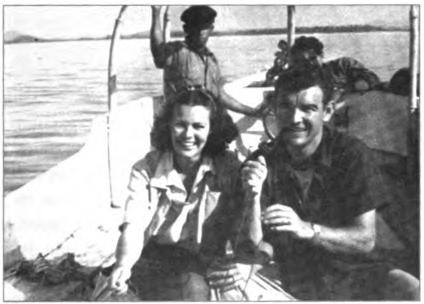
They spent a romantic honeymoon in Mazatlan, a very primitive fishing village on the west coast of Mexico. After a couple of weeks they decided to telegram an advance notice to Jack Smith, Lawton’s boss-to-be, that they would be reporting for work on New Year’s Day 1940. Smith wired back “Didn’t know I’d offered you a job! Admire your aggressiveness. Come along anyway.”
They did, and settled in a tiny wooden cottage on the beautiful Clackamas River only a 15-minute drive to the Hawley paper mill. The work in the office and mostly in the mill, preparing reports and recommending changes, was everything Lawton could have hoped for. For Bobbie, a young pioneering wife and homemaker with her two dogs, Popo and Peter, her rabbits and chickens, and, at least one good friend, Judy Hoffman from Stanford, life was exciting.
But their joy was short-lived. Within less than a year, in the summer of 1940, driving their new Mercury convertible (a wedding gift) to spend a weekend with Lawton’s parents in Martinez, they and their guests, Ed and Louise Smith, were in a head-on collision with Ed at the wheel. Bobbie had a badly hurt shoulder and back, and Lawton a broken right arm. They recuperated for more than a month at the family ranch in Martinez where Lawton began his diary describing “The Birds of Alhambra Valley.”
After their return to the job in Oregon City the lease on their house had expired so they moved from the sunny Clackamas River to another somewhat depressing house on the Willamette River. For whatever reasons, perhaps her ongoing recovery from the car accident, Bobbie’s newly discovered pregnancy, the depressing new house, the lack of friends or the happy memories of their recuperation in Alhambra Valley, Bobbie began to think of returning to California. Lawton’s job kept him busy, but he sympathized with Bobbie’s desire to return.
By sheer coincidence Roy telephoned them one evening to say that Harry Peet (Hazle’s brother-in-law) was with him, discussing a possible loan that Roy might make to Harry to purchase a very small hand-tool manufacturing company in Emeryville. Roy had agreed to a loan of $5,000 provided that Lawton be considered for a job there, invest $3,000 of his and Bobbie’s savings, and thereby keep an eye on Roy’s investment.
The little company, Thorsen Tools, was purchased in early 1941 with $14,000 of Harry’s money, $3,000 of Lawton and Bobbie’s, and a $5,000 Limited Partnership loan from Roy. It was, for Lawton, another turn in the road in his search for a career where eventually he could be his own boss.
Lawton and Bobbie had become friends and admirers of Jack Smith and his wife, so it was with mixed feelings when they said goodbye and moved from Oregon to Roy and Hazle’s ranch in Alhambra Valley. Hazle, always the doer, had fixed up a small cottage on the property formerly lived in by Japanese pear pickers. Gene and Nancy had both married and now lived away from the ranch. Hazle dearly loved Bobbie, and her presence gave Hazle real peace of mind. In the tiny cottage Lawton built his first darkroom for developing and printing pictures—and pursued an interest in photography that lasted a lifetime.
Starting a Family and World War II (194145). Lawton and Bobbie were living at the family ranch when William Roy Shurtleff was born on 28 April 1941 at Merritt Hospital in Oakland. Lawton was then 26 and Bobbie 23.
Soon another major event conspired to interrupt Lawton’s deep interest in Thorsen and their life at the ranch. On 7 December 1941 the Japanese military bombed Pearl Harbor in Hawaii.
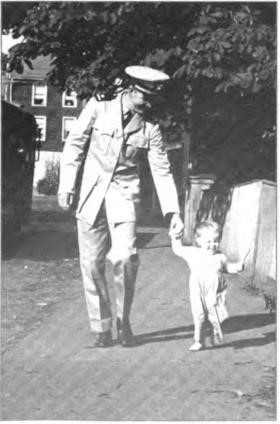
Almost immediately Lawton volunteered for the U.S. Navy and was assigned to the Naval Supply School in Cambridge, Massachusetts. Lawton and Bobbie drove across the continent in their new green 6-cylinder Oldsmobile convertible and Florence followed a few weeks later with young Bill. Now, with war orders beginning to pour into Thorsen, brother Gene took Lawton’s place there to help Harry and his crew (of only four employees at the start) keep production flowing.
Following graduation from NSCS as an ensign, Lawton was assigned to a submarine base in Coronado, California, near San Diego. There, in another twist of fate, another young ensign, John Calder Mackay, was assigned to work for him. They had mutual interests in politics and economics and soon became good friends.
On 5 October 1943 Lawton’s group was sent from the sub base to Hawaii aboard the 10,000-ton aircraft carrier, Monterey. Bobbie and Bill returned to their tiny cottage at the family ranch in Martinez.
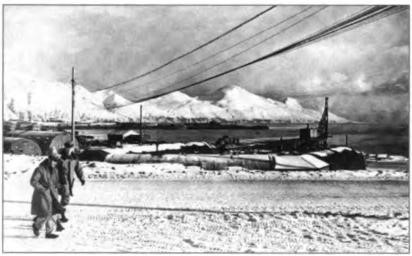
Soon Lawton, seeking more action, volunteered (when not even regular Navy personnel would) for duty at a new sub base in Attu, a windswept island on the western end of the Aleutian islands—and only 700 miles or so from Russian territory and within air strike distance of the Kurile Islands of Japan. Attu had been advertised as having “a girl behind every tree” but, in fact, there were no trees. It was a rare experience and he recalls flying over the Kuriles with brother Gene’s friend, Dudley Dexter.
Four months later, the ill-conceived submarine base was abandoned when their Commanding Officer deserted his post and left the rest of them without orders and without a job. In April 1944 Lawton flew back from Attu to the naval base at Mare Island, only an hour from Martinez. He was met there by Bobbie, Roy and Hazle and again enjoyed a memorable respite from the cold of Attu.
On 25 May 1944 new orders arrived sending Lawton to sea in the South Pacific as supply officer for the USS Sperry, a very large, modern submarine tender. This was a big promotion for Lawton, who had nearly 100 men under his command. They supplied submarines surrounding Japan and engaged in cutting off all commerce to and from these doomed islands.
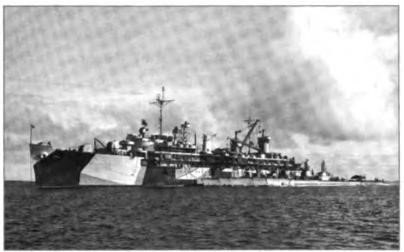
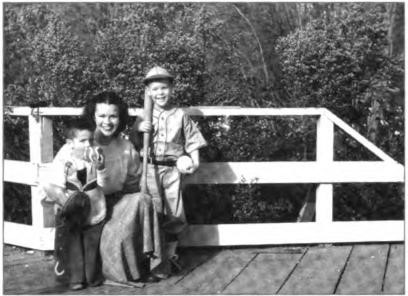
On 20 January 1945 Jeffrey Hay Shurtleff was born at Mare Island while Lawton’s ship was at Guam. In June of 1945, with war over in Europe and the U.N. Security Council meeting in San Francisco, Lawton was ordered back to the Naval Supply Corps School where nearly three years earlier he had been a student. Bobbie, Bill, baby Jeffrey, and Lawton drove across the country in their same green Oldsmobile convertible. Lawton arrived as a teaching professor and was immediately designated as “officer in charge” to help the school.
On 15 August 1945 President Truman authorized dropping the first of two atomic bombs on Japan, quickly ending World War II.
Martinez Ranch and Orinda (1945-50). Lawton received his honorable discharge from the Navy on 27 September 1945. Together the family of four again drove across the continent, returning to their home at the Martinez ranch.
Thorsen had grown and prospered solely on government business. Round-the-clock production had left the factory much the worse for wear, however. By war’s end Harry Peet was dead tired and discouraged with the labor union that had organized his workers. He badly wanted out. By 1946 Lawton had found a new partner and together they purchased Harry’s interest in Thorsen and the company took on a new postwar life.
In January 1946 Lawton, Bobbie, Bill, and Jeff moved to 175 Moraga Road, Orinda, a home they had bought for $20,000, located across a small bridge over a deep and wooded creek. In late November of 1945, in a sad moment for all of them, Roy left their Martinez ranch, after which Hazle, in her loneliness, sold it and ultimately moved near Bobbie and Lawton in Orinda. On 19 May 1948 Hazle died of leukemia, which many thought may have been the cause of her health problems the past many years.
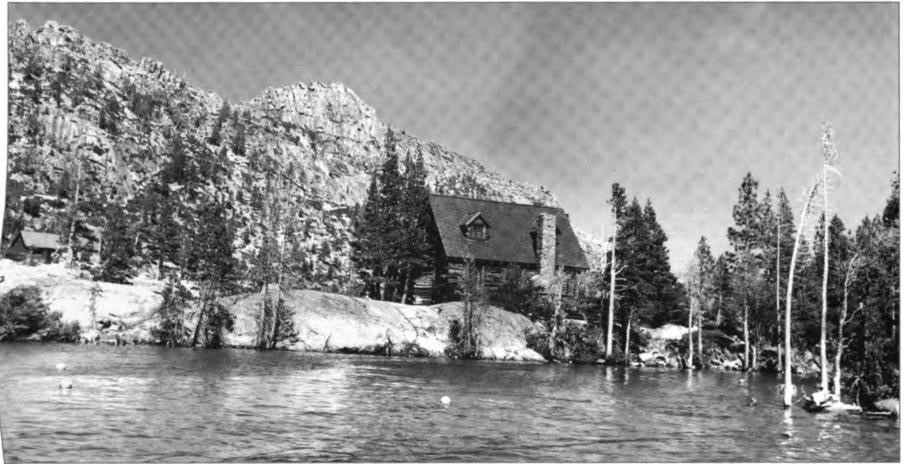
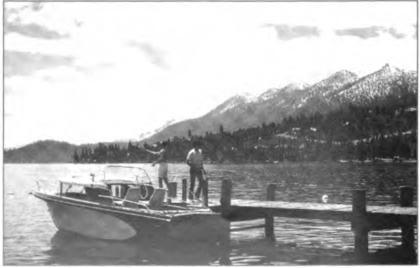
On 28 May 1949 Linda Shurtleff was born. She was the beautiful blonde baby daughter that Bobbie and Lawton had always hoped for. That same summer, Lawton, Gene, and Nancy (Miller) bought a spectacularly located cabin on “the channel” at Echo Lake, known as “Interlachen.” While the total cost was only $16,000 (on federal land), it was completely furnished and included a speedboat, sailboat and rowboat. The funds had come from their share in their mother’s will after the sale of her home in Carmel. If only she could have known of the pleasure this “gift” would bring to her children and grandchildren for the next decade and more.
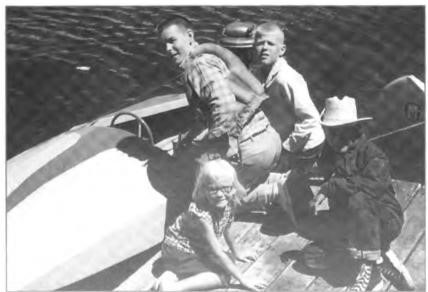
Summers at Echo covered a period of 20 of the most important years for their family. Linda was less than a year old, Jeffrey was four, and Bill eight when they were first introduced to the magic of the 9000-foot-high Sierras. When Lawton’s share of the cabin was ultimately sold to Gene and Rose, Linda was nearly 21, Jeff was 24, and Bill 28. Many of their young summers were spent in this awe-inspiring environment. For one summer of their later years Bill worked as a storekeeper and handyman at Jorgy’s chalet at the lower lake, which included the water taxi service, post office, grocery store, soda fountain, the lake’s only telephone, boat storage, and a parking area for all the lake’s residents. Jeffrey worked there for two years. Later he worked pumping gas at the “Y” at Tahoe, while sleeping nights at the Chalet. For both, these were their first outside-the-home jobs. Earlier during those years Bill had spent several weeks for five or so summers, and Jeff recalls two summers, at the “Boy Scout” camp on upper Echo Lake—on the same site as the “Talking Mountain Camp” which Lawton had attended as a boy. Nearby were the summer homes of UC Chancellor Robert Gordon Sproul and several other UC professors.
Bill Shurtleff recalls, as his most treasured memories, his wilderness experiences, identifying high mountain wild flowers and new types of trees, hiking to the dozens of tiny mountain lakes, for the first time, and meeting mother nature in her wild state, all the hours of water sports, and swimming, learning to water ski, first on two skis, then on one, finally jumping over the floating ski jump Ronnie Johnson and Lawton had built to entertain half the youngsters at Echo.
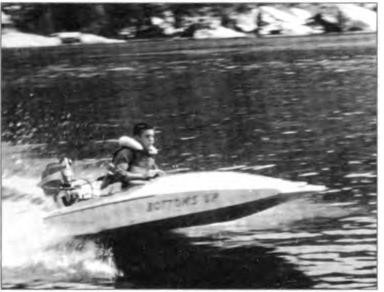
In Lafayette, Bill and Lawton had built a plywood and fiberglass outboard racing hydroplane named Bottoms-up. Jeff soon acquired a neighbor’s hydroplane and later fell heir to Bill’s boat and a new motor. Jeffrey’s memories are more concerned with the romance of the mountains and what he learned from them. Friendships were at the heart of all this: swimming, skiing, racing their boats—and finally at the end of a carefree fun-filled day sitting around the large bonfire listening to music—and mostly falling asleep, often with the wind whistling in the trees.

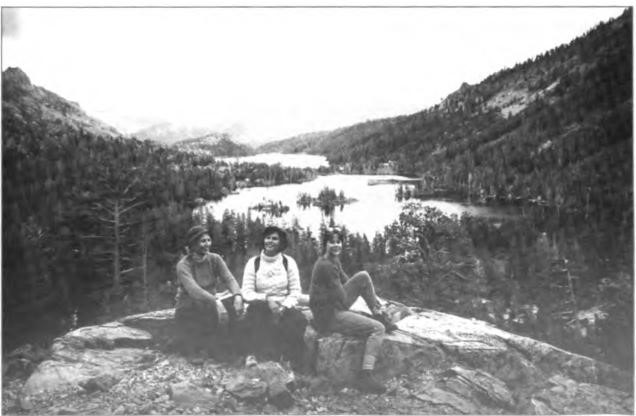
Young Linda’s fondest memories start with her hikes with Bobbie up the “brook trail” gathering wild flowers and loving their times together. She recalls skiing on her Dad’s shoulders and finally becoming an accomplished skier herself. She also remembers the huge fireplace with a large deer’s head mounted above it.
For Lawton and Bobbie there was also complete relaxation, the construction of a rock barbecue, a patio large enough for a table for eight or ten, and of course, their horseshoe pit along the channel. Literally dozens of their closest friends would come to spend a day or a week—just to see, mostly for the first time, the beauty of Echo—and to return another day.
Lafayette and Mackay Homes (1950-60): On 3 March 1950 by pure luck Lawton and Bobbie found the piece of property they had always dreamed of at 790 Los Palos Drive in Lafayette, 21/2 acres of orchard and woodlands bordered by two creeks that joined at the far north end of the property. There they built a new home with a radiantly heated concrete slab and a swimming pool, a pigeon coop for Bill, a vegetable garden for Bobbie, compost piles, and for Lawton, places to raise pigeons, rabbits and chickens. Three horses were soon to follow. This was the wonderful home in which the family lived for the next 25 years. Like Roy and Gene Shurtleff, Bobbie had a knack for creative and sentimental humor as evidenced in this little poem.
Anniversary 1955
It’s 16 years today, my love
Since you and I were spliced
Since mother changed her hair-do date
To see us shoes and rived.
We’ve had our share of busy days
And nights divinely spiced
With now and then, to balance things
An atmosphere well-iced.
I may glance twice at handsome men
And think myself well-viced
But, darling, long as I have you
I’ll never be enticed.

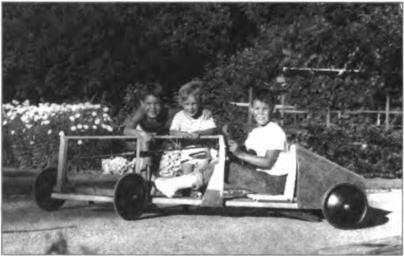
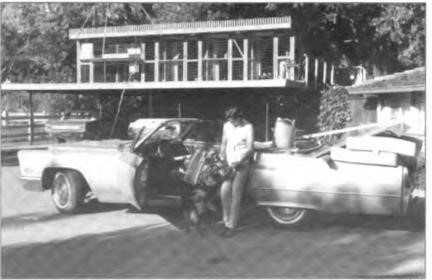
Pictured above: (left) Jeff, Linda and Bill in a roller coaster Bill had built, summer 1952. (right) Lawton’s four pens for 150 racing pigeons above the carport at 790 Los Palos, circa 1965.
At 790 Los Palos, Bill learned his love for nature in Boy Scout Troop #204, Bill and Jeffrey learned baseball, basketball and swimming skills and Linda her love for horses and other pets. Together Bobbie and Lawton had their horses, Rimrocks, Rayyo, Velvet, and Patsy, to ride on the abandoned railroad tracks down to St. Mary’s College and on to Redwood Canyon. Both Bill and Jeff attended grammar school and Acalanes High School in Lafayette.
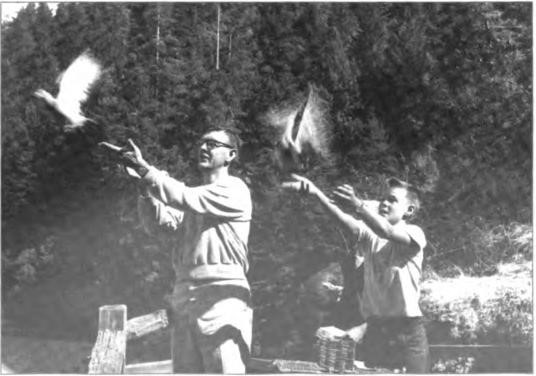
Lawton’s pigeons became a lifelong hobby. He joined the Martinez Racing Club. Races were flown from east to west and north to south up to 500 miles in length. The greatest victory was to win the 500-mile race with a homing pigeon that flew it in one day. In one year alone Lawton won both the 400-mile race from La Pine and the 500-mile race from the The Dalles, both in Oregon. Lawton, Gus Noach, and Carl Huffaker, all three from Lafayette, were among the top flyers in the Martinez Club of over 30 members. Bobbie was a great help driving with Lawton long hours to release the birds on training flights.
In 1954, in another great stroke of good fortune, Carol Fortriede joined Lawton as national sales manager of Thorsen. Carol had been the top salesman with S.K., one of the industries major competitors. He soon revamped Thorsen’s sales programs to take better advantage of its low-cost production. From that time on Thorsen began its climb to the top, guided by Carol, Paul Bening, Ray Barker, and Norm Skarsten, an ambitious, young team inspired by a generous profit-sharing plan. All of them, to varying degrees, shared 25 percent of the company’s total profits before Lawton’s salary or federal or state taxes. It was highly rewarding for all of them and certainly contributed to Thorsen’s success.
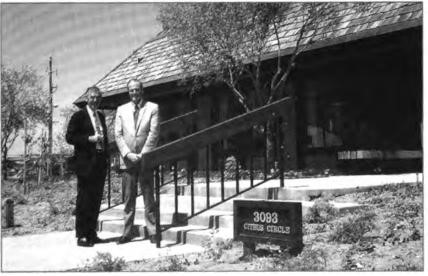
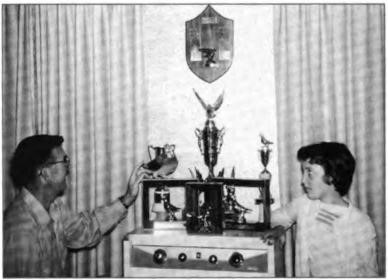
In 1990, with Thorsen booming but with savage competition from imported hand tools, foreshadowed by Thorsen’s new Thorsen-Allied import program, and with neither Bill nor Jeffrey expressing any interest in working at Thorsen, Lawton, in an exchange of stock, sold his company to its largest customer and conglomerate, Hydrometals, Inc., in Dallas, Texas.
Stepping back in time recall that in 1943 a young ensign named John Mackay worked for Lawton at the Coronado submarine base. In about 1949 or so John came to visit Lawton at Thorsen. He was working in his father’s law firm in Los Angeles and hated it. He described the terrible “high speed” elevators and talked about his love for his Mormon family ranch in Wyoming. Lawton told him about his similar experience at Blyth in New York City, and they resumed their Navy friendship on a new basis. Shortly thereafter John visited again to explain that it was the happiest day in his life when he had walked out of his father’s law offices to pursue his earlier endeavor of buying land and building tract houses. In fact, he and a partner were working on a 400 home subdivision in Richmond not far from Thorsen in Emeryville.
He suggested that Lawton might like to join him in a similar venture in Stockton—if he had $15,000. Lawton didn’t, so he asked his brother-in-law, Bill Miller, if he’d like to join them for $5,000 and lend John $5,000. Thus in 1950 the partnership Triad Construction Co. was formed. Lawton drove to Stockton one day a week with John, and sometimes Miller, where to Lawton’s surprise, they ended up building not 3 or 4 but some 60 houses the first year. Lawton was in charge of production and organization, and John of land purchasing and finance. Over the next 20 years they built close to 10,000 houses—in Stockton, Salt Lake City, Sacramento, and throughout northern California, plus a 4,000-unit retirement community and golf course east of San Jose known as The Villages. It was a wonderful fifty-fifty partnership that continues to this day (Bill Miller having much earlier sold his interest to John and Lawton). They spent countless hours together with never a disagreement that they could not resolve peacefully. In 1971, low-cost houses ($10,000-$15,000) had disappeared and speculating on $40,000 tract houses was not appealing so they sold their entire building operation to Kaiser—Aetna while retaining several choice pieces of real estate for later development. Beginning in 1973 they began developing 10 of these acres in Walnut Creek near the corner of Ygnacio Valley Road and Oak Grove. They decided to retain this property now known as the Woodlands Office Park and operate it as their own investment.
From 1957 through July 1958, Carlos De Miguel, a foreign exchange student (AFS) from Spain stayed with the family, to join Bill in his senior year at Acalanes High School. Carlos, with his charm and wit, was a welcome addition to the family and was the first of a long line of interesting visitors from abroad, including Dieter Bauman from Germany, Luis Moreno from Peru, and with numerous school teachers from Europe under the American Host Program.
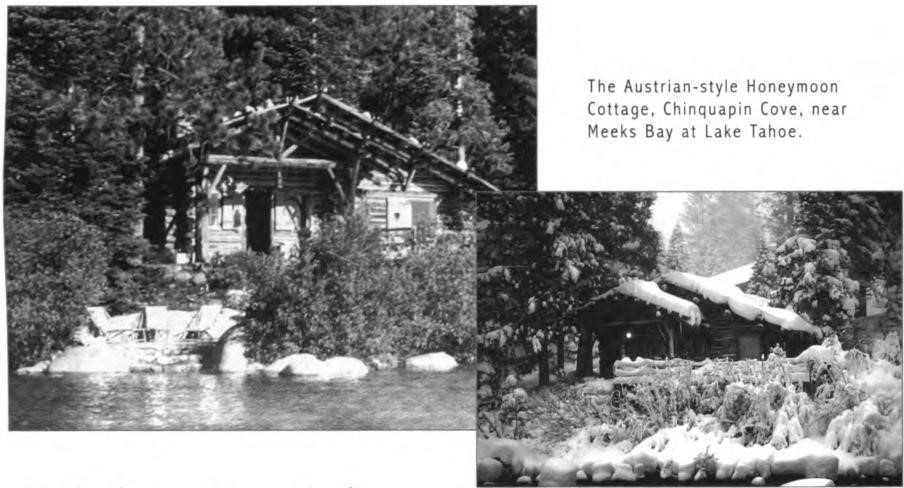
In July 1959, Lawton and Bobbie purchased the legendary log cabin known as the Honeymoon Cottage from Larry and Sally Hart, located at the edge of the lake in an idyllic setting just north of Meeks Bay. Built in 1923 of cedar logs, it had a thick shake roof held on by boulders. The Harts had built a companion cabin close by the Honeymoon Cottage and insisted on selling the two cottages as a package deal. Bobbie’s mother, Florence, wanted to buy the upper cabin, so Lawton and Bobbie offered to help her by purchasing the log cabin even though they still were spending their summers at Echo Lake and had no intention of leaving there. Florence paid $37,500 for her cabin and 100 feet of lakefront, and Lawton’s rustic log cabin with one bedroom and 140 feet of lakefront, cost $32,500.
Remember that Lawton had first met Bobbie at her parents’ home at Brockway, also at Tahoe, but 30-40 miles to the north of Meeks Bay. They had met at Tahoe so the beauty and romance of Tahoe was deeply entwined in their lives.
During the summer of 1959 Lawton and Bobbie began a series of projects to improve the one bedroom Honeymoon Cottage. They replaced the small windows with larger ones, built a loft in the living room to make room for children and visitors, doubled the size of the front deck, added a side door and patio and, of greatest importance, built a sizable rock patio at the edge of the lake with steps leading into the water only a few feet below.
Bobbie and Lawton were still in their early 40s, so skiing at Tahoe in winter was also a major
attraction. For the rest of their lives Tahoe became a welcome refuge from the summer heat in the Bay Area. Every year they had friends visit them at Tahoe and particularly after Florence died in 1962, when Bobbie inherited her adjacent cottage. Guests could then make their headquarters at the Reinhardt cabin, swim, ski, and boat, with plenty of room for sleeping there. So, firmly established at Lake Tahoe, Lawton and Bobbie finally sold their one-half interest in the Echo cabin to Gene and Betty in 1969.
Lawton and Bobbie, After the Children Had Gone (1960-76): By late 1960 Bill and Jeff were mostly on their own. Linda still had her horse, Peggy, in Lafayette and, skied with Lawton and Bobbie at Granlibakken in winter.
As with most generations, sometimes serious issues arose to divide them. In Lawton and Bobbie’s generation, it was Communism. Several of their good friends actively and vocally espoused the anti-American Communist line. One of Lawton’s best friends and a fellow fraternity member was actually disinherited by his father, and another joined a Communist cell and was ultimately forced to leave the country. These were the exceptions but the generational divide was real. All of these young dissenters were serious and well meaning but inevitably frictions arose.
In Bill and Jeff’s generation the cultural shift was even more dramatic, and was inflated by the unwillingness of Bill and Jeff and many of their peers to serve in the military in the unpopular Vietnam War. Beyond that were the changes in values concerning the use of drugs, more liberal views on premarital sex, and other basic cultural shifts. None of these challenges to their own values was easy for Lawton or Bobbie to accept. Lawton had, by this time, become as conservative as Bill and Jeff were radical. He was, in fact, much in the mold of his mentors, his father, Roy, Bill Reinhardt and, later, Ronald Reagan.
Roy, in his infinite wisdom, had anticipated much of this. In 1967 he had written the following in his Christmas letter to Lawton and Bobbie:
Our thoughts also go to those two grandsons of mine and our difficulty in understanding why they don’t think and act conventionally.
There is of course the other side of the matter—They might be right—The World’s struggles for betterment has always been led by radicals. A few who net the disapproval of their “status quo”—Jesus Christ, Martin Luther King, William Tyndale, The Puritans, Our Founding Fathers, Abraham Lincoln, etc.
There have also been many others who espouse causes which turned out to be merely crack pot.
In this time of universal turmoil in the minds of youth let’s allow time to be the judge.

Roy was undoubtedly remembering the boy’s in their youth and the normal and high achieving lives they both had led.
Bill, in the Boy Scouts, earning its highest award of Eagle Scout. In high school, his excellent academic record, his record setting achievement in swimming, and finally, in his senior year, winning the Acalanes Citizenship Cup, one of the school’s highest awards.
Jeffrey’s interests led him in different, but equally worthy paths. His adventurous and curious nature, his warm and humorous personality, were envied by all who knew him. However he was younger and smaller in stature than his classmates. Despite his excellent physical capabilities, this made athletic competition difficult, although later at both Acalanes and Choate high schools he earned his varsity letters in tennis. At Stanford, he won his varsity letter in soccer in both his freshman and sophomore years. Jeffrey, while not a scholar in the conventional sense, is an encyclopedia of assimilated knowledge in the diverse fields that interest him.
In the years that followed, it has turned out, Roy’s advice for patience before making judgement has largely been justified. As both boys now live somewhat normal lives (see page 234).
In the early 1960s, with Thorsen well managed and Mackay homes under John’s personal scrutiny, Lawton’s business world must have looked youthfully optimistic and secure, for in December 1960, at age 46, he wrote in his journal “In a real and disturbing sense my business career has peaked out earlier in life than is frequently the case. By luck and hard work our fortunes have been made and our thoughts turn to other ventures: politics, public service, private school, etc. and none of it completely clear at this writing.”
The first channel for Lawton’s creative energies was the Athenian School, a progressive private boarding school project, conceived by his old friend Dyke Brown. Lawton started working with Dyke in about 1961. In 1962 he had secured 110 acres of Castle and Cook property, the Black Hawk ranch, at the base of Mt. Diablo. He was on the board of trustees with Barbara Mendenhall and others. He helped with the fund-raising, and Mackay Homes built the initial school buildings, including the Florence Reinhardt dormitory, faculty housing, and schoolrooms, then donated them to the school. In about 1965, following a disagreement with Dyke over the direction the school was taking, Lawton and Barbara Mendenhall resigned from the Athenian board.
Barbara Mendenhall, who had started the highly successful Marin Country Day School, a primary school, now wanted to establish a high school into which students could enroll after graduation. She asked Lawton to work with her. In about 1967 they acquired the old Marin Military Academy, found a fine headmaster, Bill McClusky, and opened the Marin Academy. Lawton raised funds and helped develop the school’s prospectus and brochures. This completed, he retired from the project in the late 1960s. Both Athenian and Marin Academy are today among California’s top private schools.
It might be of interest to note that while Roy and Gene’s generous philanthropy was directed to prestigious institutions such as the University of California, Lawton’s was more toward lesser-known groups. His interests focused on the Hoover Institution, Heritage Foundation, and other well established smaller groups promoting freedom, self-reliance, and major Constitutional values against the ever-present threat of “socialism” and the welfare state.

Chalk Hill Ranch (1968-). In 1967 Lawton and Bobbie purchased the Chalk Hill Ranch, 997 acres of land on Chalk Hill Road, in Healdsburg just north of Santa Rosa, for $187,700. For three years before that, they had been looking for land in the Sierra foothills on the way to Tahoe. Lawton’s childhood dream from Mt. Diablo in the early 1920s of a place with horses, nice trails, and wooded land was now resurfacing. Bud Dewitt discovered the Chalk Hill property and they bought it together. Lawton wanted it for pure enjoyment, and not for development purposes. When Dewitt decided he wanted to subdivide it, Lawton, exercising his right under their prior agreement, bought Bud’s interest at his cost. Now the energies formerly directed to the Athenian School, and the Marin Academy went into enjoying and developing the ranch.
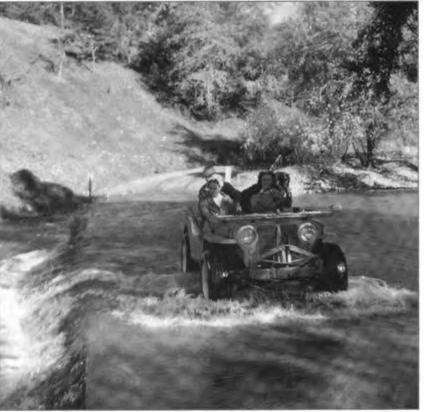
Beginning in 1968 the ranch became the center of Lawton and Bobbie’s lives. First they dammed Barnes Creek to build a beautiful three and a half acre lake. With great help from neighbor Clarence Wright and contractor Pete Baretta, they built miles and miles of jeep and riding trails. And, finally, they built the home of their dreams, a real ranch house overlooking the lake and its towering redwoods. This was followed by a six-stall horse barn to house Bobbie’s quarter horses, Patsy and Tallyoga, and Lawton’s Arabians, Rimrocks and Rayyo Del Sol. The ranch’s horses, jeep trails, redwoods, 25 lakes, wildlife, and gardens were all they had dreamed of.
For the next five or so years the new ranch on Chalk Hill Road was the center of their lives together. But sadly and almost unbelievably to either of them, the beauty of the ranch was serving as a fragile shield hiding deeper problems. After 37 years of marriage, the fascination of raising three children, and a truly full life, they found that their interests and concerns were taking them in different directions. This became so apparent that in June 1975, with deep regrets, they agreed to a separation—and to go their own ways. Soon Bobbie was making new friends and Lawton was renewing relations with Anneke de Weerd of the Netherlands. Anneke had been one of the American Host teachers who in 1968, with Inge Wilms from Germany, had spent a month with Bobbie and Lawton in Lafayette and Tahoe. Bobbie was now living by herself (but with other exchange students) in her 790 Los Palos home. In May of 1976, a tumor was discovered on her colon. Sadly the tumor was malignant and she was operated on immediately. She seemed to recover well, and every month or two, she and her new-found friend, Nicki, from Boston, flew in his airplane to various parts of the country. But after only five months she again began to feel severe pain. She called Lawton to ask his advice. Her surgeon, Dr. Bob Albo, wanted her back in the hospital. She had a premonition she would never return and she wanted to die at home. On the hopefully good chance that things would turn out for the best, Lawton advised her to return. On 15 October, before Dr. Albo had a chance for the second operation, she died in Alta Bates hospital, where both she and Lawton had been born in 1918 and 1914 respectively.
Lawton and Nancy sat with her the night before she died. Nancy Miller, Anneke, and Lawton were with her in the hospital on the morning she died. Bill and Akiko, Jeffrey and Annie Leathers, and Linda were all out of the state. Bobbie was buried in the Lawton plot in the Mountain View Cemetery in Oakland. Friends came from far and wide—it was a sad goodbye. Bobbie left an extremely generous trust to Linda, Bill, and Jeffrey, which has helped make life more comfortable for each of them.
The two photos below show the large headstone on Frank Lawton’s old plot on the hillside Mountain View Cemetery. In the distance the Claremont Country Club where Roy and Hazle, Willard and Nancy, Gene, and later, Lawton and Anneke spent many happy hours golfing. From the 12th hole one can see the hill top location of the Lawton granite headstone. (The evolution of the stone is described in Chapter 7, page 87.)
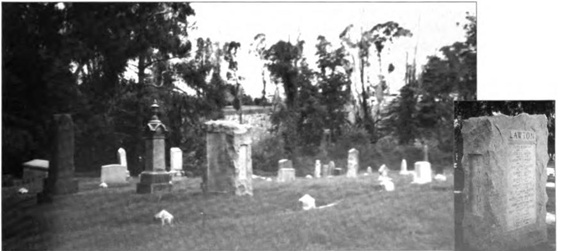
Recall again that in the early 1970s Lawton had sold Thorsen Tools. He now held a 17 percent interest in Hydrometals stock. It soon became apparent to Lawton that this small conglomerate was being run solely for the benefit of its management, not for the stockholders of which Lawton was the largest. It was not a friendly situation.
On 24 January 1977 Wallace Murray, a large, New York conglomerate agreed to purchase all of Lawton’s Hydrometal stock, all cash, no strings attached. Then Wallace Murray in an “unfriendly takeover” (one of the earliest of its kind) purchased all of Hydrometal’s stock and removed its top management. At that point Lawton was still the CEO of Thorsen but resigned after the takeover. On 20 May 1977, with Bobbie no longer there, Lawton regrettably sold the Los Palos home for $245,000. Another sad goodbye after 27 years.
Life with Anneke (1977 -). On 22 October 1977 Lawton and Anneke were married at the family ranch in Healdsburg. Lawton’s sister, Nancy Miller, was Anneke’s maid of honor and his brother, Gene, was Lawton’s best man. Anneke was born Anny Hilda de Weerd on 13 June 1939, in Veendam, Province Groningen, the Netherlands, an only child. Her father, Willem Andre de Weerd, born on 30 March 1902 in Veendam, was a highly successful wholesale and retail grocer. He died on 26 August 1969 in Veendam. Her mother, Anna-Annechiena Spek-man, was born on 1 May 1905 in Veendam, and married on 21 April 1928 in Veendam. She died 22 May 1988 in Veendam. Anneke graduated from Groningen University in 1963 with an MOB degree (midway between a BA and MA in the United States) in French language. Thereafter, for 12 years prior to marrying Lawton, she taught French language and French literature in high school in the Netherlands.
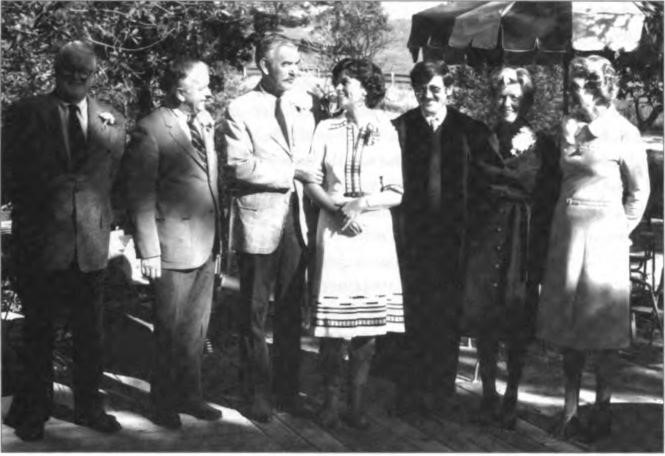
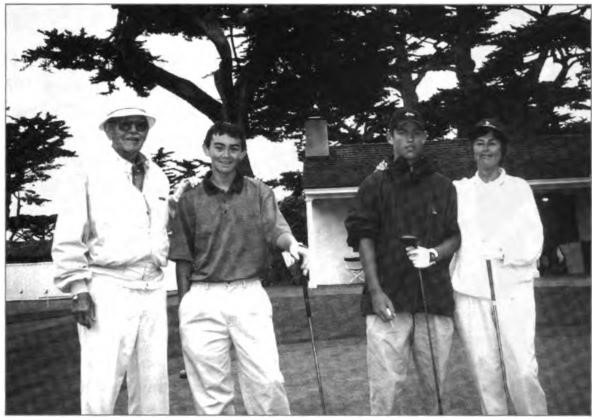
On 15 April 1978 Lawton and Anneke purchased a small home at 774 Augusta Drive in the town of Moraga, right on the seventh hole of the private Moraga Country Club. They became avid, if not expert, golfers, traveled widely with golfing friends, and enjoyed dozens of rounds of golf with the grandchildren, Justin, Joey, and occasionally, Gaby, the soccer player in the family. Their grandchildren all became experts in their fields. They visited “Aunt” Lynda in Covallis, Oregon, fly-fished on the McKenzie River, golfed at Tokatee, and had a generally great time together. Lawton and Anneke enjoyed active semiretirement in Moraga, worked hard at their Healdsburg ranch, and spent summers, next door to the Millers, at Lake Tahoe. By this time Lawton had acquired two small neighboring ranches to bring the Chalk Hill ranch total to over 1500 acres.
At the ranch, Lawton’s latest hobby was the study of the gorgeous native wood duck and its exotic, and only relative, the mandarin duck from the East Asia. Never had the two species been seen flying in the wild together anyplace in the world, so it made a fascinating case study that resulted in writing a book as described below.
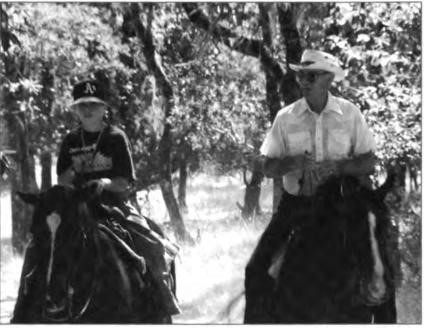
Meanwhile Anneke had shown a surprising interest in the horses and in particularly her purebred Arab mare Rafzonna. For 20 years they have ridden and enjoyed the romantic ranch trails with the many wildflowers and fauna that so delighted her. Bobcats, raccoons, fox, wild pigs, hawks, and wild ducks, even mountain lions and ring-tailed cats, all offered an endless wilderness experience.
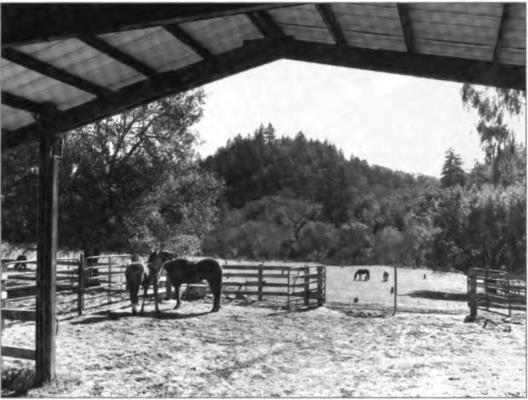
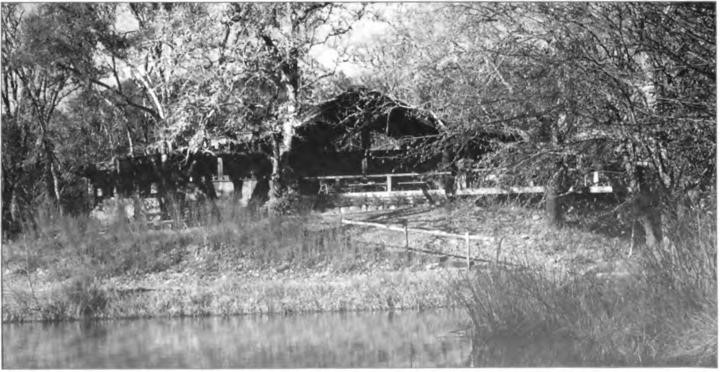
Anneke’s combination vegetable and flower garden was a primary interest, and colorful flowers brightened the inside of their cabin.
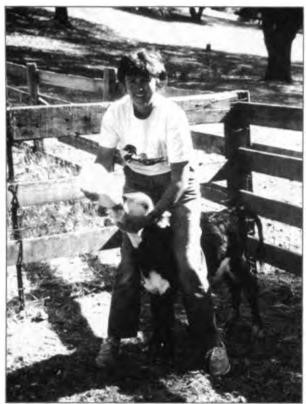
Anneke began managing the 25-50 head of Hereford and Angus cattle and calves, even to tagging and occasionally turning little bulls into little steers. From the mid-1990s on she took full responsibility, ordering hay, planning the weaning and ultimately the sale of the calves to the feeder lots. This even helped to pay the ranch taxes.
On 20 August 1996 Lawton’s beautiful book, The Wood Duck and The Mandarin was published by the prestigious University of California Berkeley Press. It had carefully researched text and elegant color photographs many by Lawton himself. Lawton’s greatest satisfaction came from the outstanding reviews by the scientific press, which rarely review popular books such as this.
He also was awarded several California Waterfowl Association Conservation awards and plaques. These were great triumphs for Lawton, who at age 81 had become a recognized authority on the northern wood ducks he had studied for more than 20 years.

Skip to the year 2004, when Lawton is in his early 90s and John Mackay, his partner is about 85. They are in the process of selling their highly successful Woodlands Office park. The prospect of their many heirs with their differing interests inheriting the office park was not a gift that either John or Lawton wished to leave their children. The park had been a great investment, and now was the time to make it a financial reality.
Roy had worked his own way through the University of California. As Roy had provided for his children’s college education, and Lawton provided for his children, so he is doing the same for his grandchildren’s education. Lawton writes:
For 90 years it’s been quite a trip. My health has been quite good. Exercise, hobbies, reading, writing and keeping up with current events have been my extra curricula activities. For the past 60 years, I have scarcely missed a day of swimming, summer or winter. In years past lots of tennis and squash racquets and, much later in life, a return to golf, often with my grandchildren. Today swimming 10 to 15 lengths of our pool each morning is about enough and 9 to 18 holes of golf (with a cart) once or twice a week is plenty.
On the other hand, the popular afflictions these days are arthritis, hip-protheses, ruptured rotator cuffs, and knee problems. All of these I have enjoyed and most relate to the arthritis, seemingly endemic, in the Shurtleffs’ long history. N.B. As co-author of this book, it has been my pleasure to be in contact recently with many of the Lawton family descendants. Only now have we learned of the relative frequency there of dyslexia, a gene-driven learning impairment, often amenable to therapy and sometimes found in high achieving children (see p. 455).
Nothing could have been better… In the greatest part of the greatest country, in the best of times, blessed with great genes, wonderful friends and employees as well as great good fortune. All of this, the good and not so good, is supported by Anneke, my loving wife and partner. I wish the same good life for all the Lawton and Shurtleff families’ descendants.
Lawton and Bobbie had three children:
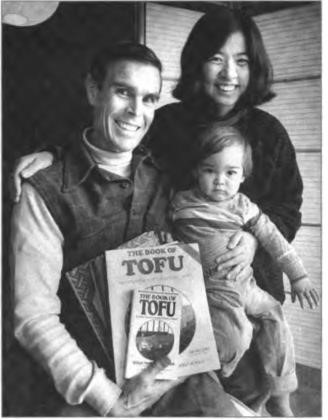
1. William Roy Shurtleff was born on 28 April 1941 at Merritt Hospital in Oakland, California. He graduated from Stanford University in 1963 (BA in honors humanities), taught for two years with the Peace Corps in Nigeria (1964-65), lived with Dr. Albert Schweitzer in Gabon, and studied French at the Alliance Francaise in Paris before returning to Stanford (1966-68) for BS (engineering) and MA (education) degrees, living in the Peace and Liberation Commune, and founding and running the Esalen at Stanford program. In mid-1968, Bill became a vegetarian. From 1968-70 he shaved his head and lived as a monk, practicing Zen meditation under Shunryu Suzuki roshi at Tassajara Zen Mountain Center in California.
In Jan. 1971 he went to Japan to continue Zen meditation practice, learn Japanese at a language school in Kyoto, and live with a Japanese family. In Dec. 1971 Suzuki roshi died, and Bill arrived at the International Christian University in Tokyo to continue his Japanese language studies. On 26 Dec. he met Akiko Aoyagi, and in 1972 he began living with the Aoyagi family in Tokyo and, with Akiko, doing research on tofu. In Dec. 1975 The Book of Ti!tii, their first book, was published.
On 10 March 1977 Bill and Akiko were married in Minato-ku, Tokyo, Japan. She was born on 25 Jan. 1950 in Minato-ku,Tokyo, the daughter of Kinjiro Aoyagi, Jr., and Fumiyo Sugata.
In April 1976 Bill and Akiko had founded the Soyfoods Center. From Sept. 1976 to Feb. 1977 they did a nationwide Tofu & Miso America Tour, traveling 15,000 miles in their van, presenting 70 public programs plus many media interviews and TV and radio appearances. Returning to live at 9511/2 Mountain View Dr. in Lafayette, they started a small publishing company, and continued research, writing and publishing on soyfoods; Akiko did recipe development and artwork. She is the designer of this family history book.
In May 1983 they and Soyfoods Center moved into the first home they owned, at 1021 Dolores Dr., Lafayette. Together they wrote or compiled more than 55 books related to soyfoods and sold over 825,000 copies. The most popular of these was The Book of Tofu. Soyfoods Center’s SoyaScan database presently contains 69,000 records from 1100 B.C. to the present, and its library houses 70,000 documents. Bill and Akiko were pioneers in establishing the present soyfoods, natural foods, and vegetarian industries and movements in America. Bill and Akiko were divorced in May 1995. They had one child:
Joseph Aoyagi Shurtleff was born on 20 Feb. 1987 at Merritt Hospital in Oakland, California. A senior at Acalanes High School in Lafayette, California, Joey excells in math and is a recipient of the 2004 Cal Tech Signature Award. He achieved perfect scores on his SAT I and Ils. He is in the top one percent of seniors nationwide trying to become a finalist in the National Merit Scholarship Competition. He became interested in golf, playing with his grandparents when he was nine. He plays on his high school varsity team and sports an outstanding 4.1 handicap. His latest passion is composing contemporary music, using a synthesizer and computer. He participates actively in his high school civic affairs. He has been au.ept-ed to Stanford University’s Class of 2009.
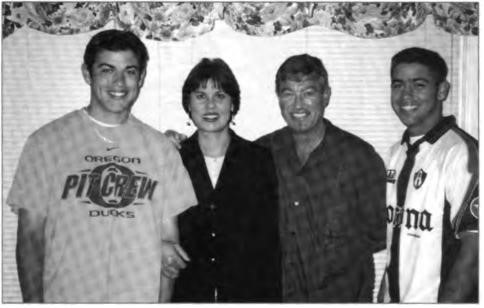
2. Jeffrey Hay Shurtleff was born on 20 Jan. 1945 in Vallejo at Mare Island Naval Hospital. He entered Stanford from the Choate School (in Connecticut) in Sept. 1%2. In 1964 he took a year off in Mexico and worked with a Quaker project. Returning to Stanford in 1965, Jeffrey lived with David Harris and Bill Shurtleff in a large commune named Peace and Liberation, which advocated resistance to the war in Vietnam. In 1968-69 he played folk guitar and sang with Joan Baez in concerts including Woodstock and made four albums in Nashville, Tennessee, including Jeffrey Shurtleff /State Farm. Jeffrey hitch-hiked to Peru, Chile, and Brazil and back to Boulder, Colorado, in 1970-72. In 1976 with financial help from his father and four friends, including Anne Worthington Leathers, he opened Printers Inc. bookstore in Palo Alto. On 13 May 1979 Jeffrey and Anne were married at the family ranch in Healdsburg, Sonoma Co., California, but later divorced in 1981.
After leaving Printers Inc. in 1981, Jeffrey opened Central Park Bookstore-Espresso in San Mateo, the largest bookstore/ cafe in San Mateo County. On 27 Jan. 1984 Jeffrey and Maria de Jesus Flores were married at Coco Palms on Kauai, Hawaii. The daughter of Amancio Flores and Virginia Sanchez, she was born on 30 Dec. 1959 in Apacilagua near Choluteca, Honduras. Jeffrey helped organize Amnesty International’s Group 466 in 1988 and later became it’s local coordinator. When Central Park Bookstore closed in 1994 due to discount chain stores and internet competition, Jeffrey and Maria opened Mother Goose Playschool in their home at 270 La Prenda in Millbrae, and Jeffrey began taking classes in early childhood education. This work also completed his Stanford English major and he received his BA from Stanford in 1996, the same year he and Maria purchased their home at 384 Hazel Ave., San Bruno. Jeffrey has been teaching pre-kindergarten classes in several Peninsula and San Francisco Centers including Genentech, Healthy Environments, El Buen Samaritano, and most recently Holy Family Day Home, focusing on bilingual literacy in Spanish and English.
He traveled in their family van with Justin, Gaby, and Maria to all the adjacent states west of the Rocky Mountains, and to Northwest Mexico and Southwest Canada. Since 1963 he continues to study and practice Buddhist and Taoist yoga, non-violent political action with Quaker meetings, Buddhist Peace Fellowship, and The Green Party of California. He also studies spoken Mandarin Chinese, keeps a personal journal, and has a passion for gardening fruits, vegetables, and ornamentals at 384 Hazel Ave. In his never-ending search for peace, Jeffrey actively opposes the present war in Iraq. Jeffrey and Maria were divorced in 1999; they had two sons:
Justin Avery Cooper Shurtleff was born on 4 March 1985 at Seton Hospital in Daly City California. Being bi-lingual in Spanish has helped him to excel in academics and athletics since childhood. His name is on public display for Soccer Awards at Mills High School in Milbrae. He entered the University of Oregon in 2002, and has earned academic honors in journalism and environmental studies. In addition to being an avid Oakland sports fan, Justin enjoys wilderness sports in the Northwest, and also writes, performs, and records his own hip-hop music, an artform of which he has built a huge collection of recordings.
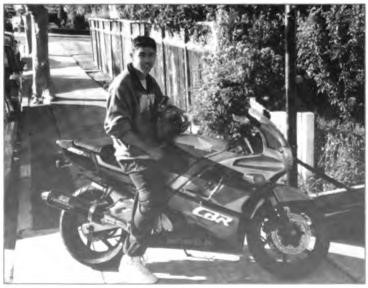
Gabriel Hay Reinhardt Shurtleff was born on 14 June 1988 at Kaiser Hospital in Redwood City California. Being bi-lingual since childhood he has played for many local Latino soccer teams and won awards for excellence at Burlingame High School and the Aloha Cup in Hawaii. Gaby credits his brother Justin as being a close friend and mentor. He plays and writes music for his bass guitar, collects recorded hip-hop tunes, and races all over the Bay Area on his silver motorcycle, occasionally with his father, Jeffrey, also riding alongside. He plans to attend a University on the Pacific Coast after graduating from Burlingame.
3. Linda Shurtleff was born on 28 May 1949 in Berkeley, California at Herrick Memorial Hospital (2001 Dwight Way). On 28 May 1979 she graduated from Linfield College in McMinville, Oregon. She moved from McMinville to Corvallis on 1 Sept. 1984. In about 1992 she changed the spelling of her first name to Lynda. In Dec. 1994 she and her dad bought a two-bedroom triplex of which she is now majority owner. In 1997 she started her cat-sitting business “Let Lynda Love Them.” She has always loved animals and has raised a variety of pet companions in her home, including cats, a 17-inch bearded dragon lizard, and a Russian tortoise. She has long been very involved in church activities and in other civic groups. Lynda enjoys residing in Oregon and exploring creative ways of living.

Pictured above: (Left) Linda at her happiest in the rocky mountains of Echo Lake, circa 1953. (Right) Linda with her first great horse, Peggy, in Lafayette, circa 1961.
Bobbie was by any measure the greatest influence and inspiration in Lynda’s life. Lynda is presently planning a trip from her home in Oregon to Echo Lake to relive where she and her mom spent many priceless hours. She recalls particularly hiking the Brook Trail up the mountain high above the channel to Cup and Saucer lakes.
This love and affection felt for Bobbie by family, friends, and all who knew her are illustrated on the following page.
ERNEST D. MENDENHALL, JR.
286 SAN RAFAEL AVE.
BELVEDERE, CA 94920
Oct 22, 1976
Dear Lawt:
Sometimes we write things better than we say them.
About Bobbie. 1 am grateful for the heritage she left Barbara and me. That is, a heritage of gentleness. Nobody ever did that before.
This was a white gloved Pasadena girl who would run a chain saw and hold a dying colt in her arms.
This was one who would leave her spirit in what she planted so it could pass on to others—our little oak tree now growing from the acorn she nurtured in a pot and gave to us—the burgeoning, hairy begonia she rooted from a leaf and now adorns our living room.
That preacher was right in so many of his comments.
We have Bobbie with us in the heritage of unforgettable gentleness and in the growing things all around.
Come see us soon.
Ernie
 Shurtleff & Lawton Families Genealogy & History - Second Edition (2005)