** All Text on these chapter pages has been copied verbatim – with permission – from this book: “Shurtleff Family Genealogy & History – Second Edition 2005” by William Roy Shurtleff & his dad, Lawton Lothrop Shurtleff ** Text in pdf convert to word doc – any spelling errors from the book may or may not have been fixed. **
On 19 September 1977 the entire extended family celebrated Roy’s 90th birthday with a large family party at the Bohemian Grove.
Remarkably keen of mind and witty Roy gave a toast and little speech, mentioning most of his many descendants by name. He had three children (all living), ten grandchildren, and 16 great-grandchildren, a total of 29 direct descendants. (Two more great-grandchildren would be born while he was still alive.)
Roy was presented with an album of photographs taken over his entire lifetime. In addition, many color photos of the entire group were taken.
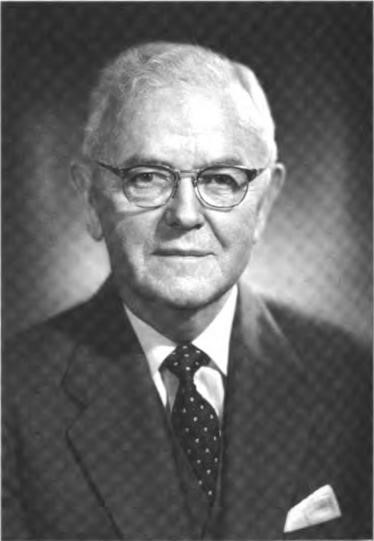
(picture – A fine photograph of Roy (taken in 1960 by Hartsook) was featured in both the San Francisco Chronicle and the San Francisco Examiner following his death on 15 June 1985.)
In 1980, on his 93rd birthday, Roy had the wisdom to give up his driver’s license. He had greatly valued the independence of driving his own car for 66 years, and it was with great reluctance that he hired a driver in order to keep up his weekday routine. He was reluctant because, as he told Gene, “It’s so damned expensive, and I’m concerned about the welfare of my heirs.” Also at age 93 his balance was poor and he felt more comfortable walking with a cane. Gradually he had to give up going to the opera and the symphony. In 1980, for the first time in 27 years, he and Mabel did not go to the MacKenzie River in the spring for three or four days of fishing. About a year later he felt unable to wade the fishing stream at the San Francisco Fly Casting Club on the Truckee River. He tried fishing from the bank of the stream but found it unsatisfactory. He continued float fishing from a boat for several years but finally, at age 95, decided that he was too unsteady. In 1982 he gave up his regular membership in the Fly Casting Club. His comment was: “One’s horizons become narrower and narrower as the years go by.” He once said to his son Gene, half joking: “You’ve never been this old, have you.” More poignantly and perceptively he remarked: “This getting old is not for sissies!” But he remained content with his very limited activity and daily routine.
In 1981 the University of California Oral History Program, under the direction of Mrs. Willa Baum, did a series of long interviews with famous members of the Class of 1912, which included Earl Warren and Roy. A summary showed Roy to be a charter member of The Robert Gordon Sproul Associates (in support of scholarships). The interviews with Roy were published in 1982 as a 70-page hardcover blue book titled The University’s Class of 1912, Investment Banking, and the Shurtleff Family History. Roy’s memory at age 94 was remarkable, as were his humor and light, modest touch. His interviewer, Harriet Nathan, wrote in her introduction:
Seated at his desk, Mr. Shurtleff was impeccable in the discreet tailoring appropriate to the San Francisco financial district. He spoke dismissively of his ninety-four years which he said had recently begun to limit his energies and activities. His manner of speaking, clarity of perception, candor, and lack of pretense coupled with a quick humor revealed a lively spirit apparently impervious to time When asked about his role in the investment banking enterprises that supported the building of the West, Mr. Shurtleff waved away so grand a notion and said with a smile, “We were just trying to make a living.”
In September 1982, on Roy’s 95th birthday, his three children and their spouses and Mabel held a party for him at the Pacific Union Club. The Cal oral history was presented at that time. Gene had arranged for part of the Cal Glee Club to sing some of Roy’s favorite old Cal songs. When they finished, Roy asked if they could sing what had once been Cal’s most famous song, “All Hail.” But to his disappointment they admitted that they didn’t know the words.
Roy continued to be active, in part because Mabel preferred not to have him remain at home during the day. This was undoubtedly good for his health, as it forced him to be up and around. Each weekday his driver would pick him up at home at 898 Francisco, so that he arrived at his office at Blyth Eastman Paine Webber in the Bank of America Building at about 10:30. There he read his mail and looked over his investments. He invested mostly in companies whose principal assets consisted of natural resources (timber, petroleum, minerals, etc.), which he felt would be in constant demand. At 11:30 he left for the Pacific Union Club or (each Thursday) the Bohemian Club. At the latter, he had a set domino game with Nelson Hackett, Ron Taylor, and some general. Lunch was preceded by one or two martinis, and followed by dominoes with his cronies or with Gene. He loved his martini (it was almost a ritual) and was very meticulous about how it was made, with “two olives and a twist,” as he patiently explained to the waiter. In later years, when he was hard of hearing and wore a hearing aid, his detailed instructions would occasionally cause the otherwise quiet, somber room to burst into laughter. He was said to be a sharp domino player. Back to the office at 2 he attended to other affairs, sometimes took a nap, then returned home at 4. As the years passed, he arrived at the office a little later in the morning and returned home a little earlier. On weekends and in the afternoons, he liked to work in his garden at home. Once a month he had lunch with his three children, often at the St. Francis Yacht Club, the Bankers’ Club in the Bank of America Building, or, when the weather was nice, his favorite golf club, the Claremont Country Club in Oakland. On weekends he liked to putter around the garden or his workshop, and on Sundays he and Mabel would often dine at the St. Francis Yacht Club.
In the late 1970s or early 1980s, Roy and his three children decided to have lunch together (without their spouses) once a month. They did this largely because Lawton and Nancy rarely saw Roy, in part because they lived across the Bay, and in part because Mabel was increasingly unfriendly. Each of the four took turns as “host,” deciding where they would meet and paying the bill. When Roy or Gene was host, the group would usually meet in San Francisco at the St. Francis Yacht Club. When Nancy or Lawton was host, they would usually meet at the Claremont Country Club in Oakland. Then once a year, each person would host the lunch at their home. They would talk about families and children, and catch up on who’s done what and who’s going where. The men would talk sports and the women would gossip.
To what did Roy attribute his longevity? Above all the family genes. A strong constitution runs in his mother’s side of the family; Roy’s two half sisters, Jessie and Nettie, lived to age 93 and 96 respectively. Plus moderation in eating and drinking. “If you have any bad habits, don’t overdo them,” he advised. Also an ongoing interest in life, and active exercise, as with his fly fishing and gardening.
During 1983 and 1984 Roy’s health went rapidly downhill, as did things at home with Mabel. She was not well, continuing to suffer from heart trouble and high blood pressure. The chauffeurs would report how she screamed at him and made his life miserable. Gene recalls how, roughly once a month, she would call him at about 7:30 in the morning and say, “Your father has fallen again.” Apparently the blood didn’t get to his head well after he got up in the morning. Gene would say, “I’ll be there as soon as I can,” and she would retort, “You’d damned well better get over here in a hurry.” When he arrived she sometimes asked sharply, “What are you doing in my house?” He would explain that he had come to help his father. Roy would be lying on the stairs where she had left him. Gene would help him back into bed. Then the next thing Gene would know, Roy would show up at the office.
Mabel complained that nobody realized what a trial it was for her to be living with an “old man” like this, ill, demanding, and hard of hearing. But when Nance suggested that they get a day nurse, Mabel would have nothing to do with the idea. Nance added: “I find very few people that I can’t figure out and can’t get close to. With Mabel I really tried, but nothing worked.”
On 29 May 1984, early in the morning, Mabel phoned Lawton at his ranch in Sonoma County. Gene was out of town. She explained with great agitation that she could not get Roy out of bed—he just lay there staring with open eyes and not speaking. By prearranged plan with Gene and Nancy, Lawton explained that he would call Dr. Bartlett, Roy’s physician, requesting that he see Roy at once. Dr. Bartlett diagnosed Roy as having had a severe stroke, following several minor ones in prior months.
Roy was admitted to St. Francis Memorial Hospital, on whose board he had served for many years. He was given room 919, coincidentally the same as his birthday (9/19), thus completing the circle. Though he was weak and disabled, his condition slowly improved.
About 7 to 10 days after Roy’s stroke, he had come out of his semi-coma and was taken off intravenous feeding. He was then “decertified.” The doctor said that he did not need to be in a hospital anymore and should go home. Medicare would no longer pay his expenses, and skilled nurses at home should care for him. But Mabel would not allow any such help in her house and Roy had said in the past, concerning the other alternative, “I don’t ever want to be warehoused in an old folks facility or nursing home.” Furthermore, there was a long waiting list at skilled nursing facilities in San Francisco.
So his children decided that the best place for Roy was in the hospital. As a result of his having served on the board of the hospital for 15 years, Gene (who was now on the board) was able to negotiate with the authorities of the St. Francis Hospital to pay them approximately the equivalent of what Roy would have had to pay in a skilled nursing facility. This was a small fraction of the standard rate for a hospital room, which was about $600 a day, or $18,000 a month. This arrangement was a tribute to Roy’s long-standing relationship with the hospital—and a well deserved return on his investment of time and energy. In addition, the family paid for two shifts of hospital nurses in his room, Herston and Chuck ($8-10/hr) during the week and Joe, two shifts each Saturday and Sunday.
By late July Roy was often able to recognize friends and relatives who visited, sit up in a chair, and talk a little. Though he was often in pain, he never fought his basic situation. It soon became clear that Roy liked the hospital and felt it was well run. One incident makes this abundantly clear. One of Roy’s three black nurses, Chuck, asked Gene one morning, “Who is Charlie Blyth?” Gene explained that he was Roy’s lifelong business associate and partner. The nurse went on, “Well, during the night Roy asked me ‘What is the name of this club?’ I told him it was the St. Francis Hospital. He said ‘Ya know, I think we ought to buy the place. Would you please take a letter to Charlie Blyth? Tell him I’d like to recommend that he discuss with George Leib the possibility of our buying the St. Francis Club.”
His memory, so remarkable in his later years, also began to return. When grandson Bill Shurtleff visited in August and showed him a rare photograph of his grandmother, Maria Louisa Avann, a spark of recognition slowly came to his eyes as he said faintly, “She was from Tenterden in England.” But his memory was far from what it was before the stroke and he was easily confused. One time, before Gene left on a short trip to Carmel, he told Roy where he was going. Roy replied, “Oh, my son Gene has a house in Carmel.”
Nancy notes: “Mabel visited Roy in the hospital regularly, never missing a day. She was as devoted to him as anyone, and she felt it was her duty as his wife.” This was, again, the lovable side of Mabel that had caused Roy to marry her 35 years earlier.
On 19 September 1984 Roy’s three children and their spouses all visited Roy to celebrate his 97th birthday. Gene had arranged for a flotilla of balloons. There was a big silver one with “Happy Birthday Roy” printed on it. Each of Roy’s children’s names were written on balloons of one color, his grandchildren’s names on balloons of a second color, and his great-grandchildren’s names on balloons of a third color. There were 32 helium balloons, delivered in hand by a “balloon girl.” It was a gala affair. When Gene asked Roy, “How would you like a little martini?” Roy quickly replied, “Who said anything about little!” And when the balloon girl asked Roy, “Where did you get this wonderful family” he chuckled, “Oh, just picked them up along the way.” The balloons bobbed from Roy’s bedpost for the next few days and were then distributed to children in the hospital burn center.
Roy’s stay in the hospital for a little more than one year showed, once again, what an iron constitution he had, a priceless set of rugged genes bequeathed to all his descendants. Though his pure white hair grew down to his shoulders, his body was thin and his cheeks sunk, and he often suffered from bursitis and had to be lifted in and out of bed, he just kept going, even to the doctor’s astonishment, long after all medication was withdrawn. During his last six months he needed a great deal of sleep and he often seemed unable to recognize visitors. But then he would snap back. Up in a chair at least once a day, he always took his food with a spoon (though he was often hand fed) and drank from a cup (often using a straw). He had a good appetite and was never put back on the IV. He seemed to enjoy watching baseball and football games on TV, and talked a little, though less and less.
During his hospital stay, as Gene observed, “Roy continued as always to make friends and to earn the love and respect of those around him, even while very ill and totally dependent. He never lost his dignity, his sense of humor, or the wonderful grace that carried him through all the years.”
Finally, on 15 June 1985 (father’s day) at 6:15 p.m., at age 97, Roy Lothrop Shurtleff died peacefully in his bed at the hospital where he had been for just over one year. The immediate cause was a stroke as a consequence of cerebral arteriosclerosis and heart failure.
He was survived by his second wife, Mabel, his 3 children, 10 grandchildren, and 18 great grandchildren. In 1962 Roy wrote a memorandum to his kids, requesting a simple service in his memory at the Chapel of the Chimes in Oakland. In 1981, while updating his will, he noted that since all his close friends from his generation were long gone, there was no need for a funeral or memorial service. The family suggested memorial gifts to St. Francis Memorial Hospital or a charity of the donor’s choice.
Roy’s body was cremated and his ashes placed in an urn at the indoor Shurtleff niche (which he had established some years previously) at the Columbarium of the Mountain View Cemetery in Oakland (Section 14, Niche 2, Tier 3). The first Shurtleff names on the plaque in this niche were Rose Kerner (1918-1961) and Bobbie Reinhardt (1918-1976).
Roy’s obituary was carried in both the San Francisco Chronicle (June 18, p. 16) and the San Francisco Examiner, with the nice Hartsook photograph. Roy’s life had been an inspiration to his many friends and acquaintances, and upon his death resulted in a flow of expression of love, admiration, and respect. Gifts from friends and members of his family to St. Francis Hospital established a permanent fund in his memory, and room 919 was named the Shurtleff Room in his honor. A plaque on the door read:
Presented by Friends and Members of His Family
In Memory of Roy L. Shurtleff
1887-1985
Dedicated and Loyal Hospital Trustee
Respected Civil Leader
The more than two hundred letters of condolence that poured in from Roy’s many personal and business friends were mostly, of course, from a younger generation:
Roy was a super camp mate. He was always so friendly and kind to the younger generation… He was not only a wonderful person but a great guy—Thomas Witter
Roy was very special to me. He always had an encouraging word, even when life seemed almost too difficult to endure— Morse Erskine
He was a great man of the old school, and his passing marks the end of an era—Mignon Rowe (Piedmont)
Roy was a gentleman and an extraordinarily kindly man—Robert G. Sproul, Jr.
Roy was a great guy—an enthusiastic fisherman, a competitive domino player, a leading citizen of the community, and a man with a host of friends. Despite the generation gap I considered myself one of them—Walter A. Haas, Jr.
Roy will always be remembered in our financial community for the fine example he set for our generation as a top quality investment banker and leader of the financial community—Robert E. Sinton
One of the outstanding men of that great class at Cal— the Class of 1912—Lil Haven
I shall miss the presence of the man who gave me my first job, and the inspiration to emulate his gentle ways. He was a good one!—Ernie Mendenhall
Though 1 knew Roy’s death was a blessing under the circumstances, I still had the feeling of seeing a cliff falling into the sea—William K. Bowes, Jr.
Mardy Peet Love wrote a longer recollection:
Perhaps you’d like to hear just one of many memories 1 have of Uncle Roy. When Auntie Hazle and Mom (Dorothy Peet] went to Hawaii together for a month, I was in Jr. High School. Nonie was a freshman at Cal and stayed in the Theta house. Dad (Harry Peet] and I moved to the “Ranch” with Roy. Many afternoons, Uncle Roy came to Willard Jr. High in his Packard to pick me up and drive me to the Ranch. He always seemed pleased to be doing this chore as if it was perfectly natural for him to leave work early and drive a 14 year old home. On weekends (& evenings, too) he spent a lot of time teaching me some of the finer points of life, i.e., proper way to cut a squab!!
Hazle and I had a very long and special friendship (she started me on antiques!) but my memories of Roy and his many warm gestures toward me are perhaps unknown.
In his will, last dated 1 May 1981, Roy asked that his home and personal belongings be given to his wife. Then, on the condition that his estate was worth more than $1 million, he made three special bequests: (1) To his secretary, Grace Elizabeth Franks, “in gratitude for her many years as a valuable associate, particularly for her energetic and skillful work covering our fifteen years of gathering material and publishing the DeSCIfIlliallis of William Shurtleff” $20,000. (2) He intended to remember Dorothy Lawton Peet
in his will in gratitude for her loving care of his first wife, Hazle. But since Dorothy predeceased him, Roy left $10,000 to her two daughters, Eleanor (Nonie) Peet Kelly and Marjorie (Mardy) Peet Love. (3) To the San Francisco Presbyterian Orphanage and Farm, now called Sunny Hills, $10,000, in memory of his mother, Charlotte Avery Shurtleff. (Roy had sent them $25-35 a month throughout his life.) Finally, he asked that the remainder of his estate be divided equally between his wife and three children, with Bank of America as executor.
The value of Roy’s estate was appraised at $5.8 million, not including his and Mabel’s home at 898 Francisco. Virtually all of the value was in stocks and bonds. This was a remarkable residue considering the many years of gifting to his children, plus his many charitable and political contributions.
After Roy died, his three children now, together with their spouses, continued to meet for lunch once a month, following the same basic format established when Roy was alive. This custom continued over the years.
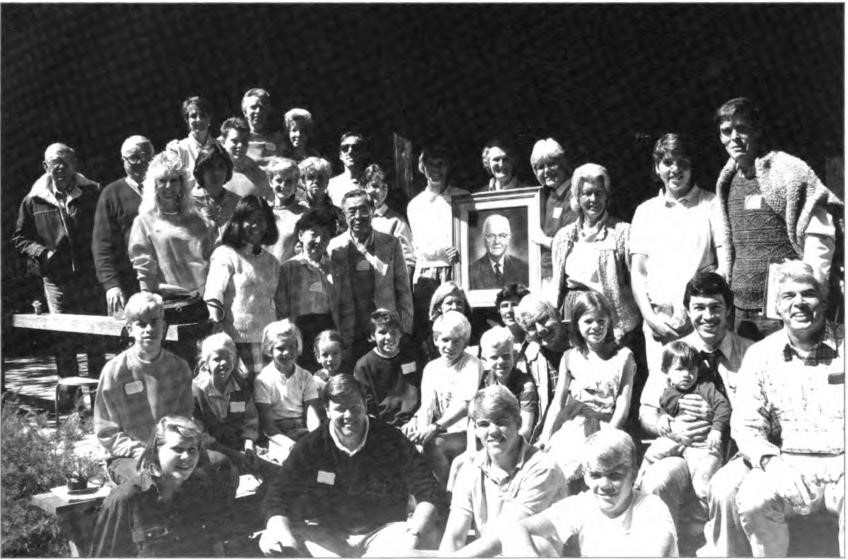
On 21 September 1986, about a year after Roy’s death and a year before the 100th anniversary of his birth, Roy’s children, grandchildren, and great-grandchildren gathered at the Lawton Shurtleff ranch in Sonoma County for a combination family reunion and day of remembrance and appreciation. An updated family tree was developed for the occasion and distributed to all present. First, the autobiography that Roy had written in 1941 was read aloud by a number of his grandchildren and great-grandchildren. Then Roy’s three children told the story of his life and answered questions, with Bill Shurtleff, the oldest grandson, acting as master of ceremonies. The day was a great success in every way, and many of the younger generations enjoyed a rare opportunity to hear, most for the first time, about the history of their ancestors.
 Shurtleff & Lawton Families Genealogy & History - Second Edition (2005)