** All Text on these chapter pages has been copied verbatim – with permission – from this book: “Shurtleff Family Genealogy & History – Second Edition 2005” by William Roy Shurtleff & his dad, Lawton Lothrop Shurtleff ** Text in pdf convert to word doc – any spelling errors from the book may or may not have been fixed. **
As noted above, in late November 1945 Roy moved away from The Ranch in Martinez and into the Pacific Union Club at 1000 California Street in San Francisco. There he lived alone for the next four years. In about 1947, at age 60, he decided that he would have to develop new interests outside his business. He entered the Cal evening extension program and took a course in Great Books. He also took bridge lessons. One photo shows him in 1947 in a canoe at the Pennoyers’ at Lake Tahoe. Another shows him in the winter of 1948 at Yosemite with Lawton and Bobbie Shurtleff.
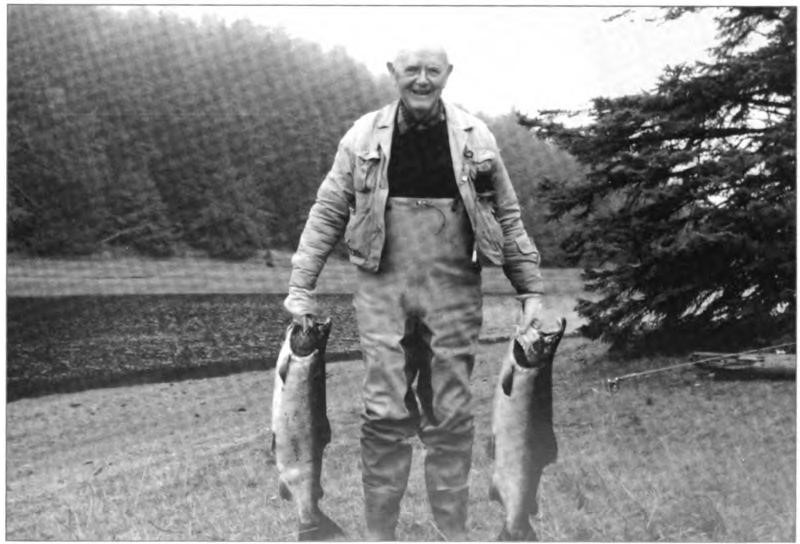
At about this time Roy renewed an old friendship with Don Kessler, a great fly fisherman from Piedmont. Don taught Roy fly casting at a lake designed for that purpose in Golden Gate Park, then took him to the San Francisco Fly Casting Club on the Truckee River and on various fishing trips. Thereafter Roy became a devout and serious fly fisherman. It was his first new recreational hobby since the gardening, home brewing, horseback riding, and golfing of his younger years. He loved not only the fishing, but also being out in the bosom of nature, especially in the wilderness. Gene later remarked that “whenever Roy got interested in anything, he did it all the way, in depth and with great thoroughness.” This trait seems to have passed to his three children.
In February 1946 Roy was named to fill a vacancy on the Iron Fireman Manufacturing Company’s board of directors, caused by the death of his friend and colleague Mansel P. Griffith.
During the lonely years at the PU Club, Roy frequently visited his children. Nance recalls how he would come to work in her garden almost every weekend.
Roy had always lived a life of self-discipline and moderation. Moderate with food, he was trim throughout his life. He had always been a fairly moderate drinker, but after his separation (perhaps because he realized the temptation that loneliness and boredom could bring) he drank less than before. Nance remembers him saying that he had set down a rule for himself not to have more than two cocktails for either lunch or dinner, during this time of aloneness. He was rarely known to break it, except perhaps on rare occasions at a special party. But after he remarried, he didn’t find it necessary to adhere to that practice.
During the late 1940s Roy’s three children completed their families, blessing him with ten grandchildren. Lawton was successfully running his own business, Thorsen Tool Co., and Gene was moving up the corporate ladder at Blyth, as was Willard at Dean Witter.
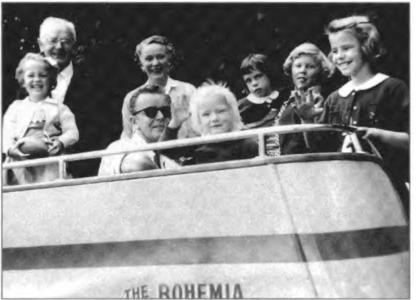
Starting in about 1947, Roy decided that he wanted to do more things with his grandchildren to keep in touch with them and to know them as they were growing up. So began a tradition of taking all of his children and grandchildren to the zoo in San Francisco then, from 1948, on a one-day weekend trip to the Bohemian Grove in Monte Rio each year in early October. It was a day of fun! There were presents galore, with long noses attached to thick-rimmed glasses, crazy hats, rockets that zoomed into the air, horns, and squeakers. There was lunch high above the Russian River, riding in the big blue and gray open bus named The Bohemia, the moist smell of redwood air fragrance, tossing the football, listening to the World Series, and often some acting at one of the Grove stages. For the many cousins it was a time to be together, packed with memories and good times. Many photographs were taken—and survive—to record those memories.
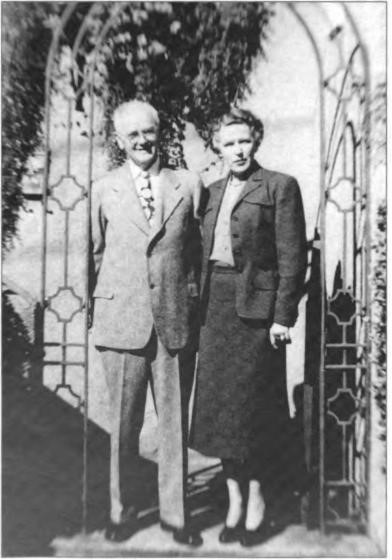
On 12 March 1949 Roy remarried in San Anselmo, California, to Mabel Gertrude (Mitchell) Dunn, his personal secretary. Some time before their marriage Mabel would shop for Roy, picking out Christmas or birthday presents for his grandchildren and the like. Born in Gridley, California, on 23 October 1901, she was the daughter of Edward F. Mitchell and Erma Florence (Rogers), and widow of H. Arthur Dunn, Jr. Roy and Mabel were married in a family service at the home of and by the Reverend Lynn T. White. Rev. White was a friend of Roy’s and his son was president of Mills College, where Roy served as a trustee for many years.
Several weeks before the wedding, on 28 February, 1949, his daughter-in-law, Bobbie Shurtleff, wrote him this letter, which he kept the rest of his life:
Dearest Dad:
This is the kind of letter it’s really fun to write—a letter full of congratulations and love and happy things to come. We were so very glad to have you and Mabel drop in yesterday afternoon in the midst of all that wonderful sunshine—only wish you could have stayed longer.
I told you in person, Dad, but I want to tell you again how very happy I am that you’ve found the girl who can put an end to your loneliness and bring you the love and companionship that you’ve needed for so long. I’ve never really gotten used to the idea of picturing you all alone in your room at the P.U. Club and when we would leave you there after a nice family evening of fun together it made us all sort of blue. But now that chapter is nearly ended and you’re to have a bride and a home and we’re to have a lovely new member of the family and the joy of knowing that you’re no longer alone.
I think Mabel is darling and I’m awfully anxious to know her better. We’re all set for March 12, complete with sitters and rice, so let the time fly by and we’ll all concentrate on a beautiful sunny day for you.
It goes without saying that we wish you both a wonderful life and many many years of happiness together.
My dearest love to you always,
Bobbie
Roy moved out of the Pacific Union Club, and he and Mabel lived for about a year at Stanford Court Apartments (now Stanford Court Hotel). There, one evening, shortly after his marriage to Mabel, Roy wrote her a little poem:
I have put on the lights,
And put out the cat,
Put on my coat
And put on my hat.
The only thing I now miss.
Is a pat on the back
And a good night kiss.
See you in the A.M.
Upon returning home, he found this response from his new wife:
The lights were on as I came in,
And the house was as empty as it’s ever been
The good night kiss, I’ll miss it too,
But I’ll go to sleep thinking just of you.
Then Roy and Mabel moved to a lovely house at 1168 Lombard Street. In May 1956 they moved to 898 Francisco, where they lived for the rest of their lives. Mabel attended the Bohemian Grove outings with Roy from 1949 on.
Roy and Mabel got along nicely during the early years of their marriage, and throughout the 1950s. Nance recalls: “They had a close, sweet relationship, and she made Roy happy. They were very compatible. He told me several times that they slept in different bedrooms to help each other sleep better, but he would get up in the morning and climb into bed with her just to be together.”
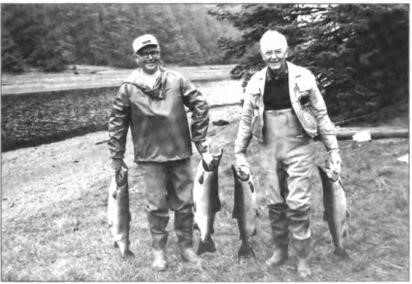
In about 1953 Roy and Mabel began an annual tradition of a fishing trip to Oregon. First they went to Thompson’s Lodge on the McKenzie River, then at a later date to Holiday Farms, a fishing lodge run by Mrs. Vivienne Wright in Blue River, Oregon, also on the MacKenzie. At both places over the years Roy’s fishing guide was always Dick Helfrich of Leaburg, Oregon. Roy’s children often fished with him. In 1953 Roy and Mabel went fishing on the Umpqua River in southwestern Oregon with Nancy and Willard Miller.

The late 1940s and 1950s were busy, prosperous ones for Blyth. In 1954 the company handled security offerings for the new electronics high-flyer Ampex Corp.—taking the corporation public for the first time. In 1955 Roy was promoted from Vice President and Director (a position he had held since 1918) to Vice Chairman. In January 1956 Blyth played the chief role in offering 11.5 million shares of Ford Motor Co. family stock to the public at $64.50 a share. On 26 January Blyth wrote the Ford Foundation a check for $642.6 million This was the largest cash offering of common stock that had ever been made on the American market. A large article about Blyth’s management of the Ford stock debut appeared in the New York Times (15 Jan. 1956, p. F3).
In April 1954 Blyth & Co. celebrated its fortieth anniversary. An attractive 55-page book titled Forty Years: Blyth & Co. Inc. A Profile was published by the firm to mark the occasion. In summing up the basis for Blyth’s impressive accomplishments, it noted:
The credit for this achievement goes to the work, thought and skill of the many men and women of the Blyth organization, past and present. Yet in a large degree it goes also to the unseen but ever present ideal which has guided Blyth & Co. Napoleon said: “The spiritual is to the physical as two to one,” and no enduringly successful business institution lives or can live by bread alone. Strict rectitude and honor in every phase of its dealings and the will to serve the client is the creed which has inspired Blyth & Co. to make investment banking history and has contributed immeasurably to the company’s success.”
Lawton notes: “I believe that the example set by Roy and his associates as men of honor, diligence, and high ethical standards had everything to do with Gene’s and my feelings, held to this day, that business, capital, and wealth are not the dirty words of the New Deal, but are at the heart of our country’s potential.”
Prior to the Ford underwriting, Roy had driven Cadillacs for many years. Now he switched to a
Lincoln Continental, a car made by Ford. In about 1970 he stepped down to a smaller and less expensive Oldsmobile Cutlass, which he thought was just keen, and continued to drive for as long as he had a license.
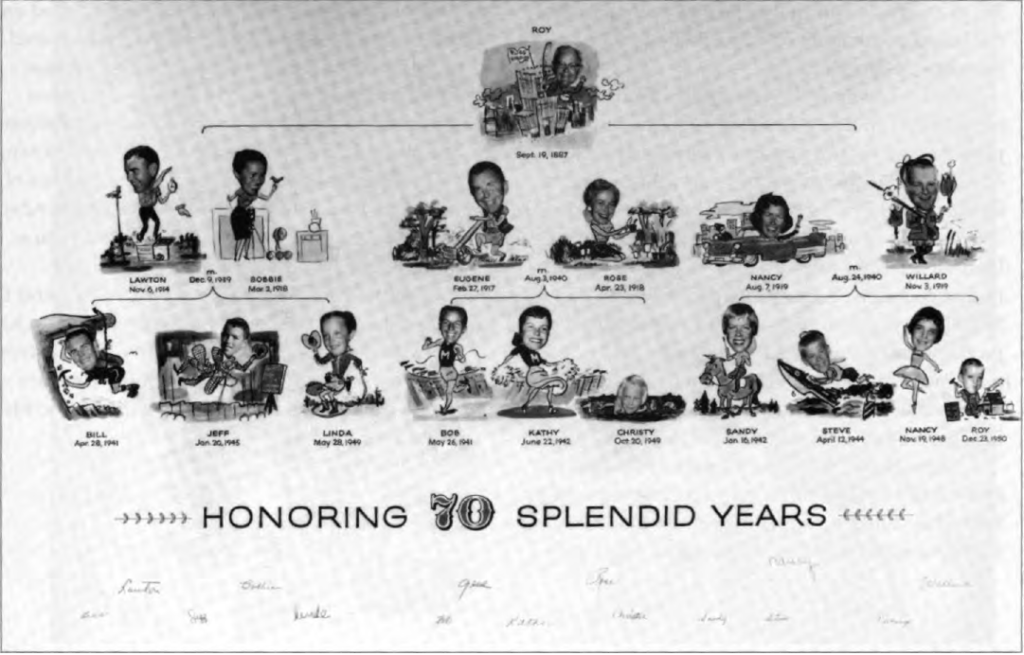
September 19, 1957 was Roy’s 70th birthday. To celebrate the occasion (at Lawton and Bobbie Shurtleffs home in Lafayette), his children created for him a large (16 by 30 inches), colored family tree. On it was a black and white photograph of the head of each of his three children and their spouses, plus his ten grandchildren. Each head was part of a color cartoon, below which was the person’s birth date. Below the cartoons, in large letters, were the words “Honoring 70 Splendid Years” and at the bottom each descendant’s signature. This was presented to Roy at a dinner party, which Mabel had for him at their home. Roy hung this over his bed for the rest of his life.
Also on his 70th birthday, Bobbie Shurtleff wrote him a poem:
For Dad
Oh, men may come and men may go
And some make history.
But very few hold a candle to
The head of our Family Tree.
As a sporting man or a business man
Or a basker-in-the-sun,
The lively lad whom we call “Dad”
Takes second place to none.
He can land a fish that’s a tasty dish,
Eat well and not grow stout.
He can rig a deal for U.S. Steel
That’ll make their eyes bug out.
He can steer a horse on a cowboy course
Or can a wicked ‘cot,
His martinis rare have a fragrance fair
And his dominoes are hot.
But since none of these accomplishments
Can quite describe his worth,
We’re here to swear by the prophet’s hair
He’s the sweetest guy on earth.
With lope and a Happy 70th from us, All Sixteen
In 1958 Blyth handled a major offering for Hewlett Packard. On 25 August 1959 Charlie Blyth, now an internationally known financier and Republican party leader, died at his home in Hillsborough after a long bout with throat cancer. He was 76 years old, a large, handsome man without a gray hair on his head. The company he helped to found now had offices in more than 20 cities from New York to San Francisco. Three years earlier, Mr. Blyth was a leader in arranging one of the biggest corporate deals in modern history —the purchase of the $100 million Dant & Russell shipping and lumber properties and resale of parts of that enterprise to new owners.
In April 1959, when Blyth & Co. celebrated its 45th anniversary, a nice article and a large photograph of Roy, Charles R. Blyth, and George C. Leib appeared in the New York Times (April 27, p. 36).
After Charlie Blyth’s death, Roy Shurtleff was promoted to Chairman of the Executive Committee. Also in 1959 Gene Shurtleff was elected a vice president, and a director in 1960.
In February 1960 Roy and Mabel, with Gene and Rose, went to the Winter Olympics at Squaw Valley, and proudly viewed the Blyth Arena named to honor Charlie Blyth who, at the time of his death in 1959, was chair of the Winter Olympics Committee.
On 18 July 1960 Roy prepared a two-page typed autobiographical sketch for the San Francisco Chronicle. He was a director of Del Monte Properties and Broadway Hale Stores, Inc. Civic activities included membership on the Endowment Committee, Sunny Hills, and a Director of the San Francisco Light Opera Association. He was a member and director of the Pacific Union Club, and member of the Bohemian Club, the San Francisco Bond Club, and the San Francisco Fly Casting Club. He listed his principal hobbies as gardening and fishing. On August 28 the newspaper published a nice color photo of him in his office accompanied by one sentence about his activities.
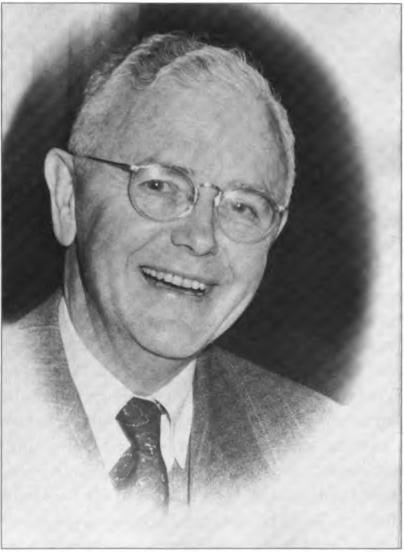
In August 1960, a nice photograph of Roy was taken by Hartsook in San Francisco. It was published in the New York Times (18 Aug. 1960, p. 39) in an article noting that he had been named to the board of directors of Consolidated Freightways, Inc.
Each Christmas Roy and Mabel would visit his children and their families, bringing abundant presents, including generous gifts of stock for Nancy, Gene, and Lawton. Nancy, Rose, and Bobbie would take turns hosting the extended family each year—and all in-laws were invited. Until Roy retired from Blyth & Co., he gave stock in that company. Each stock gift was worth about $3,000, the maximum allowable tax-free gift. It produced no immediate income and could not be redeemed for cash until Roy retired, but its value increased steadily over the years. After retirement, Roy gave other stocks, such as PG&E.
Throughout Roy’s life, Christmas had always seemed to hold for him a very special meaning. When his children were growing up, the family Christmases were major productions, filled with presents big and small. Roy’s children carried on this tradition. But as he grew older, Roy seemed to reflect more on the profound and eternal significance of Christmas. His son Lawton recalls: “Many of his Christmas notes to his children and grandchildren are masterpieces of gentle loving, often religious and philosophical, expressions of family love and support.” He allowed the tender, sentimental, or witty sides of his spirit to shine through in a wonderful way.
These letters were always written by hand to each of his descendants, even when he was in his 90s. Many of Roy’s descendants saved these letters as his most treasured Christmas gifts. Here are two, written when he was in his early 80s, to his eldest son:
Dec. 1970
My Dear Lawts:
The love of a parent for his child is a pretty constant thing, but it doesn’t always show on the surface. Hence we go most of the year taking each other for granted, not frequently touching—. And then comes Christmas! This is the season when we habitually pause to think of each other and express what lies buried in our hearts.
You and yours are very dear to me and 1 take this opportunity to wish you a Merry Christmas in which Mabel joins me.
The gifts are incidental.
Love,
Dad
Dec. 25, 1967
Dear Lawton and Barbara;
The Christmas season and what it stands for makes our thoughts turn to those closest to us—our families. We have so much to be grateful for, health, happiness, creature comforts, and love of each other.
Our thoughts also go to those two grandsons of mine and our difficulty in understanding why they don’t think and act conventionally.
There is, of course, the other side of the matter—They might be right. The world’s struggle for betterment has always been led by radicals. A few who met the disapproval of the “status quo” of their times: Jesus Christ, Martin Luther, William Tyndale, The Puritans, Our Founding Fathers, Abraham Lincoln, etc. There have also been many others who espoused causes which turned out to be merely crackpot.
In this time of universal ferment in the minds of youth, let’s allow time to be the judge.
It sounds like Christmas is also a time for sermons.
Anyway Mabel and I wish you the best, and if these prosaic gifts added to our love help toward a Merry Xmas we’ll be glad.
Sincerely,
Dad
Because all three of Roy’s children lived most of their adult lives near one another and near him, in the Bay Area, there were many opportunities for family gatherings on special occasions besides Christmas, such as Thanksgiving, or hot summer afternoons playing around any one of the three families’ swimming pool, listening to a world heavyweight boxing match or shooting pool at the Eugene Shurtleffs, playing with an electric train at the Willard Millers, or handling pigeons or tossing a baseball or football at the Lawton Shurtleffs.
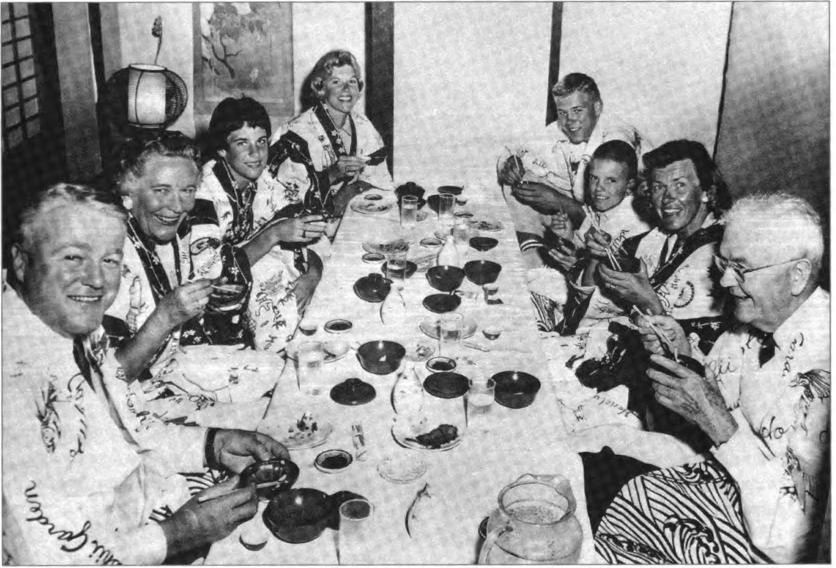
In December 1961 Roy and Mabel took a trip to Honolulu, Hawaii, with Nancy and Willard Miller and their four children. A photo shows them all having a happy dinner together at the Ishi Gardens.
 Shurtleff & Lawton Families Genealogy & History - Second Edition (2005)