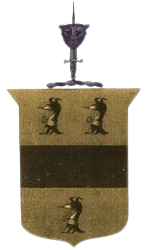
** All Text on these chapter pages has been copied verbatim – with permission – from this book: “Shurtleff Family Genealogy & History – Second Edition 2005” by William Roy Shurtleff & his dad, Lawton Lothrop Shurtleff ** Text in pdf convert to word doc – any spelling errors from the book may or may not have been fixed. **
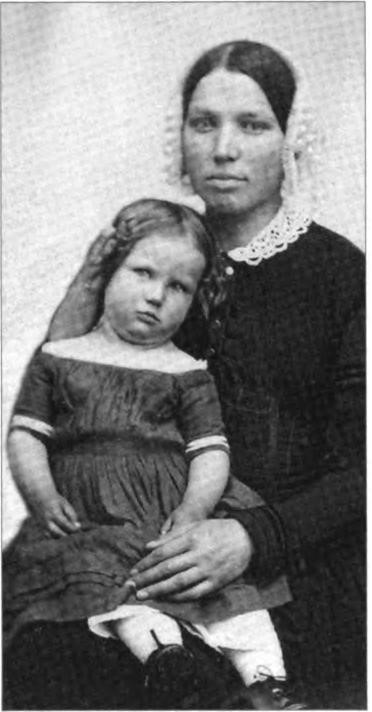
George Avery, Jr., and Maria Louisa Avann Avery were Roy Shurtleff’s maternal grandparents. Their daughter, Charlotte Louise Aseneth Avery, was Roy’s mother.
Charlotte was born in Brecksville, Cuyahoga County, Ohio, on 13 December 1849 nearly 10 years after her parents, George Avery, Jr., and Maria Louisa had arrived in America from England. Recall from Chapter 3 that Charlotte was the third of their four Avery children, all born in Ohio. She had an elder sister, Elizabeth Avery, and an elder brother, William H. Avery. A younger sister died in infancy. Charlotte never knew her own father, George Avery, Jr., for he had died at age 35 when she was only nine months old.
Also recall that in 1853, when Charlotte was three and a half years old, her widowed mother, Maria Louisa, still living in Ohio, remarried—this time to George Reanier. On 3 January 1856, Maria Louisa bore his child, a son, Frank Eugene Reanier. Frank, therefore, was Charlotte’s half brother. Later that year, when Charlotte was only six years old, Mr. Reanier suddenly and mysteriously disappeared. Over the years, Charlotte and Frank became very close friends and remained so for the rest of their lives.
In 1862, near the start of the Civil War, when Charlotte Avery was 13 years old and Frank Reanier was 6, Maria Louisa took these two youngest of her children to California. They traveled by steamer from New York to the Isthmus of Panama, then braved the nearly 50-mile-wide tropical isthmus by small boat, mule back, and foot to the Pacific Ocean, and on to the goldfields in the foothills of the Sierra Nevada. It was an ambitious but difficult adventure and marked the beginning of Charlotte’s lifetime in California.
At first she lived (and probably worked) with her mother and half brother Frank in river towns around Sacramento. In the mid-1860s, when she was only 15 or 16 years old, Charlotte parted from her mother and went the 30 or so miles to Grass Valley, Nevada County California, where she boarded with a Mrs. Stevenson while attending a school for girls. The move was almost certainly at her mother’s insistence and further evidence of this family’s enduring belief in the value of an education.
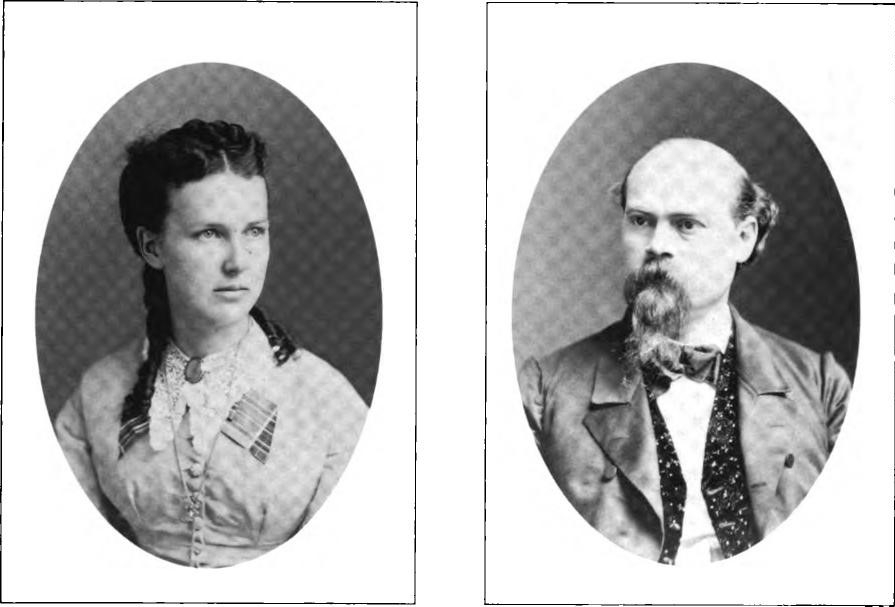
John David Meek, Charlotte’s husband, circa 1866, all- around miner, adventurer, banker, entrepreneur, and artist in those exciting days of the 49ers in the gold country.
Charlotte Avery married John David Meek in 1866 (we don’t know the exact date) in Grass Valley, California. She was age 17. He was about 30, and a partner in gold mining with William Stephenson.
John David Meek and His Ancestors. John was born on 25 December 1836 in Indiana, the son of Lorenzo Dow Meek and Martha Cary. Early generations of the Meeks in England are described in Genealogy: Avery-Meek, by Charles A. Meek (1934). The section titled “John David Meek 1836-1883” begins:
In England there is no prettier stretch of country than that embraced by the boundaries of Lincolnshire. Although this land has been farmed for hundreds of years yet it yields generously. Here in this garden spot was the home of Adam Meek, the primogenitor of our family. He was of Anglo-Saxon descent and first saw the light of day in 1640. He married and had three sons, Matthew, John and Jacob.
Matthew Meek went to Ireland, but John and Jacob had heard of the wonderful land across the sea and had determined to try their fortunes in the new land of America. Thus they left their mother soil and settled in the colonies, on the James River, Virginia, in 1719. Later Jacob migrated to the New England States and his future generations had the privilege of fighting for the colonies under George Washington.
John Meek remained in Virginia, raised a large family and founded the branch of the Meek family from which we have descended. They were not mentioned in the Congressional Records for the reason that they forged ahead of civilization into the western wilderness and were the pathfinders who finally settled in the region now known as Ohio, Illinois and Indiana.
There was one member of tins family that received some prominence; I refer to Joseph Meek, called Oregon Fur Trapper Jo Meek, who went with the Lewis and Clark expedition into what is now Oregon amid Washington…
Lorenzo Dow Meek, our Grandfather, was born in Indiana in 1812…
From this sturdy strain of hardy people our father John David Meek was born Dec. 25, 1836. He in turn followed the heritage of his ancestors and crossed the plains to California in 1858. He had three sisters, Isaphene, Josephine and Christabelle; and three brothers, Samuel Carey [sic, Cary], Irvine Read, and James. Samuel C. Meek went to Socorro, New Mexico; Irvine Read Meek made his home in New Providence, Iowa; James lived in Silver Lake, Indiana…
Our grandmother, Martha Meek, mother of John D. Meek, lived near Liberty Mills, Indiana, and died there at an old age. She was from the old English family, the Careys, and was first cousin to Alice and Phoebe Carey [sic, Caryl, the writers. Their genealogy dates back to the reign of Queen Elizabeth.
The first three paragraphs of this story are taken almost verbatim from the 1902 book A Meek Genealogy, by H. B. Meek. Since the book was written, at least three serious Meek genealogists have tried to trace the family back to England. All have failed, and concluded that the first three paragraphs of the above story are a fanciful account, created by H. B. Meek.
The paragraph about Joseph Meek, “called Oregon Fur Trapper Jo Meek,” refers to a remarkable and famous man—though not our direct ancestor —whose life has been well documented. Joseph Lafayette Meek was born on 9 February 1810 in Glade Springs, Washington Co., Virginia. In 1829 he entered the fur trapping business with the Rocky Mountain Fur Company, then in about 1840 moved to the Oregon Country with Robert “Doc” Newell, his brother-in-law by marriage. They settled near the Willamette River. Between 1835 and 1838, Joe Meek married three times, each to Indian girls. His first wife was killed by an arrow during a fight with another tribe. His last two wives were Nez Perce. His second wife bore a daughter, then got homesick and returned to her people with her daughter—but without Joe. His third wife, the daughter of a Nez Perce chief, bore eleven children from 1838 to 1861. Joe, who became known as “Joe Meek, the Merry Mountain Man,” did not accompany the Lewis and Clark expedition (1804-06), but he was involved in many Indian battles and was friends with other mountain men and trappers such as Kit Carson, Jim Bridger, and Jedediah Smith. On
2 May 1843 American settlers established the Oregon Provisional Government; Meek, known for his courage, good humor, and popularity, was elected the first sheriff. In 1846 and 1847 he served in the second and third sessions of the provisional legislative council. More important, he was instrumental in bringing the Oregon Territory into the United States. In 1848 he and Robert Newell traveled to Washington, D. C. to ask for protection from Indians. There he visited the White House and President James K. Polk, who was a relative of his mother, and who had been trying to persuade Congress to pass a law to annex the Oregon Territory to the United States. The law was opposed by most southern congressmen since Oregon would eventually become a free state. Finally, with Joe Meek’s help, the law passed on 14 August 1848. Polk named Joe the first U.S. Marshal of the new territory. On 14 February 1859 Oregon joined the union as a state. Near the end of his life, Joe dictated his autobiography to Mrs. Frances Fuller Victor; published in 1870 as The River to the West, it contains several photographs and illustrations of him. The book was reissued in 1983.
Joe Meek died on 20 June 1875 in Hillsboro, Oregon, and was buried there under a lone tree at the corner of his farm. Many books and articles have been written about him. Two of the best are: (1) No Man Like Joe, by Harvie Elmer Tobie (1949, scholarly and well documented); (2) Joe Meek, the Merry Mountain Man, by Stanley Vestal.
Joe Meek had an elder brother, Stephen Hall Meek, who also became famous as a “mountain man,” guide, and Oregon pioneer. Born on 4 July 1805 in Washington Co., Virginia, he began trapping in 1827 and crossed the plains with his brother Joe. In 1845 he led more than 1,000 immigrants from Fort Boise to The Dalles over a “short cut” that he knew from his trapping days. This event is the subject of a book, Terrible Trail: The Meek Cut-Off, 1845. Author of the book Autobiography of a Mountain Man, Stephen Meek died on 11 January 1889 in Etna, Siskiyou Co., California. Thanks to Dell and Caroline Nelson of Ft. Smith, Arkansas, for the genealogy and history of Joe Meek and Stephen Hall Meek, plus much more about our Meek ancestors.
The last paragraph about the early Meeks mentions two English writers. Phoebe Cary (lived 1824-1871) coined the phrase “Keep a stiff upper lip” (see Bartlett’s Familiar Quotations).
Christopher A. Meek (Carlisle, Iowa), who has spent the last 20 years trying to document our Meek line, has concluded that it cannot be traced back further than John Meek, who was born in about 1751/1754 in Maryland.
John Meek and Margaret. John Meek, our earliest known ancestor, was born in about 1751 /1754, probably in today’s Howard Co., Maryland. He married Margaret in about 1771 and they had nine children between 1772 and 1788: John, Bazil, Joshua, Jeremiah, Rachel, Patience, Temperance, Sarah “Sally,” and Terah (a daughter). In 1775 John Sr. enlisted at Ellicott’s Mills, Maryland, to fight in the American Revolution. He served as a private in the 6th Company, 4th Battalion, Maryland. By 1780 he and his family were residing in Robinson Township, Washington Co., Pennsylvania. For much of the rest of his life he lived near and moved with his brother, Jacob. By 1788 John and his family had left Pennsylvania and settled on 400 acres at Drennon Lick Creek, Kentucky Co., Virginia. In 1789 he received a pension of $40. On 1 June 1792 Kentucky became the 15th state admitted to the Union. Before that date, much of Kentucky had been part of Virginia. What had been Kentucky Co., Virginia, now became Selby Co., Kentucky. So from June 1792, without moving, our Meeks now lived in Kentucky. In 1799 Henry Co., Kentucky, was formed out of Selby Co., and now our Meeks lived in Henry Co. On 2 May 1801 John wrote his will, which made clear the names of his wife and descendants. He died in 1803 in Henry Co., Kentucky.
John Meek (Ir.) and Margaret Erwin. This John was born in 1772 at Ellicott’s Mills (now Elliott City), Howard Co., Maryland; he was called “Little John.” He lived for a while with his parents in Moon Township, Allegheny Co., Pennsylvania. John married Margaret Erwin on 1 July 1792 in Shelby Co., Kentucky. She was born in 1775 in New Castle, Henry Co., Kentucky. Between 1793 and 1812 they had nine children born at New Castle, Henry Co., Kentucky: William, Joseph, Sarah “Sally,” Mary “Polly,” Jeptha (a son), Jesse, Elizabeth, John III, and Lorenzo Dow Meek. In about 1812 John (Jr.) and his family moved to Wayne Co., Indiana. They later moved to Henry Co., Indiana. Margaret, John’s wife, died in about 1820 at Salisbury, Henry Co., Kentucky. John later returned to Wayne Co., then in 1832 moved to Owen Co., Indiana. John (Jr.) died in 1849 in Morgan Township, Owen Co., Indiana; he was buried there at Pleasant Grove Cemetery.
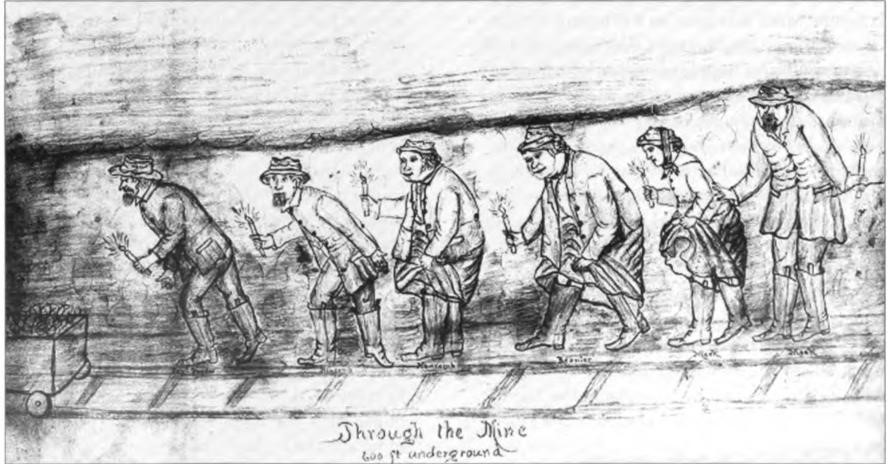
Lorenzo Dow Meek and Martha M. Cary/ Carey. Lorenzo was born on 29 May 1812 in Indiana. On 25 Sept. 1831 he married Martha M. Cary in Henry Co., Indiana. She was born in about 1812 in Ohio. Between 1832 and 1849 they had seven children, all born in Indiana: Isophene Meek (a daughter, born 6 July 1832), John David Merl (born 25 Dec. 1836), Samuel Cary Meek (born 19 Feb. 1838), James Andrew Meek (born 15 August 1841), Irvin Read Meek (born 16 February 1844), Josephine Meek (born 15 June 1847), and Christabelle/Christabella Meek (born 15 November 1849). In 1840 Lorenzo Dow Meek and his family are listed (without much detail) in the U.S. census in Franklin Township, Henry Co., Indiana. In 1850 Lorenzo, with his wife and seven children, appeared (in detail; he was a tailor) in the U.S. census in Henry County, Indiana (page 1, family 112).
Concerning his paternal grandfather, Charles Meek wrote in 1934 in his Genealogy: Avery-Meek:
Lorenzo Dow Meek, our grandfather, was born in Indiana in 1812. In later years he became prominent in county affairs. During the gold rush to the west he conceived the idea of casting his lot with others and succeeded in his adventure. He later returned to Indiana with plenty of gold, but lost it through unwise investments. To regain his losses he again returned to the west, but an unfortunate accident befell him while crossing the Missouri River; his horse slipped in a clay bank, fell on him, breaking his hip. As soon as he was again able to travel he returned to his home in Indiana and died there in 1856.
Lorenzo was treasurer of Henry Co., Indiana, for two terms. He died on 2 October 1856.
John David Meek’s Early Years.
Born in Indiana in 1836, John Meek arrived and settled in Grass Valley, California, in May 1860, probably from Indiana. He had previously been clerking. For a while he mined with a friend, John Webber, in the region of Smartville, just west of Grass Valley. From 1863 to 1866 he served as constable in nearby Nevada City.
On 27 July 1865, with William M. Stephenson, Meek purchased a residence in Grass Valley at No. 16 North Church Street for $250 in gold coin. On September 16 of the same year, he bought Mr. Stephenson’s half interest for $125. It is not known whether at that time there was a house on the property or whether he proceeded to construct one, for it was on this property that he and his family had their home. On 7 March 1866 he purchased from Mr. Stephenson another piece of property on Church St., this time for $350 in gold coin.
Raising a Family. After his marriage in 1866 to Miss Charlotte Avery, John served as deputy postmaster from 1867 to 1871. John and Charlotte’s first child, Charles Avann Meek, was born on 6 April 1868 in Grass Valley. Two years later, in 1870, Jessie was born.
After the expiration of his term in the post office, John worked from 1871 to 1875 as cashier in the A. A. Delano Bank of Grass Valley. On 4 December 1871 he purchased lot 13, block 6, from the Trustees of the Town of Grass Valley for $7. In 1874 he was treasurer of Grass Valley.
After the death of Mr. Delano in 1874, John was named as one of his executors. He helped to settle the estate and dosed the bank’s doors in 1875, then for a short time he returned to the life of a miner.
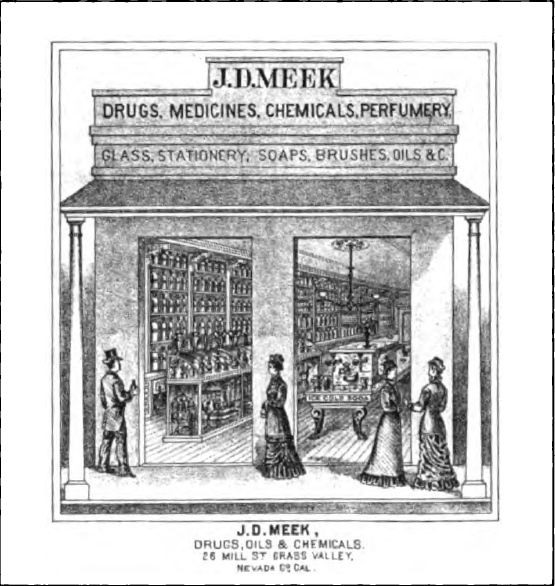
In February 1878 John bought the drugstore of C. C. Smith on Mill Street in Grass Valley and became self-employed. It seems likely that his savings and the fees from his executorship provided the capital for this purchase. The sign read: “J. D. Meek: Drugs, Oils, and Chemicals.” The History of Nevada County, by Thompson and West (1880, p. 104), has a full-page illustration of this store. His biography(p. 224) notes: “His place of business is No. 26 Mill street, residence No. 16 North Church street.” He and his wife have one son and one daughter. Note: As of July 2000 his store, which is now an antique store, is numbered 126 Mill St.
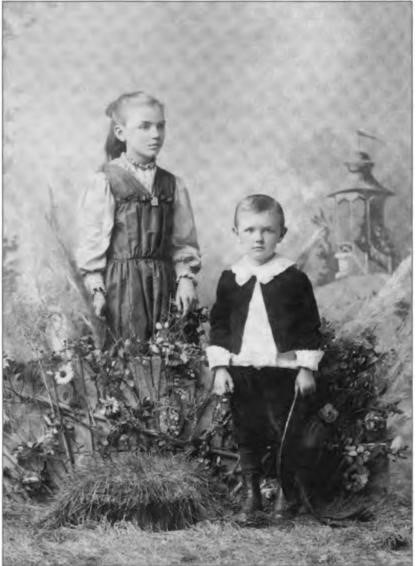
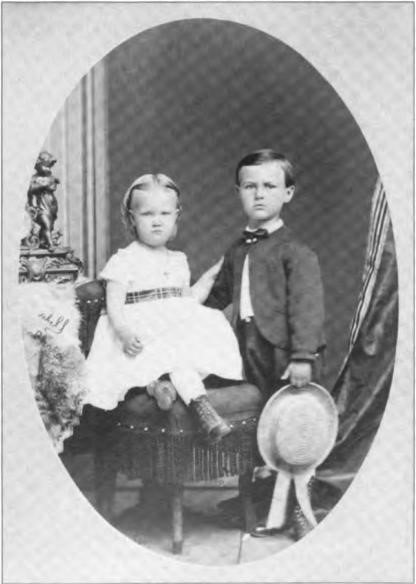
The Meek’s third child, Nettie, was born on 31 May 1880, almost ten years after the birth of their second child. A detailed record of the Meek family appears in the 1880 U.S. census for Grass Valley Township, Nevada County, California—conducted on June 5. John is listed as “Apothecary.”
John was also one of the founders of Grass Valley Lodge No. 51 of the Ancient Order of United Workmen, which would have paid $2,000 in gold to his heirs upon his death.
For Charlotte, now nicknamed “Lottie,” these were halcyon years with the respected and succesful John David Meek and three children; they started after the Gold Rush of 1849 and ended with the real estate collapse in this-area in the late 1880s. What could have been more exciting for our Lottie than marriage to a prosperous older man, raising three adoring children, having her beloved mother, Maria Louisa, close by in the tiny mining and timber town of Snow Tent, and half brother Frank working nearby in summer and in winter finishing his schooling in Grass Valley? Recall, too, that elder sister, Lizzie, had come with her husband to Grass Valley where they did dressmaking together. We know now from Charles’s Genealogy that Charles and sister Jessie were frequent visitors to another of grandmother Maria Louisa’s homes in nearby Penn Valley and we also know of their joyful memories of those days.
In the memorabilia of his sister Jessie’s son, Herbert S. Martin, Jr., are two articles written by Charlie. In one undated reminiscence, “Memories of Grass Valley in the 1870’s,” he writes, “I see myself as a barefoot boy with an old straw hat and a pair of well-patched trousers running down School street—who is the boy who can forget those wonderful days?” He reflects on the Civil War days, on old-fashioned religious revival meetings, on the completion of the Nevada County Narrow Gauge Railroad to Nevada City and the driving of the last spike at the terminal there.
In another sentimental piece, titled “My Grandmothers” and written in 1940, he speaks wistfully of his paternal grandmother, Martha Cary Meek, whom he met only twice when he visited her in faraway Indiana. He called her his Indiana grandmother, wrote that she “was a large woman, tall and erect,” and believed that she came from England.
His maternal grandmother, Maria Louisa Reartier, was his California grandmother and the one he knew best. He tells of visiting her ranch in Penn Valley”—there I roamed the hills with her 10 back on old Button, or Polly to my heart’s content. That was the life for me”.
Also in “My Grandmothers” he writes:
Having no grandchildren of my own, I fear I have a tinge of envy in my heart for those in my family who are more fortunate. Somehow I hope these grandchildren will realize what a blessing they have, and will appreciate what grandparents can mean to them. If they have no grandmothers they have missed something in their lives that can never be replaced…
Charlie Meek’s memories of his boyhood years in Grass Valley are heartwarming and tell us much about this Meek family. For more on their lives see page 287.
Then sadly, after some 17 years of an apparently very happy marriage, John Meek died on 13 September 1883 in Grass Valley at age 47. He had a premonition of his impending death. A short announcement in the Grass Valley Union of Wednesday, 13 September 1883 (p. 3) titled “At Death’s Door” stated: “John D. Meek was considered to be dying last evening, at the time the UNION went to press, and his death was looked for at any moment.”
His obituary appeared in the Grass Valley Union (Thursday, 14 September 1883, p. 3, col. 2):
Passing Away
The death of Mr. Meek who passed away on Wednesday evening, seems one of those untimely visitations for which his family and friends were not prepared with any feeling of resignation. In the prime of life, with happy and prosperous surroundings, a devoted wife and three loving children, this going away into the great beyond seems a dark visitation to the bereaved ones. Mr. Meek was born in Newscastle, Henry County, Indiana, in 1836. He came to Grass Valley in May 1860, when he entered into partnership with William Stephenson, and served as Constable in 1866; also for a time clerked in the Postoffice. He acted as Cashier in Delano’s Bank until the death of Mr. Delano, when he purchased the drug store in which he has ever since remained, and locked its doors for the last time, late Friday night of last week, when he remarked to a friend that he was going home to die. On Thursday he was in the Pavilion apparently enjoying all he saw in his genial, hearty way which made the announcement of his dangerous illness seem a wild rumor. The public has lost an honorable, faithful businessman, his friends a loyal heart, and his wife to whom he was united seventeen years ago, can look back upon their life as one long beautifid sacrament, the memory of which death’s flowing tide could not bear away.
As if to perpetuate John David’s foresight and success, some 13 years after his death, Lottie sold for $500 a piece of property that in 1871 he had purchased for $100. In 1886 she sold for $687.50 a property he seems to have purchased earlier for a pittance.
So now in 1883 Lottie, still an attractive young woman of 34, was widowed (as was her own mother, Maria Louisa, at 26) and left alone on the frontier with a family of three young Meeks to care for. There are no records to show what happened to her house on Church Street or the drugstore on Mill Street. However, years later her daughter Nettie recalled that Lottie’s income while she was living in Berkeley was from property she owned in Grass Valley. Following John Meek’s death, she must have been quite secure financially, but life alone in this still-wild frontier was probably lonely and certainly not secure.
The rest of Charlotte’s story is told in the following chapters: Samuel Matthew Shurtleff and Charlotte Avery Meek, Roy Shuttle/1’s Childhood Years, and Piedmont and Early Years of Abundance.
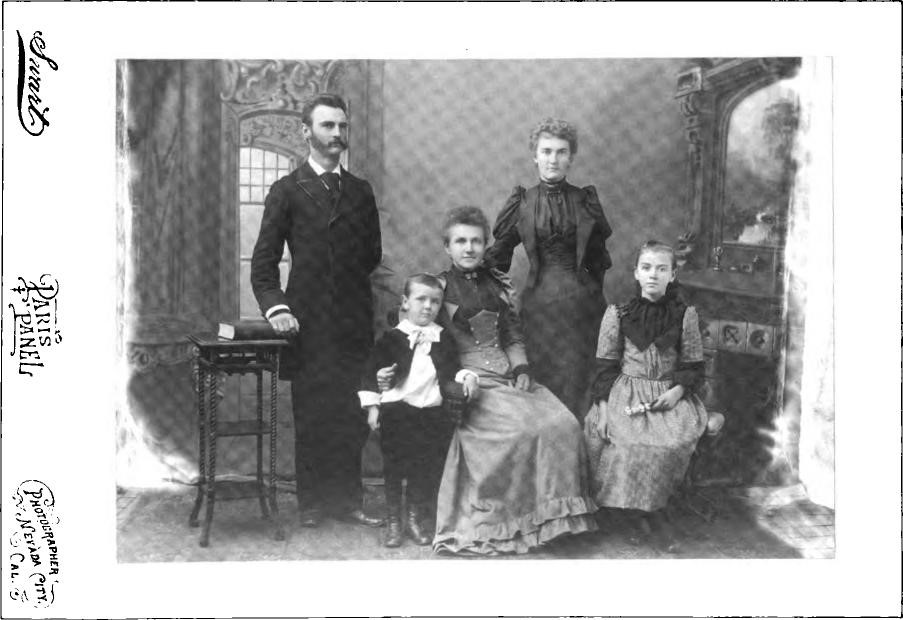
Charlotte and John David Meek had three children, all born in Grass Valley, California:
- Charles Avann Meek was born 6 April 1868. He married Minna Lipp, but we do not know the date or place. She was born 8 Feb. 1868 in Wisconsin Hill, Placer Co., California. Minna died 8 Oct. 1931 in Berkeley, Alameda Co., California, at age 63. Charles died 11 Nov. 1945 in Berkeley, California, at age 77.
- Jessie Meek was born 25 Oct. 1870. She married Herbert Sargent Martin on 10 May 1893 in Nevada City. He was born 2 June 1869 in Pilot Hill, El Dorado County, California. Herbert died 19 May 1916 in Georgetown, California. Jessie died 12 Feb. 1963 in Concord, Contra Costa Co., California, at age 92.
- Nettie Meek was born 31 May 1880. She died 5 March 1977 in Berkeley at age 96 years and 10 months, of old age. She never married.
 Shurtleff & Lawton Families Genealogy & History - Second Edition (2005)