
** All Text on these chapter pages has been copied verbatim – with permission – from this book: “Shurtleff Family Genealogy & History – Second Edition 2005” by William Roy Shurtleff & his dad, Lawton Lothrop Shurtleff ** Text in pdf convert to word doc – any spelling errors from the book may or may not have been fixed. **
Roy Shurtleff’s maternal grandparents were George J. Avery, Jr., and Maria Louisa Avann, both of Tenterden, Kent, England. Intrigued by clues in their grandson Charles Avann Meek’s recollections, privately published in his 1934 pamphlet, Genealogy: Avery-Meek, Bonnie Meyer, also a direct descendant of Maria Louisa Avann, began a search to discover more about this pioneering couple, married in Tenterden more than 150 years ago on 22 February 1841.
The story of George and Maria Louisa’s arrival in America has filtered down through generations. The newlyweds, along with George’s brother James, left London in 1841 on the sailing ship Gladiator bound for the New World. Their voyage of six weeks and three days crossing the Atlantic Ocean turned frighteningly perilous when unexpectedly heavy ice threatened the ship. Arriving in New York on April 27, they crossed New York state via the partly completed Erie Canal, then continued by a team of oxen to their destination—Cuyahoga County on the Ohio frontier. Reaching Cleveland, then a rough town on the edge of the western wilderness, the brothers left Maria Louisa there and walked the 12 miles to Brecksville in search of a conveyance to transport them back to their new home.
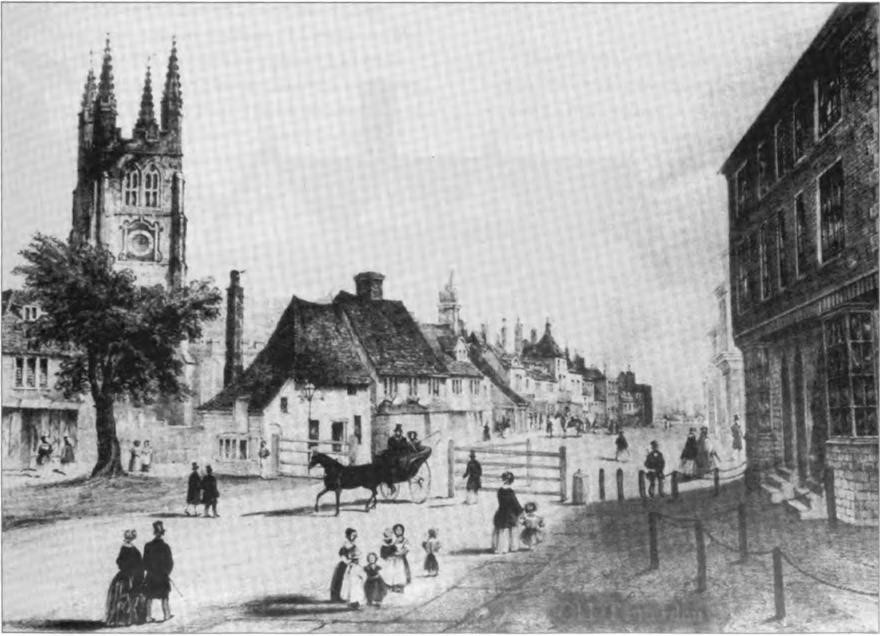
The young bride was alone and waiting on the wild frontier. What was going through her mind? Maria Louisa was only 16 years old, born 24 July 1824, daughter of a prosperous farmer in England. (In the 1841 census her father owned 175 acres, with a 12-room house, barns, cottages, and an oast house for drying hops, and employed six servants.) Only weeks earlier she had married, without her father’s consent, a man nearly 10 years her senior. What brought her to America? Her grandchildren recalled that she spoke of a girls’ boarding school where she was cruelly treated. Had she run away? Or had she simply fallen in love with George? In any event, she left her entire family an ocean behind her—father John Avann of Bugglesden Farm in Tenterden, mother Elizabeth [Parsons] Avann, and her Avann siblings. John and Elizabeth had eight children, all but the first born in Tenterden, Kent, England:
- John “of Tenterden” Avann was baptized 3 Oct. 1814 in Warehorne, Kent, England, and apparently died between his marriage 13 July 1840 to Caroline Denton and the writing of his father’s will in 1862, which makes no mention of this eldest son. John is likely the brother referred to in grandson Meek’s 1934 Genealogy, where on the fourth page, Meek writes that his grandmother Maria Louisa Avann mentioned that “another brother was a sea captain, lost at sea.”
- William Avann was baptized 12 Oct. 1815. He stood up for Maria Louisa at her marriage to George J. Avery, Jr. On 27 March 1843 he married Ann Mercer also of Tenterden. Sometime between 1851 and 1854 he immigrated to Ohio, where he died in 1884 in Brooklyn, Cuyahoga County, the father of at least seven children.
- Ann Henrietta Avann was born in 1822 and buried at Tenterden 14 Aug. 1841.
- Maria Louisa Avann. our direct ancestor, was born 24 July 1824 and died 2 June 1912 in Santa Cruz, California.
- Mary Elizabeth Avann was baptized 11 Dec. 1831 and was living in 1871 in Tenterden.
- Adelaide Avann was baptized 13 March 1831 in either Warehorne or Tenterden, died in infancy, and was buried in Tenterden 1 February 1832.
- John Henry Avann was baptized 29 May 1836. In 1871, at age 34 he was living with his wife Ellen and widowed father on Bugglesden Farm.
- Alfred Charles Avann was born about 1839. He married Mary Melbourne Clarke in Tenterden 7 July 1859, and in 1881 was living in Lenham, Kent, with his wife and his son John Avann, who was born 1864 in Uitenhage, Cape of Good Hope, South Africa.
Maria Louisa had also left behind her maternal grandparents Benjamin and Mary (Holdstock) Parsons and many aunts, uncles, cousins, and friends. She might never see them again.
The reasons for her husband George Avery’s immigration to the United States are clearer. Eldest of eight known children of George Avery, Sr. (a London butcher whose parents had been farmers), and Mary Witherdon, he was rejoining his family in the new land. His father and five of the children had come to Brecksville, Ohio, the year before. Little is known of his mother. She died in England, having borne these eight Avery children:
- George Avery, Jr. was born May 1815 in Kent County, England, married 22 Feb. 1841 to Maria Louisa Avann, died 3 Sept. 1850 in Brecksville, Cuyahoga County, Ohio.
- Mary Avery was born 1817.
- Hester Avery was born 1819.
- James Avery was born 1822. He married Eunice M. Maria Whitnall, born 8 July 1818 in Pompey, Onondaga County, New York.
- Harriet Avery was born Feb. 1827.
- Ann Avery was born Jan. 1829.
- Sarah Avery was born Nov. 1830.
- Joseph Avery was born Feb. 1832. He died 20 Feb. 1885 in Brecksville, Ohio, and was buried in Highland Road Cemetery in Brecksville.
By 1851 their father, the elder George, too, would be dead, leaving property in Cuyahoga County, Ohio, valued at $1,200, and (according to the 1851 census) a household consisting of second wife Mary (Field), age 40, son Joseph, 20, and an unrelated Baptist preacher, 26. He had accumulated 41 acres. To give an idea of the crops raised and their values, the next year his widow petitioned the following property be set off for her support for one year: “400 pounds of pork, $18-$24; four bushels of flour $5.60; for keeping horse, two cows and 15 sheep since the death [of her husband]… hay, 11/2 tons $23; six bushels of oats $1.62; two bushels of wheat $1.78; and cash $6.00, total of $62.00.” (These Ohio Averys and their English roots would be a fine topic for future researchers.)
Returning to the immigrant bride, Maria Louisa: On their marriage certificate of 22 February 1841, George Avery, Jr., lists his occupation as “Gardener,” possibly a gardener on Maria Louisa’s father’s farm. In March of 1842 he is first recorded buying land, 253/4 acres in Brecksville, Ohio, where he and his young wife started raising crops and three children:
- Elizabeth “Lizzie” Avery was born 12 Sept. 1842 in Brecksville, Cuyahoga County, Ohio. There she married William H. Sheldon on 28 Feb. 1866. Her second marriage was to a Mr. Emmons. She died in about 1933 in Seattle, Washington, at her daughter, Blanche’s home and was buried in the Reamer plot in Soquel, Santa Cruz County California.
- William ‘Will” H. Avery was born 26 June 1845 in Brecksville. He married Rosaline C. “Rose” Comstock. She was born 26 March 1827 in Richfield, Summit Co., Ohio, the daughter of Allen Comstock and Lydia Miller. She died 1 May 1917 in Brecksville and was buried there in the Highland Road Cemetery. In later life William married again, to Mary E. Sheldon. They had no children. She died in 1935. Will died on 25 July 1933, at age 88, in Brecksville and is buried there in the Rice Cemetery
- Charlotte “Lottie” Louise Aseneth Avery was born 13 Dec. 1849 in Brecksville, Cuyahoga County, Ohio, and died on 16 Sept. 1926 in Berkeley, California.
- A girl who died in infancy about 1850.
Elizabeth, the eldest child of Maria Louisa and George Avery, Jr., married Will Sheldon in 1866 in Ohio. At some point they moved to Iowa where they are said to have farmed the virgin prairie near Malvern. Her husband, Will, apparently had an accident that caused the family to move halfway across the continent from Iowa to Grass Valley, California—possibly to join Ii77ie’s youngest sister, Charlotte “Lottie,” who coincidentally in 1866 in Grass Valley had married John David Meek. In Grass Valley Lizzie and her sister Lottie practiced dressmaking together. It must have been a happy reunion for the two sisters, for there was an undoubted closeness in the family.
Lizzie and Will Sheldon had three children about which little is known:
- Blanche Sheldon may have been born in Malvem, Iowa, but her place of birth is uncertain. She married pharmacist John Buxman, who divorced her after she gave birth to two “blue babies.” She was living in Portland, Oregon, in 1937.
- Floy Sheldon was probably born in Iowa or Grass Valley. She is believed to have married and had a family. She died after 1884.
- Harry Sheldon died in Grass Valley of rheumatic fever when he was 10 years old.
William H. Avery the second child of Maria Louisa and George Avery, Jr., spent his life in Ohio. Only five when his father died, Will was independent from the age of 16 when, in June 1861, he left the family farm to begin life for himself. He was first employed in Independence township. By 1868 he had paid a total of $570 for the Brecksville, Cuyahoga County, land of his father, George Avery Jr., and secured the proper quit-claims from his mother and sisters Lizzie and Lottie. Will remained for life on the Avery land in Brecksville, becoming a well-known farmer and influential citizen. He served in the Civil War, and his company joined General Sherman at Goldsboro and continued with him to the close of the war. By 1874, Will had obtained land on both sides of Avery Road. His farmlands eventually covered nearly 100 acres. His property and homes at #8960 and #9016 may be seen today. Both Avery homes have been featured on historical home tours. The older one, where corn cob insulation was found during remodeling, contains part of the original house of his parents, George and Maria Louisa (Avann) Avery.
The children of Will Avery and his second wife, Rosaline, were:
- May/Cora Avery, born 4 May 1870 in Ohio, married a Harry Seward.
- Laura Avery, born 29 Aug. 1871, died 21 April 1873 in Brecksville.
- George A. Avery, born 16 Nov. 1875, probably married to Lizzie Marie Rudgens, died 1907 in Cuyahoga County Ohio.
- Myron C. Avery, born 14 Dec. 1879 in Ohio.
- Charles W. Avery, born 14 May 1881 in Ohio, died 20 Feb. 1884 in Brecksville, Ohio.
- Harry W. Avery, born 8 April 1884 in Ohio, died 17 Dec. 1965 in Miami, Dade County, Florida.
Charlotte “Lottie” Louise Aseneth Avery was born 13 December 1849, Brecksville, Cuyahoga County, Ohio, the third child of Maria Louisa and George Avery, Jr. She is the direct ancestor of the Roy Shurtleff family, whose life story is told in chapters that follow.
Returning to the immigrant couple, Maria Louisa and George Avery, Jr., nothing is known of their early years, but primary record research found George buying land and paying taxes in Brecksville, Ohio. Then tragedy struck. Her husband, George, Jr., died 3 September 1850, at the tender age of 35, leaving Maria Louisa widowed at 26 with three children, ages eight, five, and nine months. For two years she struggled, then in 1852 petitioned to sell three acres of land for support of her children. She was allowed to do so in July, receiving $35.75 from a neighbor for the three acres and $114.25 for some land rights.
Still an attractive woman, Maria Louisa (Avann) Avery married again, to George Wickes Reanier 18 June 1853 in Brecksville, Ohio. He was baptized 7 February 1819 near Tenterden, at Woodchurch, Kent, where her grandmother Ann Avann is buried. His parents were James and Hester Elizabeth (Wickes) Reanier of St. Mary, Dover, Kent. He had a former wife, Catherine, born in Nova Scotia, who was buried 27 June 1851 in Cleveland. It is not known whether Maria Louisa had previously known Reanier in England, although they came from the same county. George Reanier and Catherine had two sons, who were with him in the 1850 Cleveland census: George, born 1846 in Ohio, and Edwin, born 1850 in Ohio. An earlier child, also Edwin, born in England 1848, was buried in Cleveland 20 June 1849, at age one. None of the Avery children or grandchildren ever mentioned Reanier bringing the two small boys into their household. Did he abandon them to woo Maria Louisa? Did Reanier know Maria Louisa had a wealthy father in Kent and a likely inheritance?
Maria Louisa surely did not marry Reanier for his money, for George Reanier was a shoemaker and a widower owning no land. Maria Louisa had kept the remaining Avery land intact for her children’s inheritance, continuing to somehow pay the taxes. Clearly she needed help working that land, and Rearder may have seemed just the man she needed. But he didn’t stay for long. Reanier is listed in Brecksville only in 1855 and not after. Maria Louisa and George Reanier had one child:
1. Frank Eugene Reanier, born 3 Jan. 1856 in Brecksville, Cuyahoga Co., Ohio. Married Ida Sarah Elster on 17 July 1886 in Santa Cruz, Santa Cruz. Co., California. Died 7 Feb. 1931 in Capitola, Santa Cruz Co., California.
Frank was born the same year that Mr. Reanier “disappeared.” Perhaps farming and having a wife and more children were too much for him. Civil War unrest was approaching at this time, but research shows he never enlisted. Instead, he turns up in 1856 in the Cleveland directory, living in his father’s boarding house. Neither Reanier is listed in subsequent Cleveland directories. George W. Reanier is last found in Wisconsin witnessing the marriage of his son, George Wickes Reanier, to Edna Adeline Wicker, on 1 November 1874 in Cato, Manitowoc County.
Abandoned or separated, the result was the same: Maria Louisa (Avann) Avery Reanier again was alone on the frontier raising four young children, keeping house, and working the farm herself.
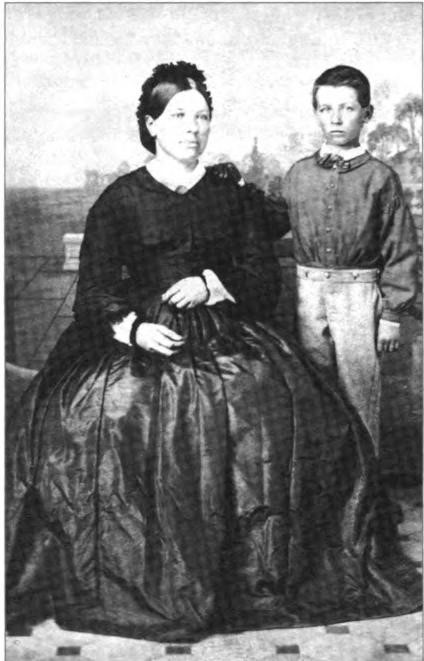
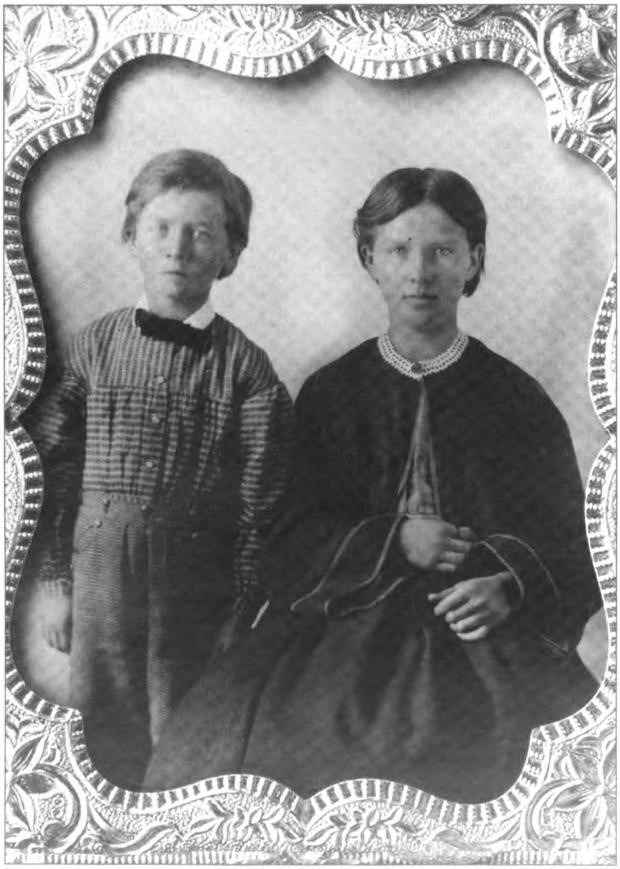
To her credit she kept her family intact, and records show no debt. But life was harsh. Ohio’s Western Reserve was notorious for an unchristian attitude toward those who became a drain on the community. Records show widows with young children were forced out. Was Maria Louisa unwelcome? The 1860 census lists her as Louisa Reanier: no land in her own name, personal property amounting to $75, and all four children (three Avery and one Reanier) living with her. Was she too proud to petition for further support? Did she wish to shield her children from learning that Frank’s father was alive? And the ultimate question: Did she not yearn to return to England to an easier life and a family circle? Instead, Maria Louisa made an amazing decision. Making the most dangerous—or adventurous—choice of her life, Maria Louisa determined to take her two youngest children to California.
The year was 1862. Daughter Lizzie Avery, age 20, and her brother Will, 17, chose to remain in Ohio, where Will was already employed. The remaining trio, Maria Louisa, age 38, Lottie Avery, age 13, and Frank Reanier, 6, faced the adventure of their lives.
What were Maria Louisa’s thoughts as she and her children headed east to the sea? Were they retracing the very route by which she, a bride filled with hope and optimism, came to the frontier some 20 years earlier? Did she dream of becoming richer and returning, as did most who went off to the gold country? She was hopefully leaving behind the sadness of loss and a failed marriage. Was she also leaving behind a callous community? We don’t know if it was her choice to leave. For whatever reasons, her choice of destination was a brave one.
They headed by sea to California in a ship of fairly recent design—a sailing ship also fitted with steam-driven paddle wheels, called a side-wheeler. This voyage 20 years later, however, was no safer than Maria Louisa’s first voyage across the Atlantic. Instead of ice floes, this time there was the Civil War. A southern gunboat shot away one of the side wheels, but the ship managed to limp into Aspinwall (Colon), Panama. Perhaps only their sail had saved them. Aspinwall was no haven and was notorious for malaria and contaminated water. The Panama Canal was not yet built across the isthmus. Those who could pay the fare of $75 in gold could ride the new Panama railway, completed in 1855. The less fortunate, like our trio, after two weeks of discomfort and delays, went up the Chagres River in small boats and finished the trip across the Isthmus of Panama on mule back, through heat and humidity, clouds of insects, and the dense jungle. They rested at a hotel of sorts along the way. Later little Frank Reanier, with his special brand of humor, would tell of the monkeys climbing on the walls surrounding the place, how stringy and nasty was the meat at dinner, and how he noticed, upon departure, that there were far fewer monkeys than upon arrival. Charlotte described the situation on the Pacific side: “camping out with hundreds of others” waiting for a ship to take them to San Francisco. Once on the steamer, they found it so crowded that families slept on the decks. At last, the travelers passed safely through the Golden Gate into San Francisco Bay, to begin their lives anew in California.
In San Francisco she and her two children boarded a river boat to Sacramento, and from there transferred to a smaller boat which took them to the small town of Nicolaus. There an old friend from Ohio, Tully Thomas, met them and took the tired travelers to his home. With the Thomas family, Maria Louisa, Charlotte, and Frank recuperated from their long journey. But soon they were on the move again. Some 10 miles northeast near Wheatland on the Feather River, 12 miles south of Marysville, Maria Louisa found work as the family cook at the Rodden Ranch, where she and her children spent the next few years.
It would seem that although Maria Louisa had very little money, she placed a high value on educating her children. In the mid-1860s, Charlotte Avery went to Grass Valley, where she attended a school for girls conducted by Mrs. Josephine Ryder and the latter’s mother, Mrs. Thompson. Charlotte boarded with a Mrs. Stevenson (who later became Mrs. Frank Barger), and the two became lifelong friends.
In 1866, daughter Charlotte, age 17, married John David Meek in Grass Valley, California, some 50 to 60 miles east of Wheatland and made her home there (Chapter 4). Soon thereafter, to be closer to her son and daughter, Maria Louisa Reanier went to the high Sierra above Nevada City, cooking for the family of Mr. S. W. Churchill, operator of the lumber mill at Snow Tent. Son Frank Reanier spent summers there with her and during the school year lived with his half sister Charlotte Meek. Frank also received his early schooling in Grass Valley; there he first met Ida S. Elster, whom he later married.
Records suggest that Maria Louisa returned briefly to Ohio in 1868 when her son, Will Avery, bought her interest in 33 acres. Young Frank Reanier may have traveled with his mother to Ohio, being the sole child remaining home.
Following the death of her father in England, Maria Louisa returned there in 1873 to receive her share of a legacy. Her father owned 237 acres, according to the 1871 census. In June of that year, his will was probated, and 145 acres of Bugglesden Farm went to auction after being held by the Avann family since 1800.
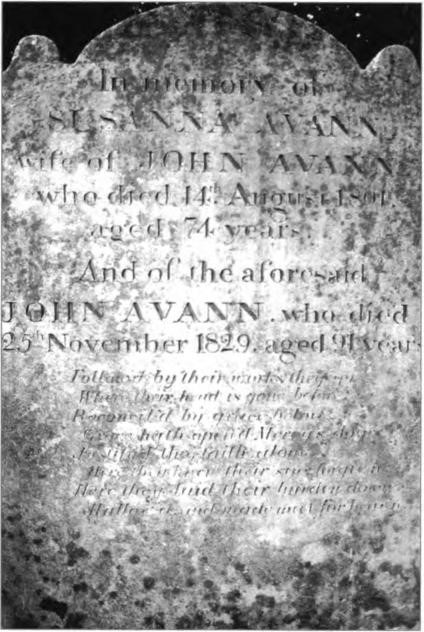
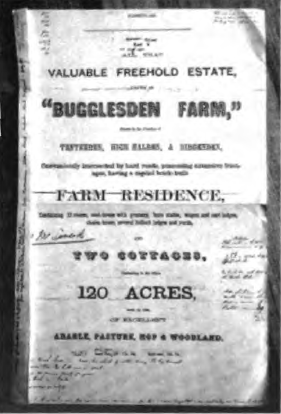
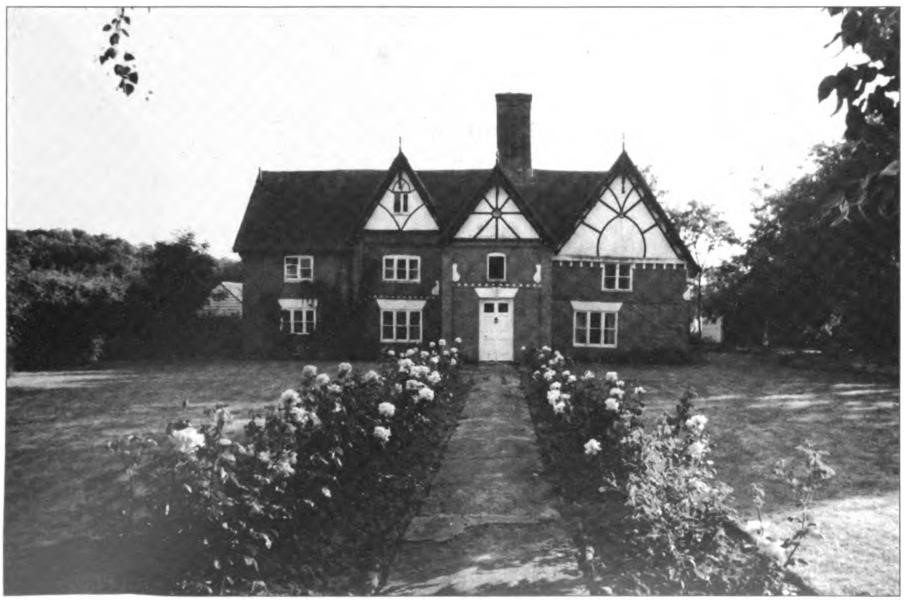
Maria Louisa jotted brief notes during her trip back to England in 1873. These proved a gold mine, enabling further discoveries regarding the Avann ancestry. Maria Louisa Avann’s parents were married “from Leacon Hall” in Warehorne, Kent, 20 September 1813. Her father, John Avann of Bugglesden Farm (son of John Avann and Ann Wells), was baptized 15 July 1792 in Kingsnorth, Kent, and was buried in Tenterden 23 April 1871. Maria Louisa’s mother, Elizabeth Parsons (daughter of Benjamin Parsons and Sarah Holdstock), was baptized 29 June 1797 in Snave, Kent, and was buried in Tenterden 10 November 1864. Two homes associated with this Avann family, Bugglesden Farm and Leacon Hall, a grand old Queen Anne home, are still standing (year 2000).
From England, Maria Louisa bmught back small items that once belonged to her great-grandparents,
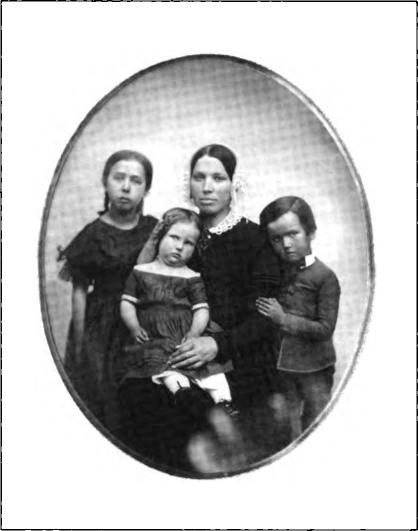
John and Susanna Avann: an old “gin bottle” (perhaps used as a pocket flask), a wooden snuff box, and some sterling teaspoons. Maria Louisa herself ate with a bone-handled knife and lethal-looking three-fined fork. Her youngest granddaughter, Nettie Meek, fondly remembered her using them. Maria Louisa did treat herself to one luxury while in England: she bought an 18K gold watch at the Ludgate Hill, London, shop of J. W. Benson, Watch and Clockmaker to HRM The Prince of Wales. (Nettie Meek later gave it to Helen (Reanier) Meyer, who passed it to her daughter, Bonnie, still in its original case.) These things, plus the wire-rimmed spectacles, the tiny travel notebook and some photographs, are all that have come down to us from this remarkable woman.
Maria Louisa’s portion of her father’s legacy enabled her to buy a farm in Penn Valley, California, just below Grass Valley. Records of the California Bureau of Land Management show “Louisa Reanier” [sic] was issued 80 acres in March 1877 and another 80 acres in December 1882. Frank Reanier, a strapping young man of 17, ran the ranch with his mother and assisted neighbors at harvest. Later, the grandchildren, particularly Charlie and Jessie Meek and Floy and Blanche Sheldon, recalled joyful times at this ranch where their Grandma Reanier raised hay and grain and a few cows. Driving a span of horses named Button and Polly, Maria Louisa would go to town to sell homemade butter, eggs, and produce. “Over the hill to grandmother’s house” would have been just a short wagon or stagecoach ride away for these grandchildren living nearby in Grass Valley. In any event it was apparently a very happy relationship for all. In December 1940, Charlie Meek, in a fond tribute titled “My Grandmothers,” wrote:
My California grandmother, Grandma Reanier, was the one I knew best, for I spent much of my younger life with her on her ranch in Penn Valley…
As a youngster I was never her favorite grandchild (I think some of the girls held first place), but we were very companionable. Somehow I understood her and never hesitated to go to her with my troubles and misdeeds. I could unburden my soul to her and tell her things I would not tell my own mother fir fear of punishment. Many kids are like that. Yes, I can see her as she sat in her favorite rocking chair down on the ranch; she would look at me sternly, over glasses, give me a mild reprimand by way of a thump with her thimble finger, and quietly say ‘Don’t do it again,’ when I made a confession to her. How quickly troubles fall from kids’ shoulders when they think they are forgiven. That is what grandmothers are to kids — forgiving.
Grandma Reanier too came from England. . . By her own endeavor she carved out a new home near Grass Valley. That is where I spent the happiest days of my childhood, with Grandma Reanier.
In 1892 Maria Louisa moved to Capitola to be with Frank Reanier, her son by her second marriage. She lived in Capitola for twenty happy years and died there at age 88.
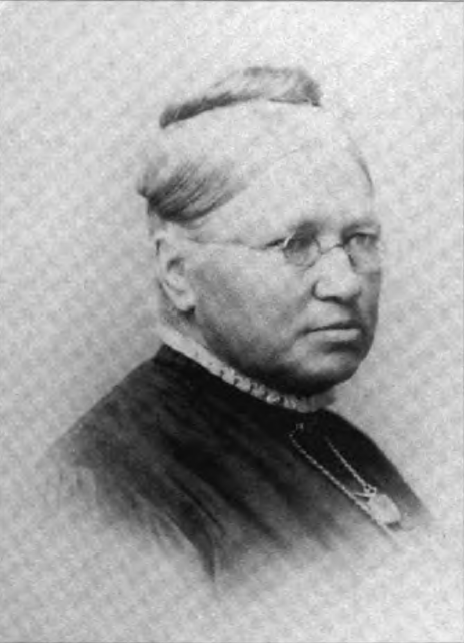

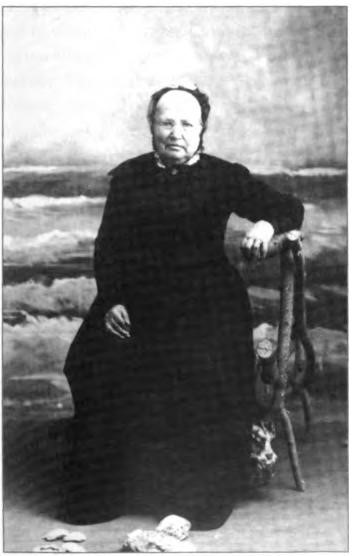
Then on 12 September 1883 John David Meek died. Two years later, in 1885, after 17 years of happy marriage to John Meek, Maria Louisa’s now widowed daughter, Charlotte Meek, married again, to Samuel M. Shurtleff of Nevada City (Chapter 5).
Then on 17 July 1886 in Santa Cruz, California, son Frank Reanier married Ida Elster of Penn Valley, located near the tiny town of Rough and Ready, Nevada County, California. Maria Louisa, age 62 and alone once more, sold her Penn Valley ranch and moved again back to Wheatland, about 20 miles west, site of her first years in California. With Frank gone, the ranch was probably too big for her to manage alone. Nettie Meek, in several letters written to Bonnie Meyer in the early 1970s, remembers this home well:
In Wheatland, Grandma Reanier had a big 2-story house set way back on the lot, eucalyptus trees across the front and a high fence on which I used to sit and watch the droves of cattle and other stock pass on their way to the higher altitudes for summer grazing. There were several fig trees in this front area, grand for climbing and eating the fresh fruit. She raised chickens and sold the eggs or traded them for groceries. I do not know what her source of income was, but there was always change for a big bag of peppermint lozenges, her favorite, which she carried in a big pocket in her petticoat. Peppermints were passed out as a special treat.. .
Grandma Reanier used to make a very delicious Yorkshire pudding and a pork pie. But she was down on booze and I do mean down—always interested in and subscribed to the Salvation Army.
In 1892 Maria Louisa moved to Capitola-by-the-Sea, Santa Cruz County, to be near her son Frank Reanier and her youngest grandchildren. There she lived not far from the railroad trestle across Soquel Creek, a short walk to the beach. As a resort town, Capitola was a magnet for visits from the rest of the family. Later Frank and Ida built her a house on Depot Hill, a lovely spot in Capitola—the house at 1124 Central Avenue is still there. Here she spent her last days close to her son and her Reanier grandchildren, and only a day’s train ride away in Berkeley lived her daughter Charlotte and Maria Louisa’s four Meek and Shurtleff grandchildren. In fact, Roy Shurtleff recalled that as a very young child he, with his mother and his sister Nettie, each summer would make the long trip to visit Maria Louisa and Frank. First they would take the train from Grass Valley to Auburn, then another train to San Francisco, and still another to Santa Cruz. After Charlotte moved her family to Berkeley, they continued this tradition.
On 2 June 1912, nearly 88, Maria Louisa died in Capitola. No one had time then to write an obituary detailing her remarkable, almost heroic life, and how she managed to raise her children virtually alone. We only have scanty primary records and recollections of grandchildren, including grandson Charles A. Meek’s words:
During her last hours she made the statement that her life had been filled with love and adventure; she had experienced the advent of modern inventions such as the steamship, telephone, telegraph, railroads, electric light, talking machines, motor vehicles and flying machines. All these crowded into her life left her satisfied.
It is a tribute that her grandchildren remembered her with such fondness and perpetuated her memory. Charles had the final words:
She embarked on her last journey to Eternity leaving behind with her grandchildren memories that will never fade. While she had received little schooling . . . she was a self-educated woman, a wide reader of history and biography, an excellent conversationalist, a fund of interesting experiences of travel and adventure, and tales of English history.
For more on the descendants of George Wickes Reanier and Maria Louisa Avann, see (Chapter 27).
Many thanks to Bonnie Meyer for her important contributions to this chapter.
 Shurtleff & Lawton Families Genealogy & History - Second Edition (2005)